FPV Drone
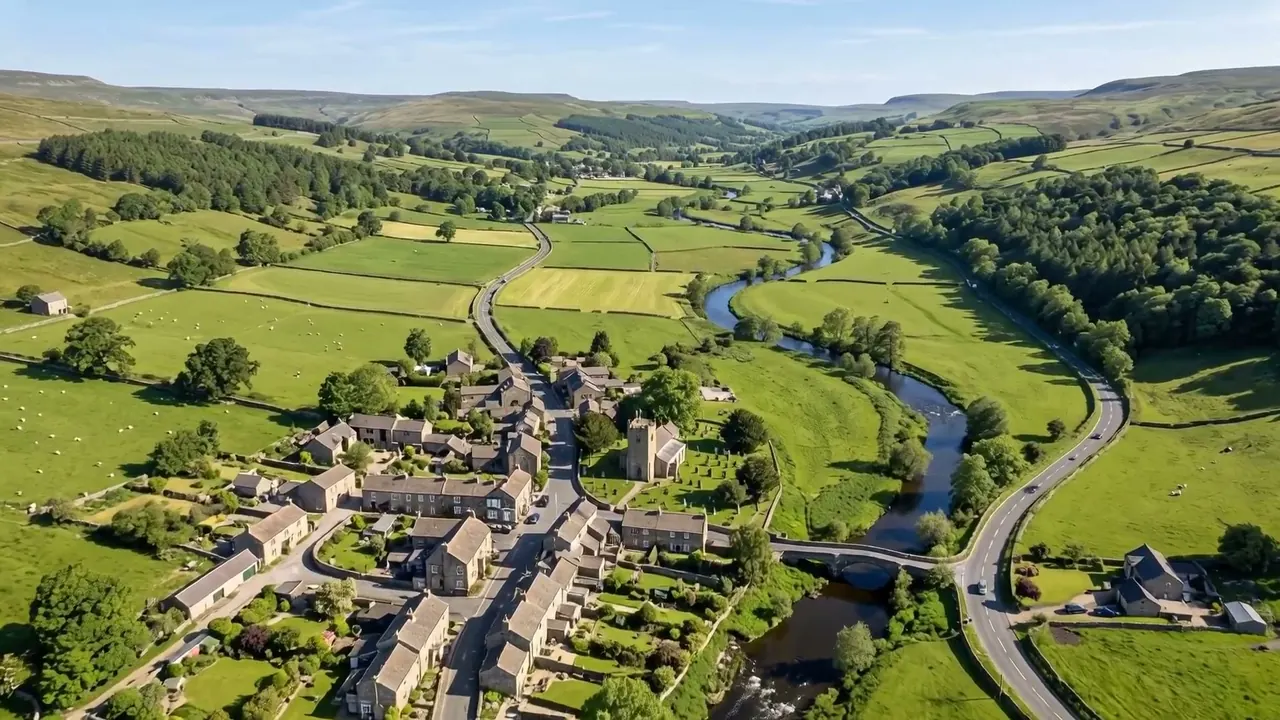
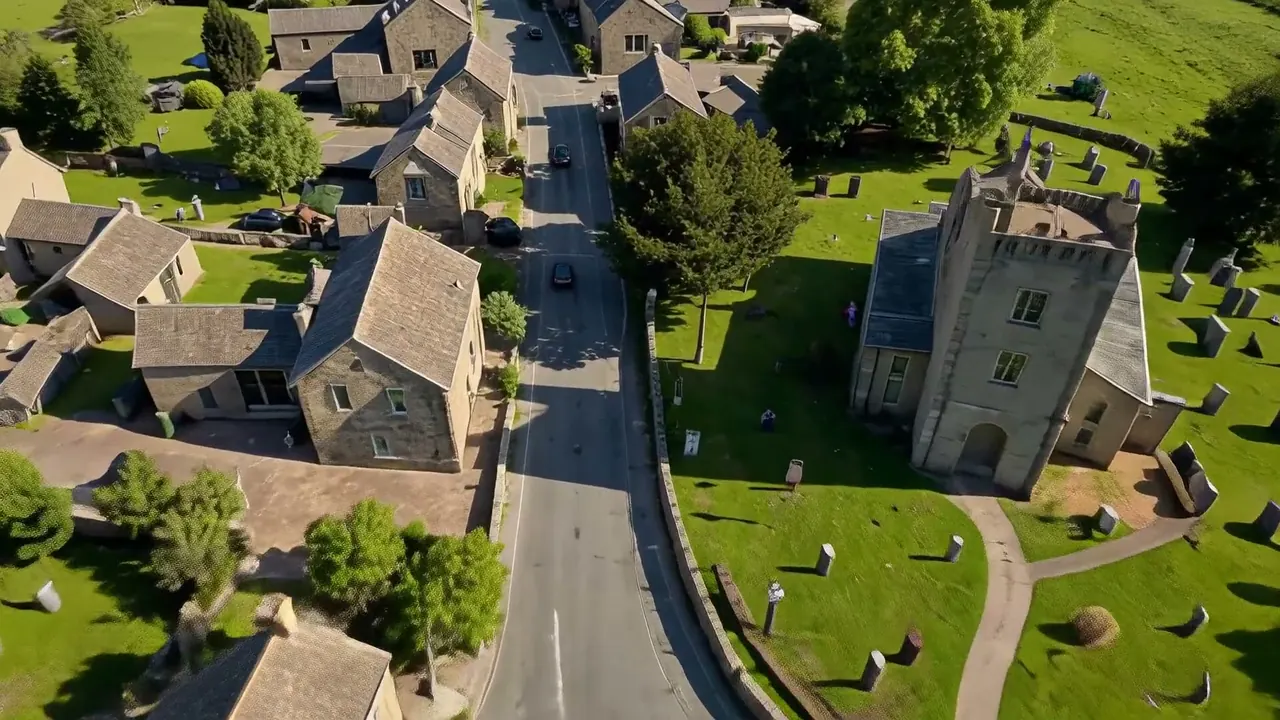
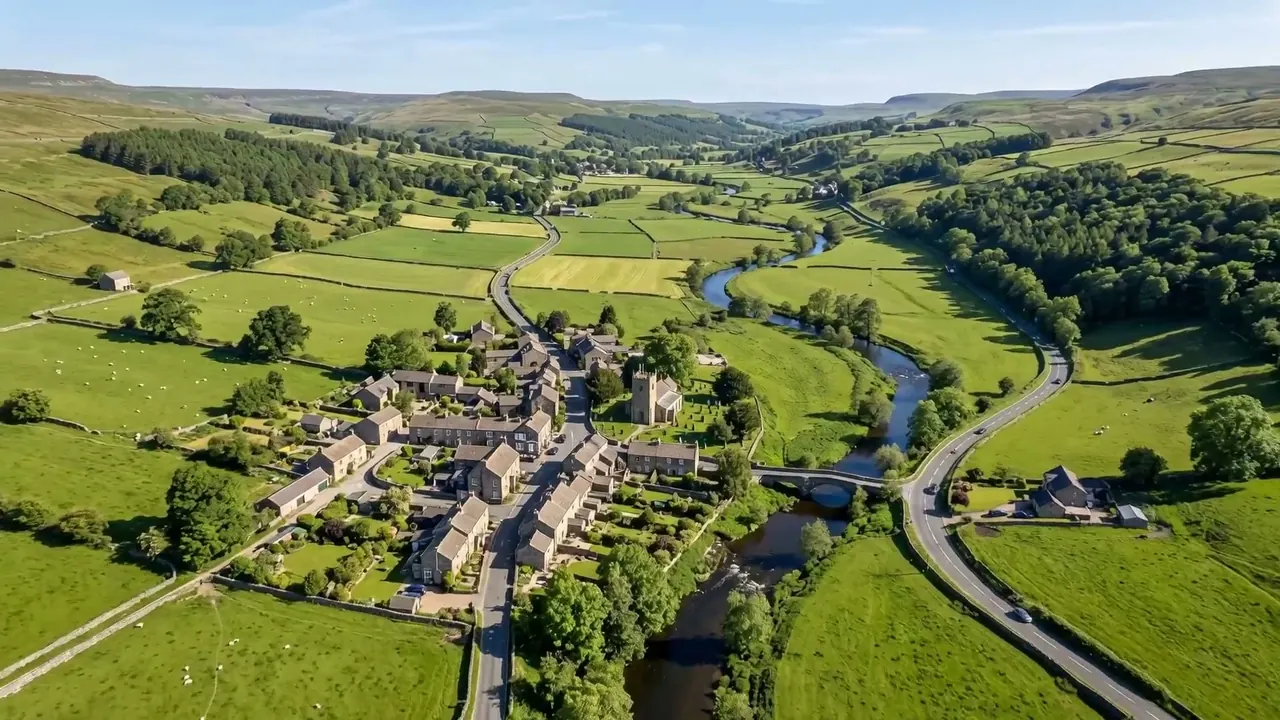
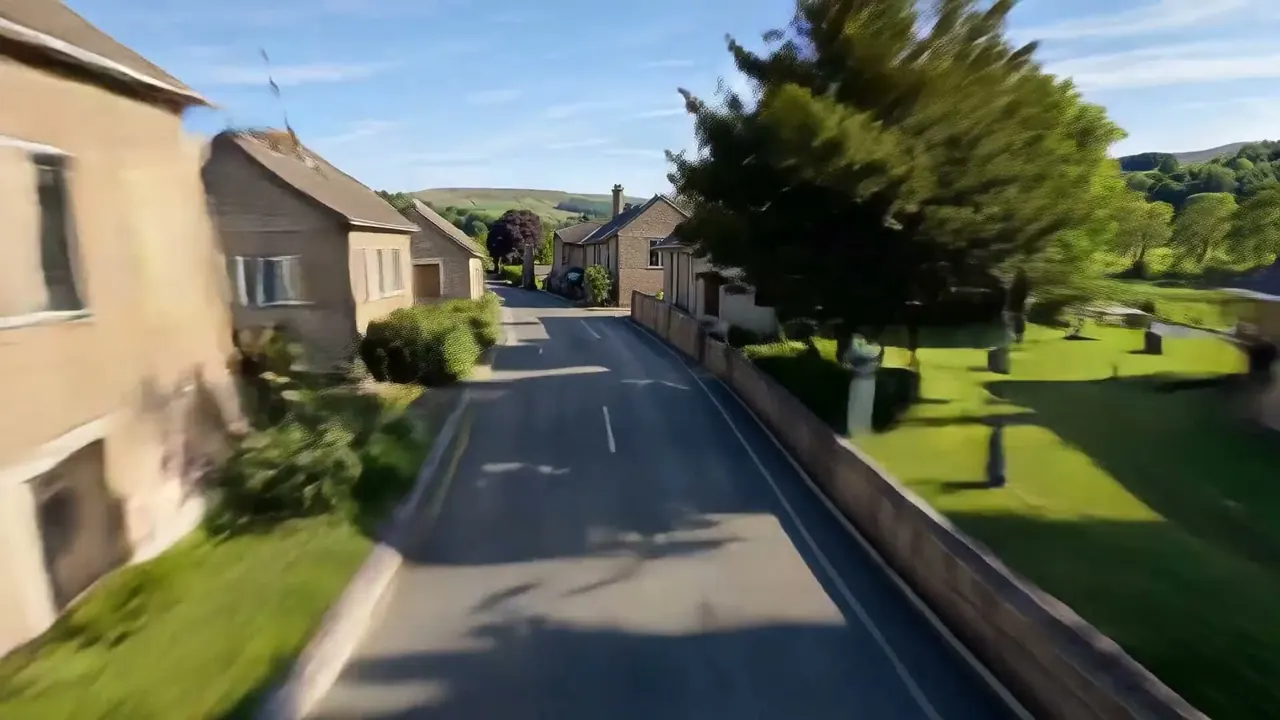
A racing drone weaves fast and close through the space.
Opens a video model with the prompt in it. The price is on the page before you sign in.
What it is for
A small racing drone flies fast and close, through gaps a camera has no business fitting through. The audience gets a ride rather than a view.
Proximity is the whole effect. Surfaces rush past the lens, and the speed reads on the near objects rather than on the distance covered.
It reads as a body rather than a machine. The banking, the near misses and the changes of mind all look like decisions, which is why the footage feels inhabited.
How it works
The drone banks into its turns, because a quadcopter tilts to accelerate. That roll is part of the signature, and a level frame through a fast corner looks wrong.
The lens is very wide, often close to a fisheye, which is why walls curve at the edges and anything within a metre of the camera looks enormous.
The path wants obstacles. Doorways, scaffolding, branches, the underside of a bridge. Open air at the same speed just looks like a fast aerial.
It is normally one continuous take. The value of the rig is that it goes everywhere without cutting, so a shot chopped into pieces throws away the reason to use it.
When to use it
Use it for energy: a venue walkthrough, a chase, a product reveal, anything that should feel like one continuous ride.
Avoid it for calm or for dialogue. The rig cannot be quiet, and a slow FPV shot is simply a worse version of a gimbal move.
Keep it moving throughout. An FPV shot that slows down to look at something turns into an ordinary drone shot in the middle of itself.
Told apart from its neighbours
An aerial pullback is high, slow and smooth, and it works by distance. An FPV drone is low, fast and close, and it works by proximity.
If you can tell how far the camera is from the nearest wall, it is FPV. If the nearest thing is the ground a hundred metres below, it is an aerial.
The prompt
Replace the blanks, keep the rest. Then run it on a video model.
FPV drone flight around <subject>, fast weaving path, tight gaps, aggressive banking, wide lens close to surfaces
What goes wrong
Models deliver a smooth, distant drone shot, because that is the common drone footage they have seen. Say close to surfaces, name the gaps it passes through, and ask for aggressive banking.
The second failure is a speed with nothing to measure it against. Put objects near the lens, since velocity is only visible against something close.
A third problem is a level frame through the corners. Ask for the horizon to tilt into the turns, because a quadcopter has to bank to change direction.
A fourth problem is a path with no shape. Name the route in order, such as in through the window, down the stairwell and out over the yard, or the flight wanders.
Leave out
slow, smooth, distant
Watch for
FPV lives on proximity. Keep the drone close to surfaces or it looks like an ordinary aerial.
Questions
Shoot it
Pay for the one run. No subscription, and the price is on the model page before you sign in.
Next to it in flying