Zoetrope
Repeated figures in sequence make a single movement when they pass.
Opens a video model with the prompt in it. The price is on the page before you sign in.
What it is for
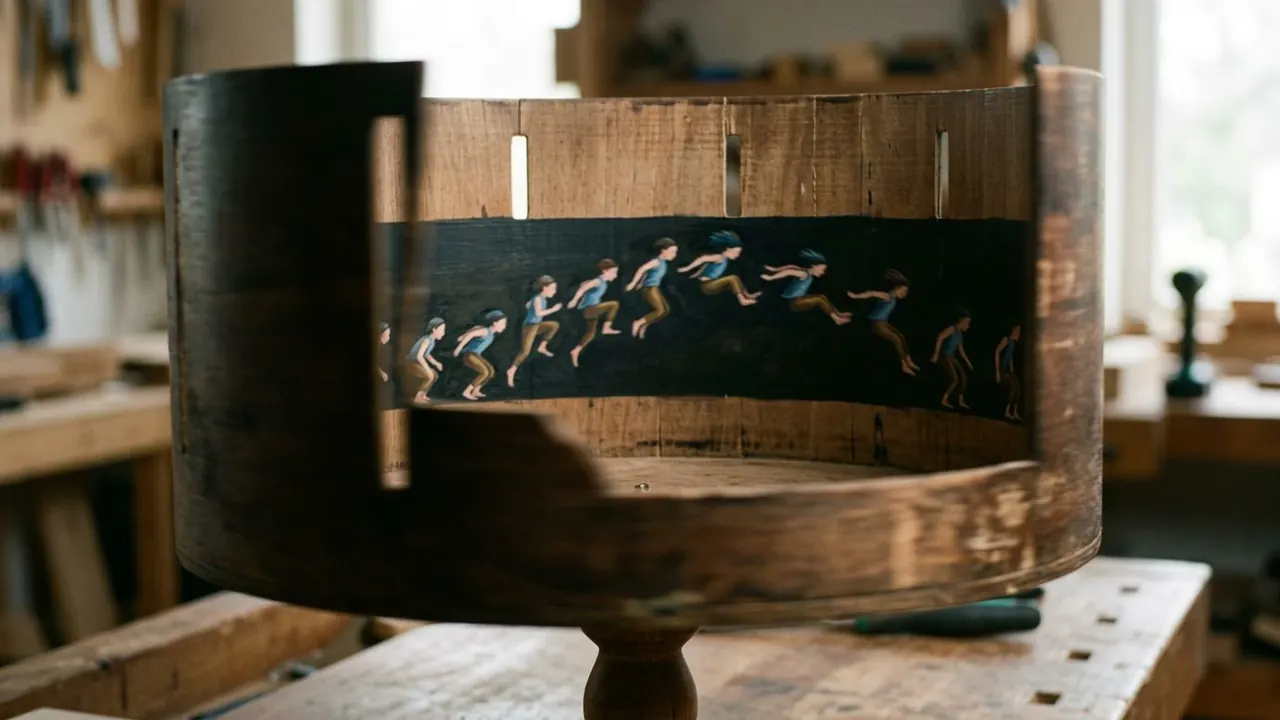
Repeated figures stand around the frame, each one a step further through the same movement. Pass them in order and a single motion appears out of the repetition.
The device is older than film. William George Horner built the spinning drum version in 1834, and the principle it demonstrates is the one every moving picture still runs on.
How it works
Each copy holds one position from one movement, in order, spaced evenly. Copy one has the arm down, copy two has it a little higher, and so on around the frame.
The copies have to be identical in everything except the pose. Same person, same clothing, same light. Any other difference between them reads as a crowd rather than as one body in time.
Movement comes from something passing them. A camera travelling along the row, or a shutter, or a strobe. Static copies with a static camera give you a frieze.
When to use it
Use it for a title sequence, for a dance piece, and for anything where the mechanics of animation are part of the subject.
Skip it when the movement is complicated. Ten copies can only hold ten positions, so a subtle action loses everything between the steps.
Told apart from its neighbours
Stop motion moves one object a little at a time and photographs each position as a separate frame, so the audience sees one object moving. A zoetrope puts every position in the frame at once and lets the eye assemble the motion.
The test is how many copies are visible. One object at a time is stop motion. Every step present together is a zoetrope.
The prompt
Replace the blanks, keep the rest. Then run it on a video model.
repeated figures of <subject> in sequence around the frame, each a step further through one movement, motion emerging from the repetition
What goes wrong
Identical copies come back in the same pose, which is a pattern rather than a movement. Say each copy is one step further through the action, as the note asks.
The second failure is a smooth animated figure, because a model will resolve the sequence into ordinary motion. Say the figures are discrete and separate, and that the movement comes from the repetition.
Leave out
single figure, smooth motion
Watch for
Each copy must be one step on. Identical copies give you no movement.
Questions
Shoot it
Pay for the one run. No subscription, and the price is on the model page before you sign in.
Next to it in one thing becomes another