Thermal
A heat camera maps temperature to colour.
Opens a video model with the prompt in it. The price is on the page before you sign in.
What it is for
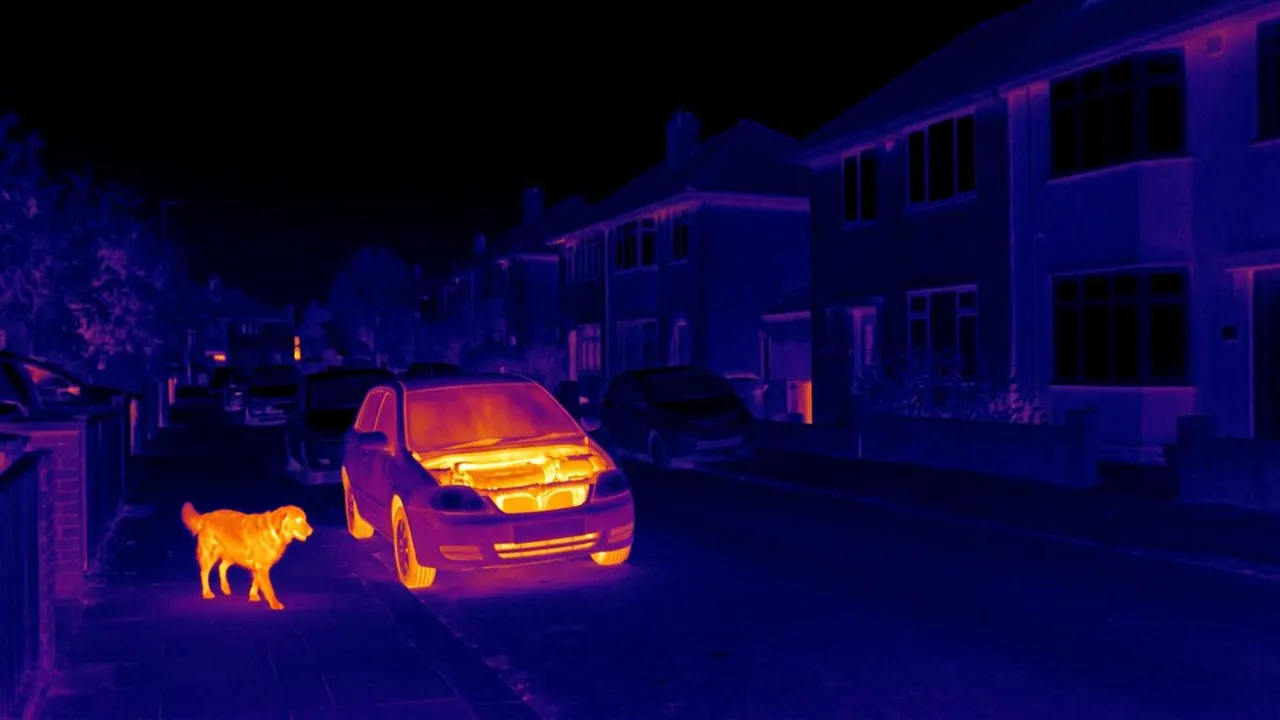
A thermal camera maps temperature instead of light, so a body glows in a dark room and a cold engine hides in a bright one. It shows a fact about the world the eye has no access to.
That is why it reads as surveillance and as hunting. The picture belongs to a machine, and whoever is looking through it knows something the person in frame does not.
How it works
Thermal imaging works in the long wave infrared, roughly 8 to 14 micrometres. That radiation is emitted by warm objects themselves rather than reflected, which is why the camera needs no light at all.
The sensor outputs temperature, and a palette maps those values to colour. White hot and black hot are monochrome. Ironbow and rainbow palettes run cold blue through to hot white, and the choice of palette is a look decision.
Glass is opaque to long wave infrared, so a face behind a car windscreen disappears. Water and wet surfaces also behave oddly, and a warm handprint stays visible on a cold surface after the hand has gone.
When to use it
Use it for a point of view through a scope or a drone, for tracking someone in darkness, and for any moment where the audience should see heat rather than shape.
Avoid it when faces have to be recognised. Thermal flattens features, because temperature across a face varies far less than reflected light does.
Told apart from its neighbours
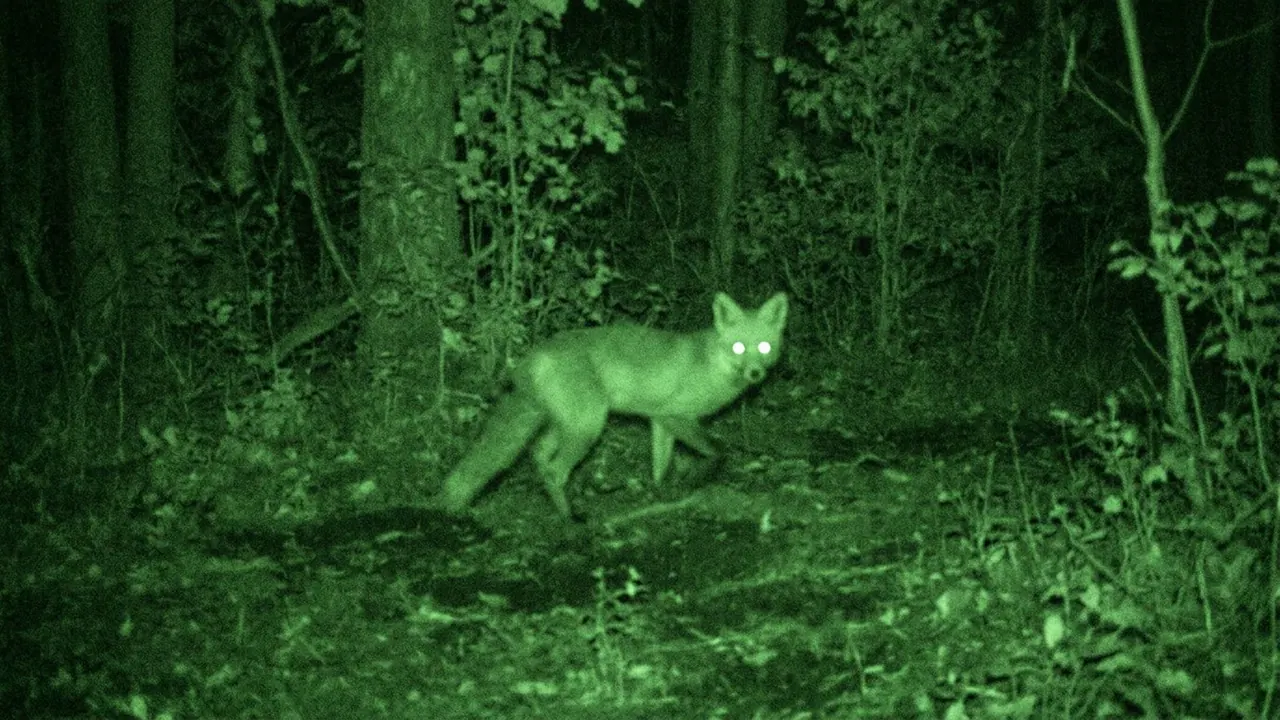
Night vision amplifies the faint light that is already there, so it still records reflected light and needs some of it to work. Cover the lens of a night vision device in total darkness and it shows nothing.
Thermal needs no light whatsoever, because it reads emitted heat. The test is what happens to a cold bright object. In night vision it reads bright. In thermal it reads dark.
On film
John McTiernan gave the creature in Predator (1987) a thermal point of view, and the jungle reads as a field of cool blues with warm bodies burning through it. The scene where a man covers himself in cold mud works only because the audience has learned what the camera is measuring.
- Predator (1987)
The prompt
Replace the blanks, keep the rest. Then run it on a video model.
thermal camera view of <subject>, body heat rendered as bright warm colour against a cold dark background, temperature gradient across surfaces
What goes wrong
The model maps brightness instead of heat, so a white shirt glows and a warm engine sits dark. Say it maps temperature, and give an example: a hot dark object must still read bright.
The second failure is a scene that is thermal in colour only, with normal shading and shadows. Thermal images have no shadows, because there is no light source casting them. Ask for the shadows to be gone.
Leave out
visible light, natural colour
Watch for
Map heat, not brightness. A hot dark object must still read bright.
Questions
Shoot it
Pay for the one run. No subscription, and the price is on the model page before you sign in.
Next to it in seeing what the eye cannot