Film Grain
The image carries the moving texture of film stock.
Opens a video model with the prompt in it. The price is on the page before you sign in.
What it is for
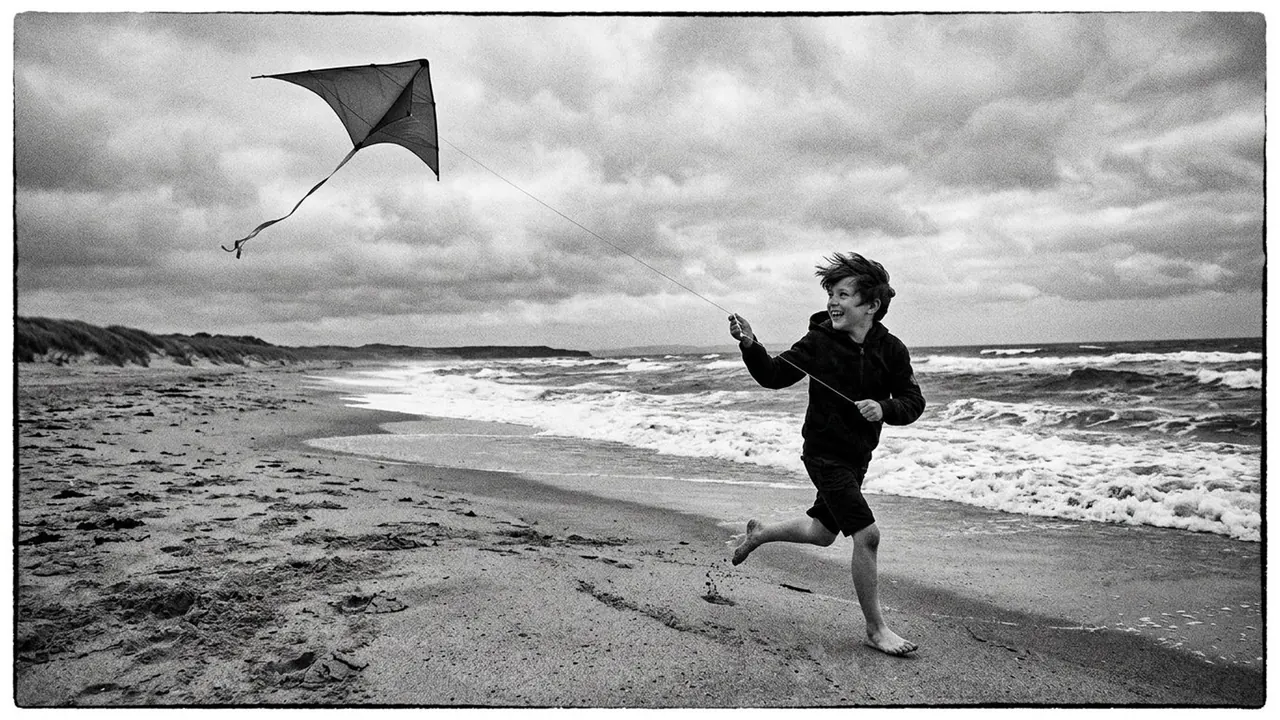
The image carries a texture that changes every frame. It sits between the viewer and the scene, and it is one of the strongest signals that footage was photographed on film.
Grain also hides things. It breaks up banding in a gradient and softens the plastic look of a clean digital image, which is why it gets added long after anyone has stopped shooting on film.
How it works
Film records light with silver halide crystals scattered at random through the emulsion. The crystals land differently on every frame, so the texture moves even when nothing in the scene does.
Faster stock has larger crystals, so it is grainier. A 500 speed stock pushed in the dark shows far more texture than a 50 speed stock in daylight, and the difference reads as available light against controlled light.
The texture is not even across the picture. It reads most in the darker mid tones and the shadows, and least in a bright even highlight, which is why the entry asks for it heaviest in the shadows.
When to use it
Use it on anything meant to read as film, on footage that looks too clean, and over gradients where digital banding would otherwise show.
Leave it off work that has to survive heavy compression. Grain is the hardest thing in a frame for a codec to carry, and it turns to mush at low bitrates.
Told apart from its neighbours
Halation is a glow spreading out of bright areas, and it lives only around highlights. Film grain is a texture spread across the entire image, and it has nothing to do with where the bright parts are.
The two arrive together on real stock, which is why they get confused. The test is whether the artefact has an edge to hug. Halation does, grain does not.
The prompt
Replace the blanks, keep the rest. Then run it on a video model.
<subject> with visible film grain, texture moving frame to frame, grain heaviest in the shadows, organic emulsion feel
What goes wrong
The texture comes back frozen, identical on every frame, which reads as a dirty sensor rather than as film. Say the grain moves frame to frame.
The second failure is grain laid evenly over everything including the highlights. Ask for it to sit heaviest in the shadows and to thin out in the bright areas.
Leave out
clean digital image, static noise
Watch for
Grain moves. Static noise reads as a dirty sensor.
Questions
Shoot it
Pay for the one run. No subscription, and the price is on the model page before you sign in.
Next to it in what light does to the glass