Infrared
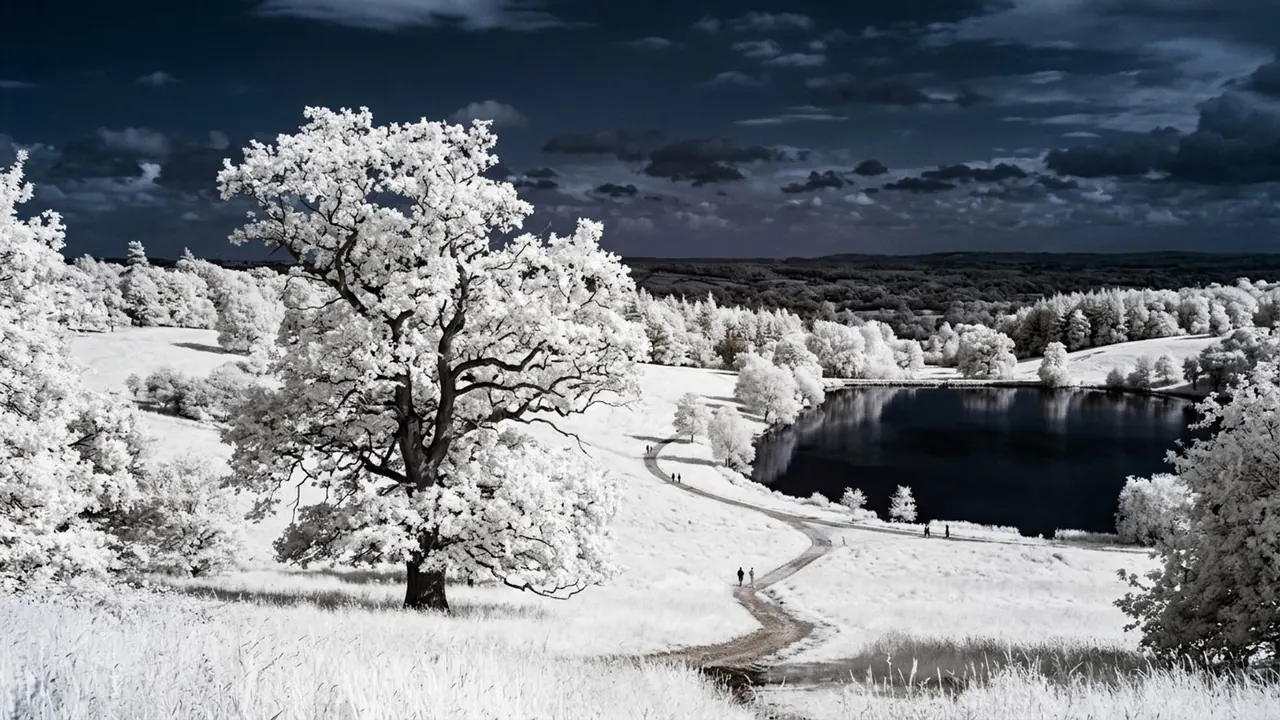
The image records light the eye cannot see, so foliage goes white.
Opens a video model with the prompt in it. The price is on the page before you sign in.
What it is for
The camera records light just past the red end of what the eye can see, and the world comes back with its tones rearranged. Leaves go white, skies go near black, and skin turns pale and waxy.
The strangeness is the point. Nothing in the frame is impossible, and yet every relationship between light and dark is wrong, which makes a familiar place read as somewhere else.
How it works
Infrared imaging works in the near infrared, roughly 700 to 900 nanometres, just outside human vision. A filter blocks visible light so only that band reaches the sensor or the film.
Chlorophyll reflects near infrared strongly, so living foliage records as bright white. The effect is known as the Wood effect, after the physicist who first photographed it, and it is the single clearest signature of the look.
Blue sky scatters very little infrared, so it records dark. That combination of white trees against a black sky is what people recognise, and it is why the technique needs landscape to show itself.
When to use it
Use it on exteriors with plants in them, for dream and memory sequences, and for anything meant to feel observed by something that is not human.
Skip it indoors and in a bare street. With no foliage the tonal inversion has nothing to invert, and the shot reads as a mildly odd black and white.
Told apart from its neighbours
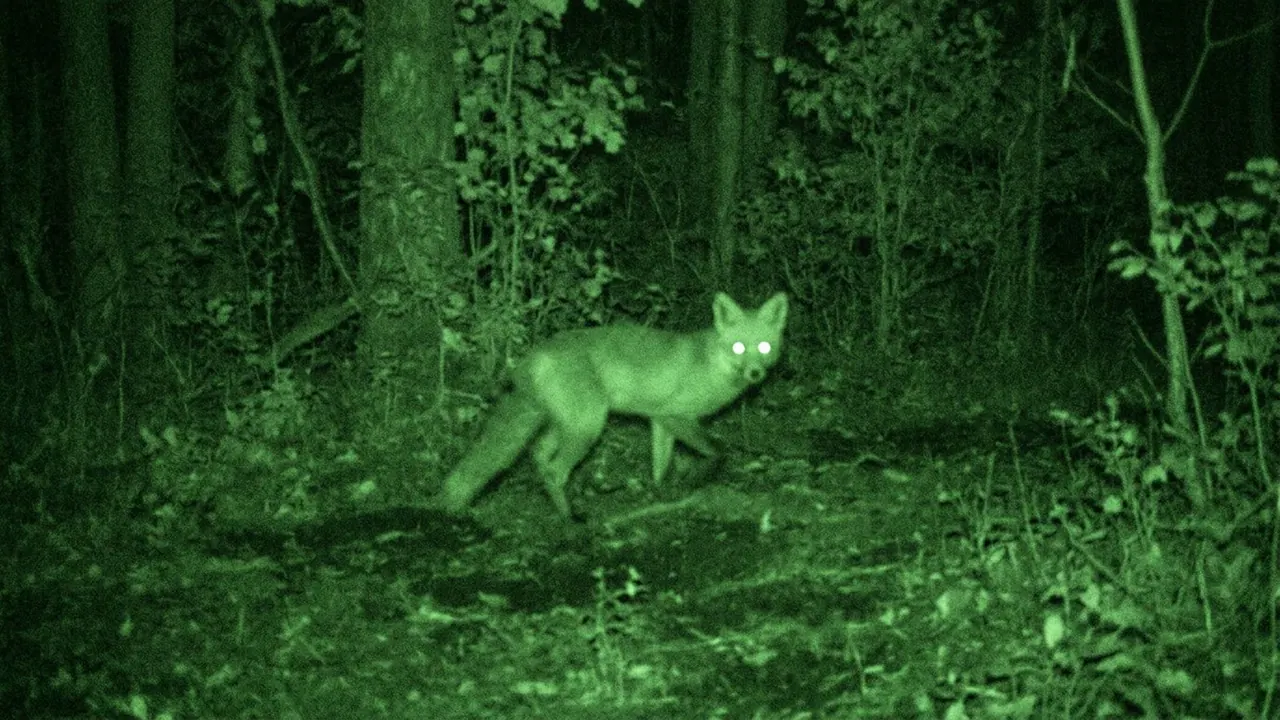
Night vision amplifies the small amount of visible and near infrared light already present, and renders it as a green, grainy, blown out picture. It is about seeing in the dark.
Infrared imaging works in daylight and is about seeing a different band. The test is the foliage and the exposure. Infrared gives white trees in a cleanly exposed frame. Night vision gives green, noisy footage with clipped highlights.
The prompt
Replace the blanks, keep the rest. Then run it on a video model.
infrared rendering of <subject>, foliage turned white, skies dark, skin rendered pale and waxy, false tonal relationships
What goes wrong
The result comes back as ordinary black and white. Say the foliage is white and the sky is dark, because those two together are what make it read as infrared.
The second failure is a frame with no plants in it. The white foliage is the signature, so put trees, grass or leaves in the shot before asking for the look.
Leave out
natural tones, green foliage
Watch for
The white foliage is the signature. Without plants in frame it will not read.
Questions
Shoot it
Pay for the one run. No subscription, and the price is on the model page before you sign in.
Next to it in seeing what the eye cannot