Collage
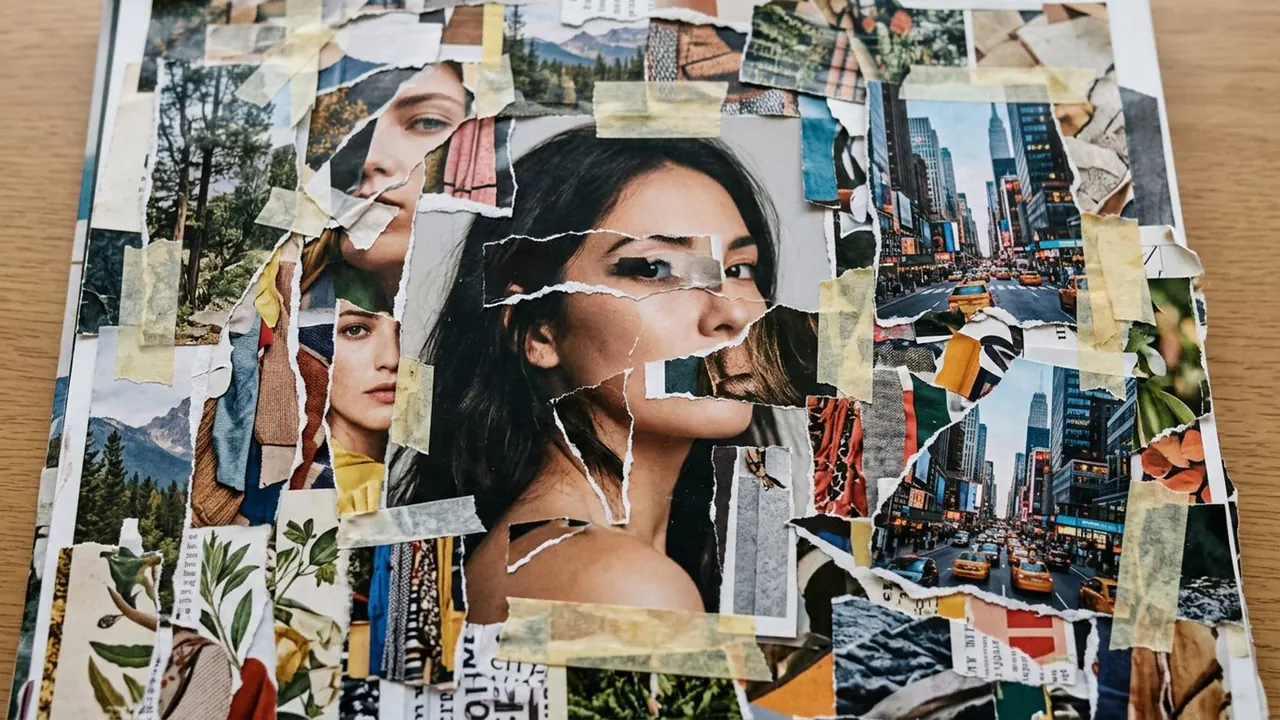
Cut paper, photographs and scraps are layered over the image.
Opens a video model with the prompt in it. The price is on the page before you sign in.
What it is for
Cut paper, photographs and scraps sit on top of the image as flat pieces. The frame becomes a surface somebody has stuck things to.
Torn edges carry the meaning. A clean cut reads as design and a rough tear reads as urgency, which is why ransom notes and punk record sleeves look the way they do.
How it works
Every piece is flat and sits at its own depth in a stack, with hard edges and small drop shadows where one overlaps the next. Nothing bends around anything.
Scale mismatch is the language. A magazine eye four times the size of the head it lands on, a printed hand from a different picture entirely. Matching the scales would remove the point.
Paper stock shows. Newsprint greys and shows its screen dots. Glossy magazine paper holds colour and catches a highlight along the tear. Naming the stock changes the whole look.
When to use it
Use it for title sequences, for a character's obsession pinned to a wall, and for any piece with a zine or punk register.
Skip it when the frame has to hold together as one image. Collage works by breaking the picture into pieces.
Told apart from its neighbours
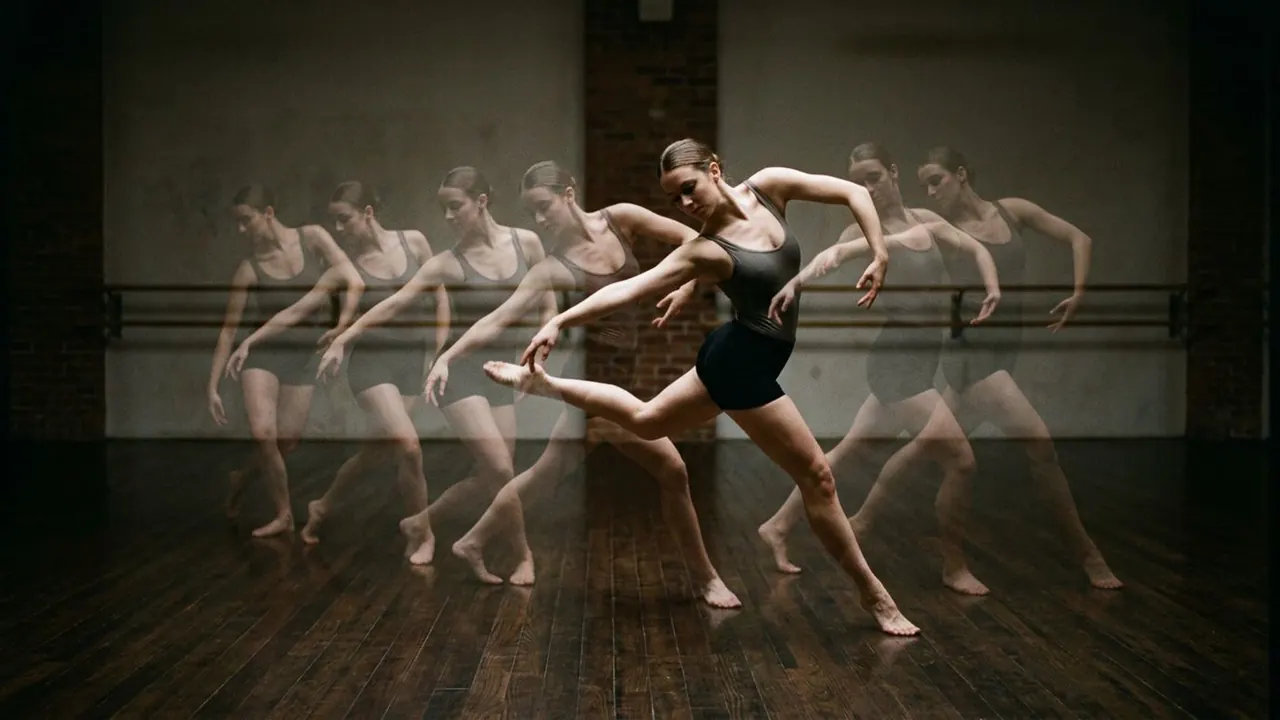
A double exposure blends two images into each other with soft transparent overlap. Collage keeps every piece opaque with a hard edge, so each fragment hides what is under it.
The test is the edge. Soft and see-through is a double exposure. Hard and torn, with a shadow under the lip, is collage.
On film
Terry Gilliam built his cutout animations from magazine engravings and photographs, moving them as flat hinged pieces, and Monty Python and the Holy Grail (1975) carries that style through its linking sequences.
- Monty Python and the Holy Grail (1975)
The prompt
Replace the blanks, keep the rest. Then run it on a video model.
collage over <subject>, cut paper and photograph fragments layered on the frame, visible torn edges, mixed scales
What goes wrong
The pieces come back softly blended into the image, which is a double exposure with extra steps. Ask for hard torn edges, as the note says, and for a small shadow under each piece.
The other failure is a tidy grid of same-sized rectangles. Say the scales are mixed and the pieces overlap at angles.
Leave out
clean single image, smooth blend
Watch for
Keep the torn edges hard. A soft blend becomes a double exposure.
Questions
Shoot it
Pay for the one run. No subscription, and the price is on the model page before you sign in.
Next to it in two images in one frame