Projections
- Reflective-screen projection
A projected image lands on a real surface and wraps its shape.
Opens a video model with the prompt in it. The price is on the page before you sign in.
What it is for
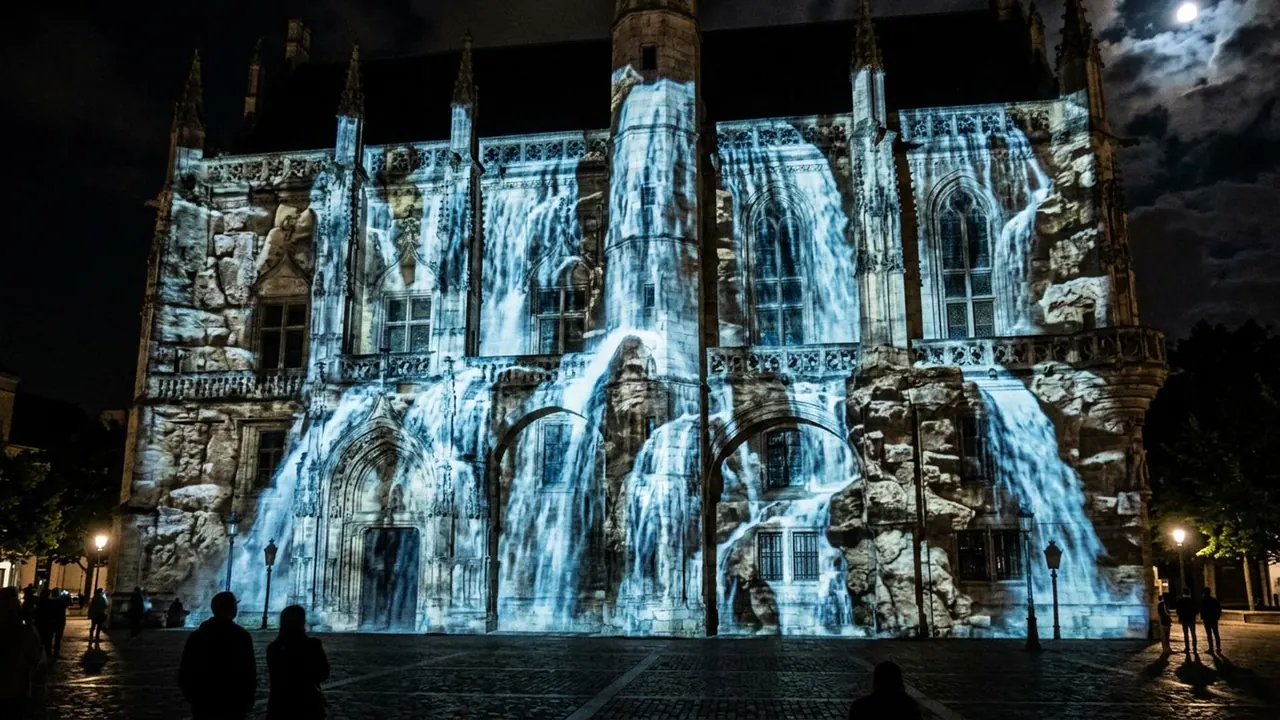
A projected picture lands on a real surface and takes its shape. The image bends over a face, a wall or a building, and the surface stays visible underneath it.
That contact is what separates it from an overlay. The audience reads two real things at once, the thing being lit and the thing doing the lighting.
How it works
A beam leaves a source and hits a surface, so it follows every contour it meets and breaks over every edge. A nose splits the image. A doorway throws part of it onto the floor beyond.
The beam is visible in the air when there is anything to catch it. Haze, smoke or dust makes the cone read, and that cone tells the audience where the projector is standing.
Projection light behaves like any other source. It lights the room it is in, spills onto nearby walls, and puts a rim on anyone standing in its path. A projection that leaves the rest of the room untouched is a composite.
When to use it
Use it for a performance, for surveillance footage shown to a character, for a face wearing an image that belongs to somebody else, and for a building that turns into a screen.
Skip it in a bright room. Projection needs the surround to be darker than the beam, so daylight kills the effect before it starts.
Told apart from its neighbours
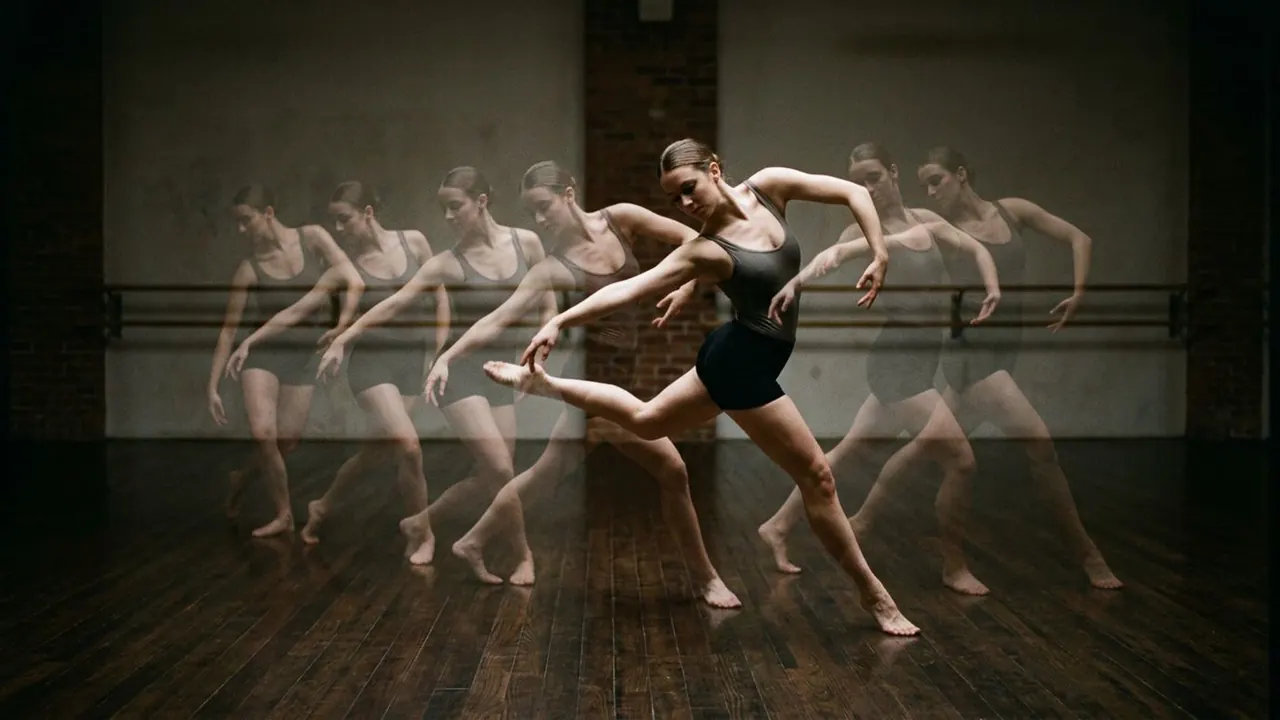
A double exposure lays one image over another with no physical relationship between them, so it ignores every surface it crosses. A projection wraps what it lands on and breaks at every edge.
The test is geometry. If the image stays flat and straight across a nose or a corner, it is an overlay. If it bends and breaks, it is a projection.
On film
2001: A Space Odyssey (1968) used front projection to put African landscapes behind the Dawn of Man sequence on a stage. Alfred Hitchcock built whole conversations against rear projection in To Catch a Thief (1955) and Vertigo (1958), with the actors in a stationary car and the road running on a screen behind them.
- 2001: A Space Odyssey (1968)
- To Catch a Thief (1955)
- Vertigo (1958)
The prompt
Replace the blanks, keep the rest. Then run it on a video model.
image projected onto <surface> near <subject>, projection following the contours, light spilling into the room, visible beam in the air
What goes wrong
The image arrives as a flat sticker across the frame. Ask for the projection to follow the contours and to break over the edges, as the note says.
The second failure is a projection with no beam and no spill. Name haze in the air and say the light from the projection falls on the room and on the subject.
Leave out
flat overlay, no beam
Watch for
Let the projection bend over the surface. A flat overlay is a composite, not a projection.
Questions
Shoot it
Pay for the one run. No subscription, and the price is on the model page before you sign in.
Next to it in two images in one frame