Cyclope
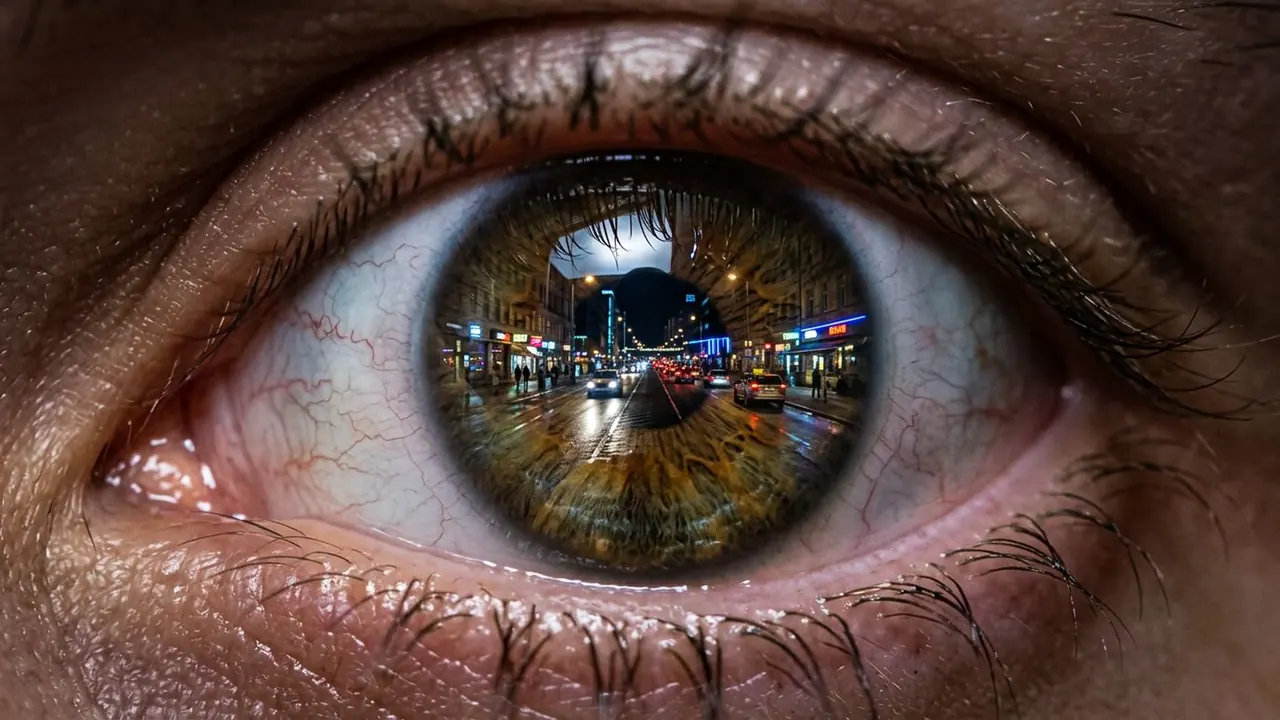
A single enormous eye dominates, often with a scene inside it.
Opens a video model with the prompt in it. The price is on the page before you sign in.
What it is for
A single enormous eye fills the frame, with a scene reflected in the iris. The eye becomes a screen and the thing inside it becomes the subject.
It places the audience uncomfortably close and gives them something to read at the same time, which is why it is used for openings and for moments of recognition.
How it works
Name what appears in the iris, as the note says. An eye with nothing in it is a macro shot. A city, a fire or a face in the reflection is what makes the frame a picture of two things.
The iris is a structure. Radial fibres, a darker ring at the outer edge, a pupil that is a true black hole rather than a dark grey disc. Getting that texture right is most of the realism.
Everything outside the eye goes dark or falls out of focus. At this magnification the depth of field is millimetres, so the lashes and the lid are already soft and the rest of the face is gone.
When to use it
Use it as an opening image, as a recognition beat, and in science fiction where a machine or a being is doing the looking.
Skip it in the middle of a scene with geography to maintain. There is no context in this frame at all, so it needs the cut before and after to carry the room.
Told apart from its neighbours
A fisheye is a lens that bends the whole frame into a curve, and it can be pointed at anything. A cyclope is a subject, one eye filling the frame, shot on a macro or a long lens with no barrel distortion at all.
The test is what is curved. A bent frame with straight subjects is a fisheye. A straight frame with one round subject is a cyclope.
On film
Blade Runner (1982) opens on a single eye at full frame with the burning city reflected in it, which sets the film's question about who is looking before a word is spoken.
- Blade Runner (1982)
The prompt
Replace the blanks, keep the rest. Then run it on a video model.
single enormous eye filling the frame with <scene> reflected in the iris, detailed iris texture, everything else dark
What goes wrong
An empty macro of an eye comes back. Name the scene reflected in the iris and say it is legible.
The second failure is a flat brown disc. Ask for radial iris fibres, a dark outer ring and a true black pupil.
Leave out
two eyes, wide portrait
Watch for
Name what appears in the iris. An empty eye is just a macro shot.
Questions
Shoot it
Pay for the one run. No subscription, and the price is on the model page before you sign in.
Next to it in space that does not behave