Selfie Twin
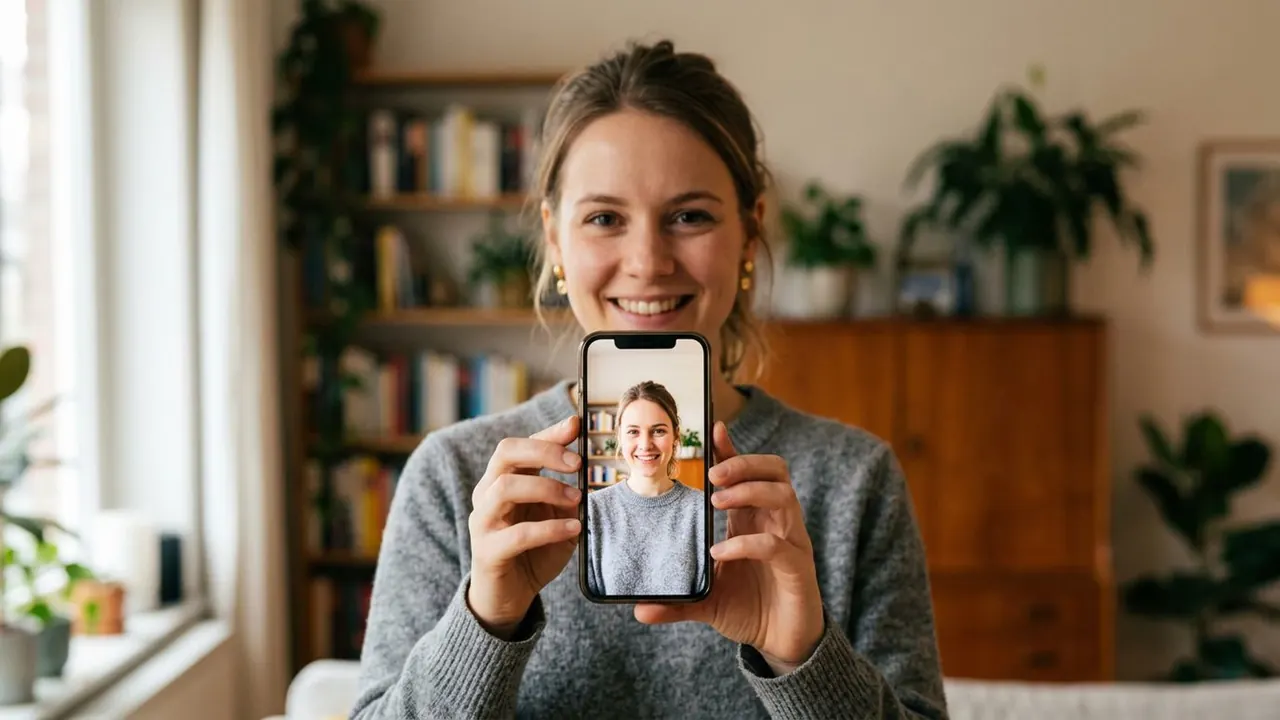
A phone screen shows a second version of the person holding it.
Opens a video model with the prompt in it. The price is on the page before you sign in.
What it is for
A person holds a phone and the screen shows a version of them that is doing something else. Two faces in one frame, one of them small and lit from inside.
The gap between the two is the whole idea. The screen version smiles when the real one does not, or looks back at the camera when the real one looks away.
How it works
The phone sits in the lower part of frame, angled so the screen is readable to the lens rather than to the person holding it. The real face stays above it and in focus.
Screen light is what sells it. A phone throws a cool, close source onto the hand and the underside of the jaw, and that spill is the difference between a screen and a rectangle pasted into the shot.
Keep the screen image small and slightly softer than the real face. A screen that is as sharp as the room reads as a second camera rather than a display.
When to use it
Use it for a split self, for a lie, and for social pieces where somebody is performing a version of themselves.
Drop it when both versions agree. If the screen shows the same expression at the same moment, the shot has become a mirror and says nothing.
Told apart from its neighbours
Duplication puts two full copies in the same physical space, both solid and both lit by the room. A selfie twin keeps one copy inside a screen, at a different scale and under different light.
The test is the light source. If the second version is lit by the room, it is duplication. If it is lit by the display it sits in, it is a selfie twin.
The prompt
Replace the blanks, keep the rest. Then run it on a video model.
<subject> holding a phone whose screen shows a different version of themselves, both faces visible at once, screen light on the hand
What goes wrong
The screen comes back showing the same face at the same angle, which is a mirror. Say the screen version differs, and say how: a different expression, a different direction of gaze, a different set of clothes.
The second failure is a dead screen. Ask for the display to light the hand and the chin, or the phone reads as a prop rather than as a second picture.
Leave out
matching reflection, single face
Watch for
Make the screen version differ. An identical copy just reads as a mirror.
Questions
Shoot it
Pay for the one run. No subscription, and the price is on the model page before you sign in.
Next to it in two images in one frame