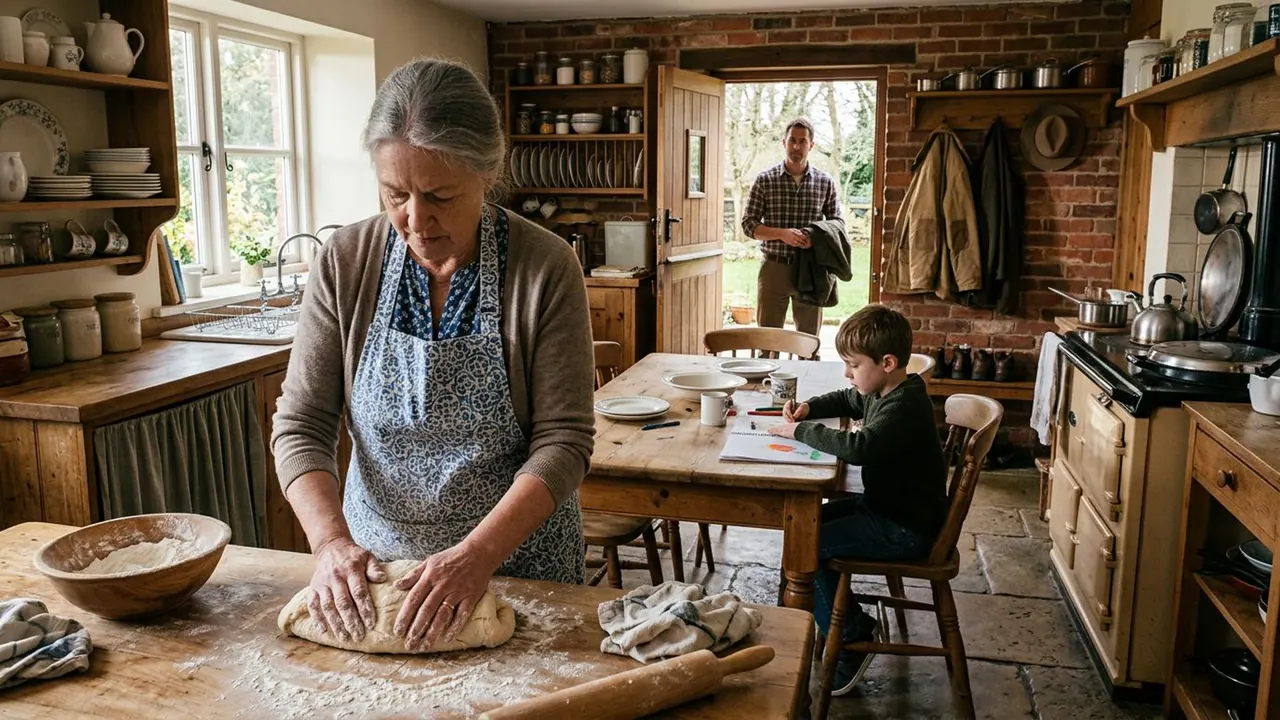
Rack Focus
- focus pull
- slow rack
- snap rack
- multiple rack
Focus pulls decisively from one subject to another.
Opens a video model with the prompt in it. The price is on the page before you sign in.

What it is for
The shot changes its mind. One subject is sharp, then the other is, and the audience follows the sharpness without being asked. It is a cut made inside a take.
The move also carries a relationship. Pulling from a face to what it is looking at joins the two in a way that cutting between them does not, because the audience never leaves the frame.
How it works
The focus ring travels from one marked distance to another while the camera rolls. On set a focus puller marks both positions and rehearses the throw, because a miss cannot be fixed afterwards.
The depth has to be shallow for it to read. A wide aperture and a longer lens keep the band thin, so the first subject visibly leaves sharpness as the second arrives.
Speed carries meaning. A snap rack lands in a few frames and reads as a shock. A slow rack takes a second or more and reads as a thought. Both are deliberate.
When to use it
Use it to hand attention from one thing to another without cutting, to reveal something that was already in frame, and to hold a reaction and its cause in one shot.
Avoid it when both subjects should be readable at once. If the audience needs to compare two faces, deep focus or a wider frame does the job instead.
Told apart from its neighbours
Shallow focus is the condition a rack focus needs. It is a fixed state: one plane sharp, held for the length of the shot. A rack focus moves that plane from one subject to another while the camera rolls.
The test is whether the sharp plane travels. If focus is thin but never moves, the shot is shallow focus and nothing more.
The prompt
Replace the blanks, keep the rest. Then run it on a video model.
rack focus from <subject A> to <subject B>, sharp plane moving between them, the first going soft as the second arrives
What goes wrong
The pull comes back as a slow drift, which reads as the lens hunting for focus rather than choosing. Ask for a decisive pull, and say how long it takes.
The other failure is a rack with nothing at either end. Name both subjects and their distances, so the model knows where the plane starts and where it stops.
Leave out
deep focus, static focus
Watch for
Ask for a decisive pull. A slow drift reads as the lens hunting.
Seen in
Peking Opera Blues (1986), The Graduate (1967)
Questions
Shoot it
Pay for the one run. No subscription, and the price is on the model page before you sign in.