Rembrandt Lighting
A small triangle of light sits on the cheek away from the key.
Opens a video model with the prompt in it. The price is on the page before you sign in.
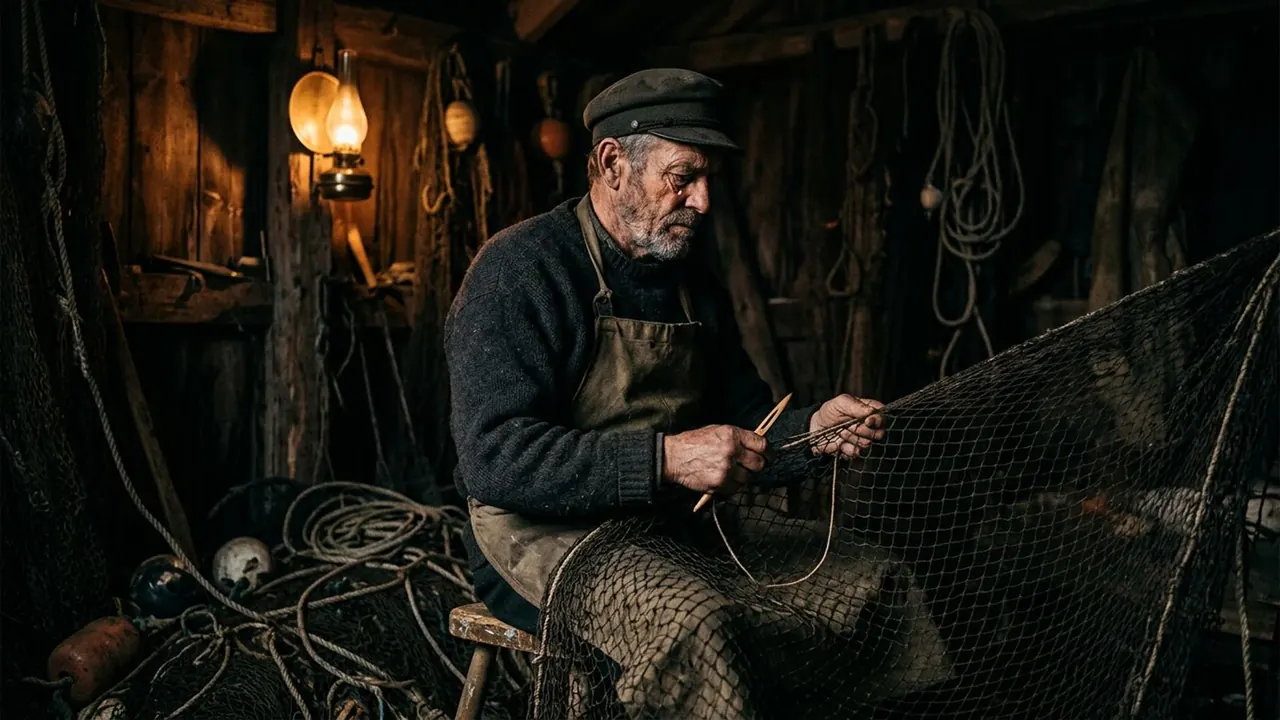
What it is for
A small triangle of light on the shadow cheek is enough to say that a face is solid and lit from somewhere real. It gives depth without giving up the dark side.
The pattern also reads as serious. It is the portrait light of painting, and an audience associates it with weight, thought and age rather than with glamour.
How it works
The key goes about forty five degrees off the lens and forty five degrees above eye level. The nose shadow reaches down and across, meets the shadow coming up from the cheek, and leaves one small lit triangle under the eye on the far side.
The triangle should be roughly as wide as the eye and no longer than the nose. Larger and the light has swung too far to the front. Gone entirely and the light has swung too far round, which puts you in split lighting.
The name comes from the Dutch painter, whose portraits carry the same patch of light on the shadow side of the face. The lighting was named after the paintings rather than the other way round.
When to use it
Use it for portraits that should feel considered, for interviews with weight, and for any character who benefits from looking older or more solid than a flat light would make them.
Avoid it in comedy and in bright commercial work. The shadow half reads as gravity, which is the wrong register for anything light.
Told apart from its neighbours
Loop lighting uses a key slightly off the lens, which makes a small shadow beside the nostril that curves down and stops before it reaches the cheek shadow. Rembrandt needs those two shadows to meet, which is what closes the triangle.
Look at whether the lit patch under the far eye is enclosed. Enclosed on all sides is Rembrandt. Open, with light running back to the jaw, is loop.
The prompt
Replace the blanks, keep the rest. Then run it on a video model.
Rembrandt lighting on <subject>, key at forty five degrees and above, small triangle of light on the far cheek, rest of that side in shadow
What goes wrong
The model returns a plain side light with no triangle, because the triangle is a small feature and the label alone does not produce it. Ask for the triangle by name and say where it sits.
The other failure is a triangle so large it covers half the cheek. Say it is small, roughly the width of the eye, and that the rest of that side stays in shadow.
Leave out
flat light, split light
Watch for
Ask for the triangle by name. It is the one thing that distinguishes it.
Questions
Shoot it
Pay for the one run. No subscription, and the price is on the model page before you sign in.
Next to it in light on a face