Chiaroscuro
- Selective darkness
- Clair-obscur
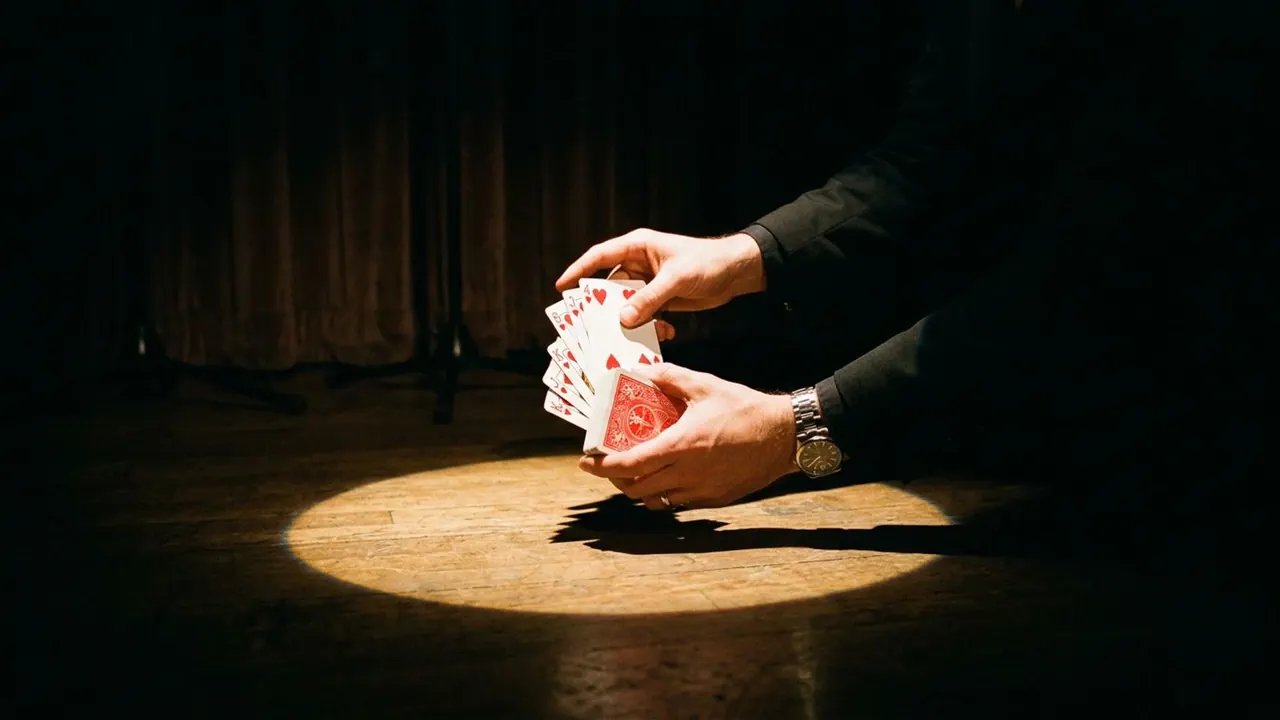
Strong light meets deep dark with very little in between.
Opens a video model with the prompt in it. The price is on the page before you sign in.
What it is for
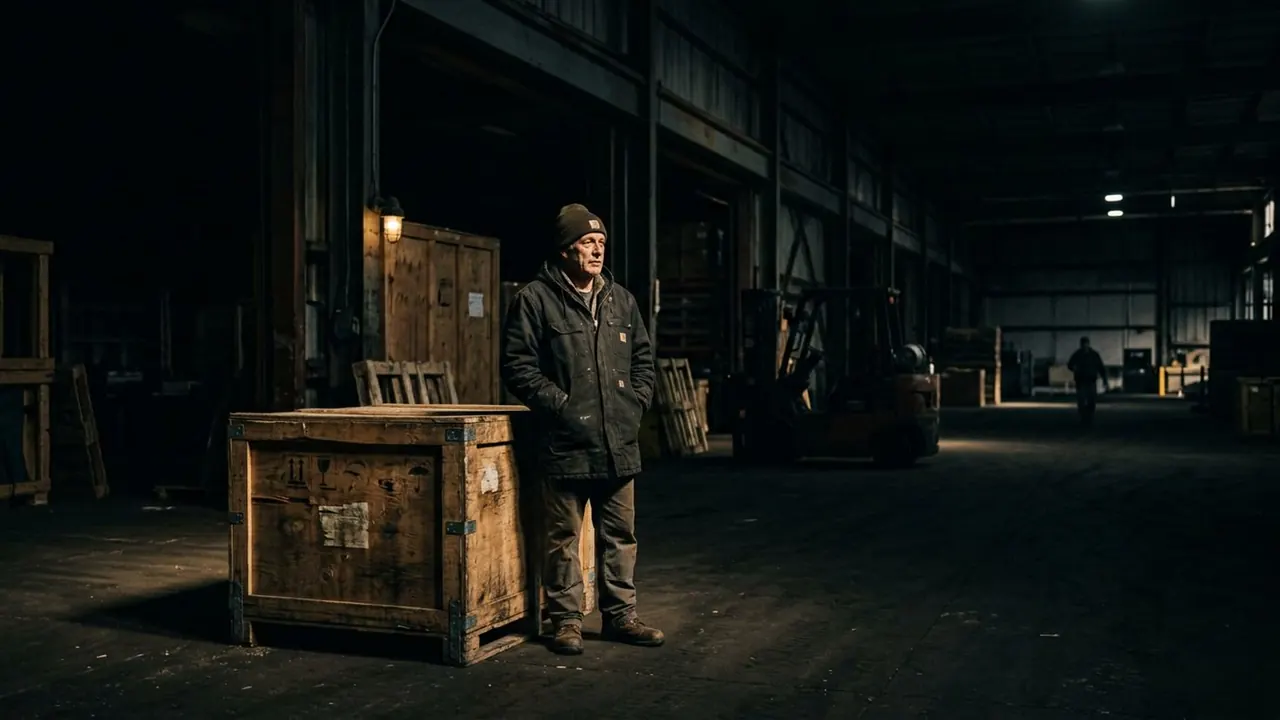
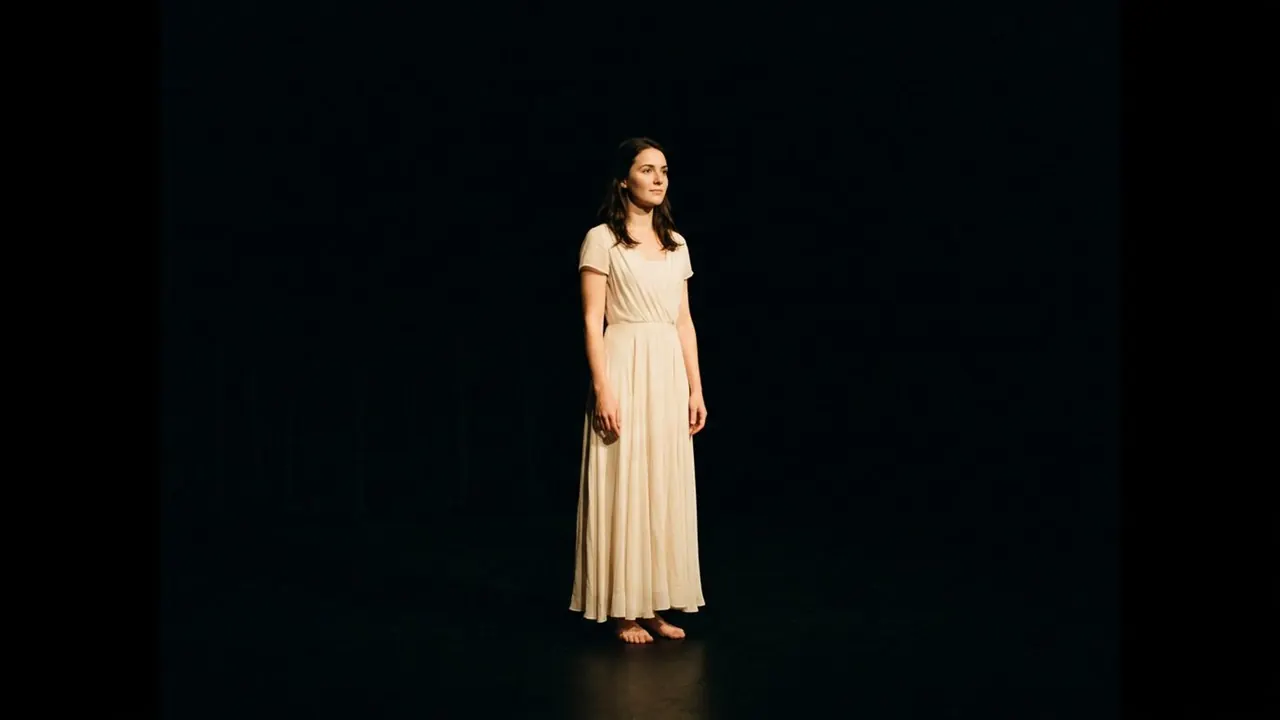
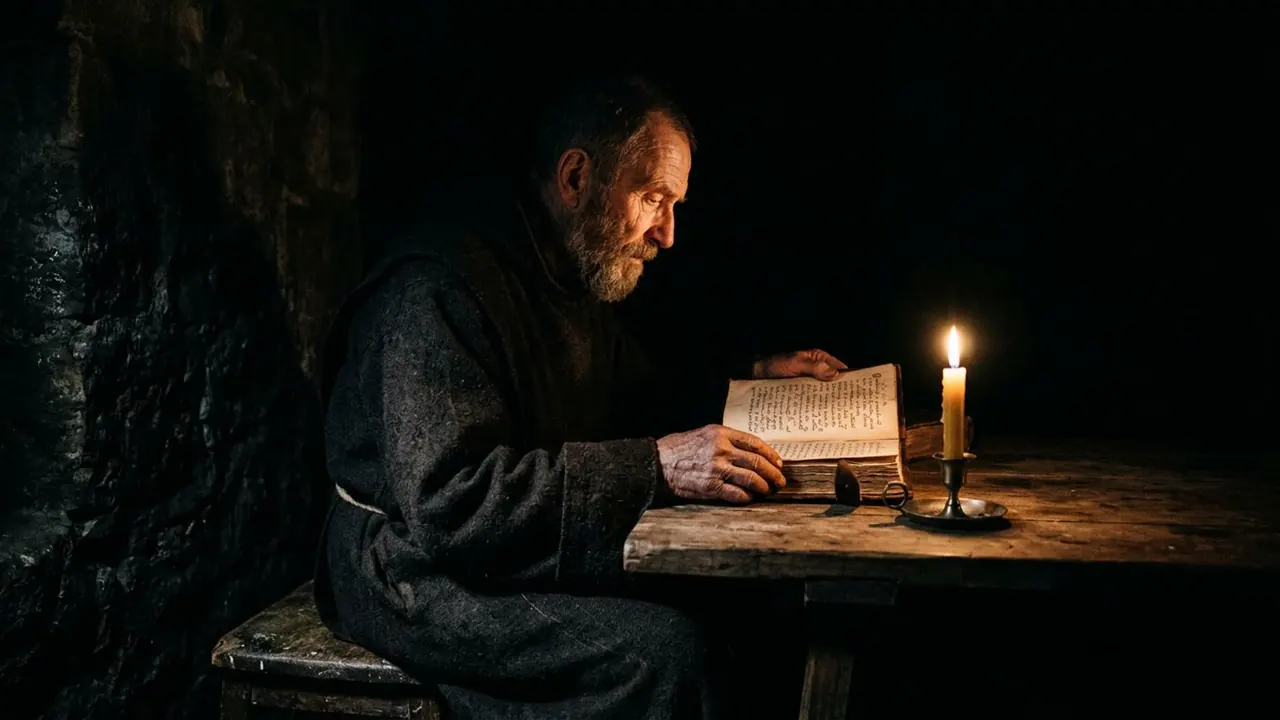
Light and dark meet with almost nothing between them, so the lit part of a face reads as carved. The idea comes out of painting, where one source against a deep ground gave a flat surface volume.
It also makes the audience work. Half a face is missing and a viewer fills it in, which is a different experience from being shown everything.
How it works
One strong source, no fill, and a dark surround. The midtone is what gets removed, so the highlight rolls into black over a short distance rather than down a long grey ramp.
A small source is usual, because a large one wraps light around the subject and puts the midtone back. Position matters more than power. The source sits to the side and a little above, so the shadow crosses the face instead of sitting under it.
Rembrandt lighting is one arrangement inside this family, with a small triangle of light on the shadow cheek. Chiaroscuro is the wider scheme and asks for no such patch.
When to use it
Use it on a face that is deciding something, on a confession, and on any scene where the audience should feel they are seeing part of a person.
Do not use it for exposition. A frame with no midtone gives up detail everywhere except the highlight, so information in the room goes missing with it.
Told apart from its neighbours
Rembrandt lighting is a specific placement, at roughly 45 degrees to the side and above, judged by the lit triangle under the shadow eye. Chiaroscuro names the contrast scheme and allows any placement that produces it.
Low key is the broader term again. Every chiaroscuro frame is low key. A low-key frame with a soft gradient across the cheek is not chiaroscuro.
On film
Gordon Willis lights The Godfather (1972) from overhead so the eyes fall into shadow, and Marlon Brando spends much of the film with half his face unavailable. Robert Krasker does the opposite job in The Third Man (1949), throwing hard light across wet Vienna streets so the shadows read as solid objects.
- The Godfather (1972)
- The Third Man (1949)
The prompt
Replace the blanks, keep the rest. Then run it on a video model.
chiaroscuro lighting on <subject>, one strong source, deep black shadow, almost no midtone, sculpted form
What goes wrong
Fill light creeps in and the effect goes. Ban the fill by name, and ask for no light on the shadow side at all.
The second failure is a grey shadow instead of a black one. Say there is almost no midtone, and that the dark side falls to black.
Leave out
fill light, even exposure
Watch for
Ban the fill. A fill light is exactly what removes the effect.
Questions
Shoot it
Pay for the one run. No subscription, and the price is on the model page before you sign in.
Next to it in how much light, and how hard