High-Key Lighting
- Low-contrast luminous lighting
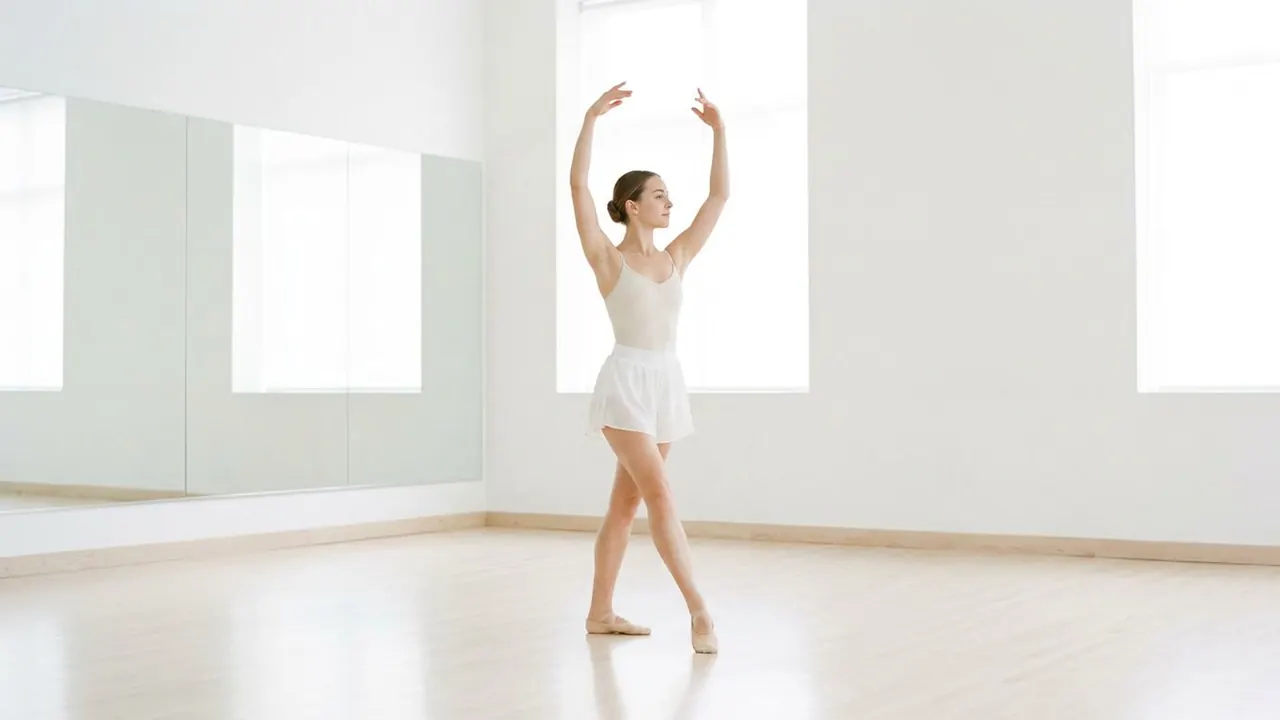
The whole frame is bright and the shadows are nearly gone.
Opens a video model with the prompt in it. The price is on the page before you sign in.
What it is for
High key takes the shadow out rather than piling light in. The whole frame sits near the top of the exposure range, so nothing in it is hiding and nothing in it is waiting.
Comedy, musicals and most advertising live here for that reason. A face with no shadow under it reads as open, and the audience relaxes without being told to.
How it works
The key and the fill sit close in level, often within a stop of each other, so the shadow side of a face is only slightly darker than the lit side. A ratio near 2:1 is high key. A ratio near 8:1 is something else.
The background does as much work as the face. Walls, floors and costume are chosen light, and they are lit on their own so they do not drop into grey behind the subject.
Sources are large and close, which softens whatever shadow edges remain. A white ceiling bounced back down does the same job in a room you cannot rig.
When to use it
Use it for comedy, for musicals, for product work, and for anything that has to feel safe. It also survives a small screen, because there are no dark areas to crush on a phone.
Avoid it when the scene carries a threat. High key drains the tension out of a horror beat, and an audience reads the frame before it reads the dialogue.
Told apart from its neighbours
Low key is the opposite decision. Most of a low-key frame is dark, a small part is lit, and the gap between key and fill is wide.
The check is the background. A bright subject in front of a dark wall is soft light on a subject. High key needs the whole frame up.
On film
Greta Gerwig and Rodrigo Prieto light Barbieland in Barbie (2023) so evenly that almost nothing casts a shadow, which is what makes the place read as a toy rather than a location. Jacques Demy holds The Umbrellas of Cherbourg (1964) at a bright level throughout, so the painted walls and the costumes keep their colour with very little shadow crossing them.
- The Umbrellas of Cherbourg (1964)
- Barbie (2023)
The prompt
Replace the blanks, keep the rest. Then run it on a video model.
high key lighting on <subject>, bright even exposure throughout, shadows almost eliminated, light background
What goes wrong
The background comes back dark and the result is an ordinary soft portrait. Say the background is bright and light coloured, in the same sentence as the subject.
The other failure is a grey, washed image. High key is bright rather than faded, so ask for clean exposure and for the whites to hold.
Leave out
deep shadow, contrast
Watch for
The background must be bright too. A dark background makes it ordinary soft light.
Questions
Shoot it
Pay for the one run. No subscription, and the price is on the model page before you sign in.
Next to it in how much light, and how hard