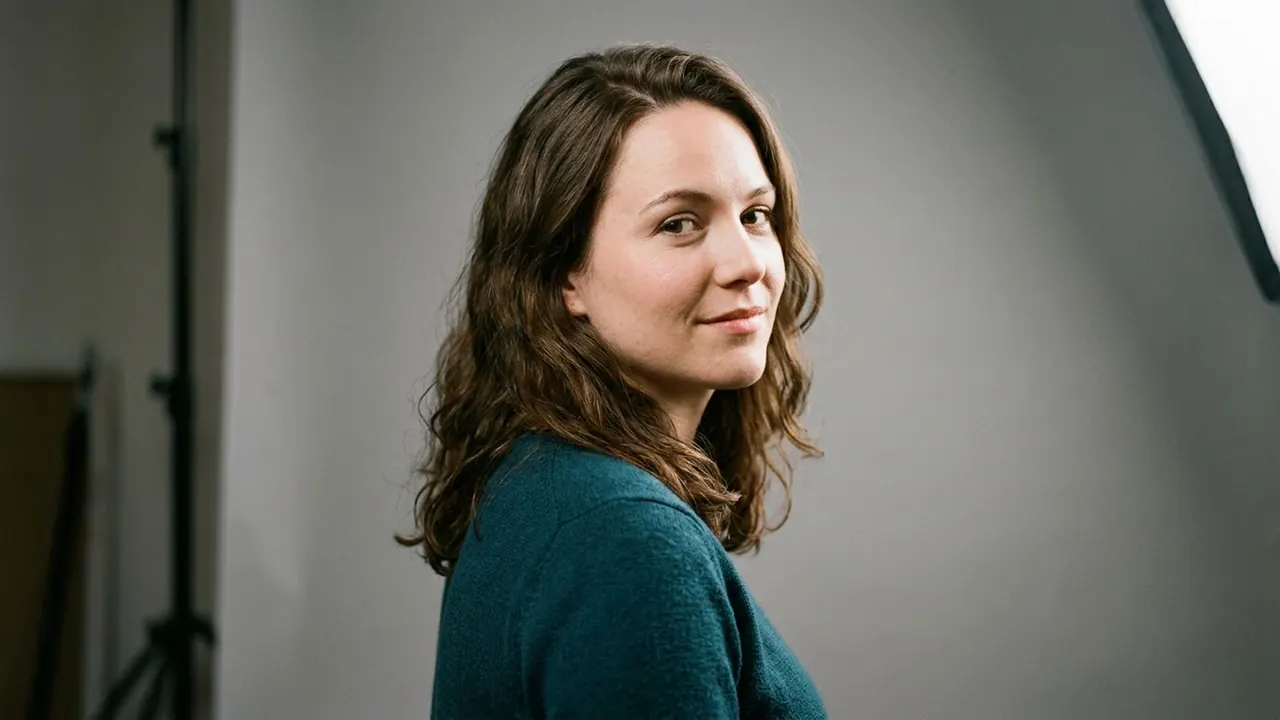
Butterfly Lighting
- Paramount lighting
The light sits high and in front, leaving a small shadow under the nose.
Opens a video model with the prompt in it. The price is on the page before you sign in.

What it is for
A high frontal key lights both sides of the face equally and puts a small shadow under the nose shaped like a butterfly. Cheekbones come forward, the jaw line tightens, and skin reads smooth.
It is the glamour pattern. Hollywood portrait departments used it through the 1930s, which is where the second name, Paramount lighting, comes from.
How it works
The key goes directly in front of the subject and high, tilted down at roughly forty five degrees. Because it is on the lens axis, both sides of the face get the same light and the shadows fall straight down.
The nose shadow is the gauge. A small symmetrical shadow that stops above the lip is correct. A long one running to the mouth means the light has dropped too low, and none at all means it has come down to eye level.
A reflector or a white card under the chin is usual. It fills the shadow beneath the jaw and the eye sockets, which is what keeps the pattern flattering rather than skeletal.
When to use it
Use it for beauty, fashion, portraits of faces with strong bone structure, and any shot where the subject should look their best.
Skip it for character work and for anyone with deep set eyes, because a high front key drops the sockets into shadow and adds years rather than removing them.
Told apart from its neighbours
Loop lighting moves the key off the lens axis to one side, which throws the nose shadow diagonally and leaves one side of the face darker. Butterfly keeps the key dead in front, so the face is lit evenly and the shadow falls straight down.
The check is symmetry. A shadow hanging straight below the nose with both cheeks equally lit is butterfly. A shadow angled toward one corner of the mouth is loop.
The prompt
Replace the blanks, keep the rest. Then run it on a video model.
butterfly lighting on <subject>, key high and directly in front, small symmetrical shadow under the nose, cheekbones defined
What goes wrong
Models return flat front lighting with no nose shadow at all, because they read the request as soft and even. Ask for the key high and directly in front, and name the small symmetrical shadow under the nose.
The second failure is the shadow running all the way to the lip, which means the height is wrong. Say the shadow stays small and stops above the mouth.
Leave out
side light, low light
Watch for
The nose shadow must stay small. A long one means the light dropped too low.
Questions
Shoot it
Pay for the one run. No subscription, and the price is on the model page before you sign in.
Next to it in light on a face