Candlelight
- Low-light period interior
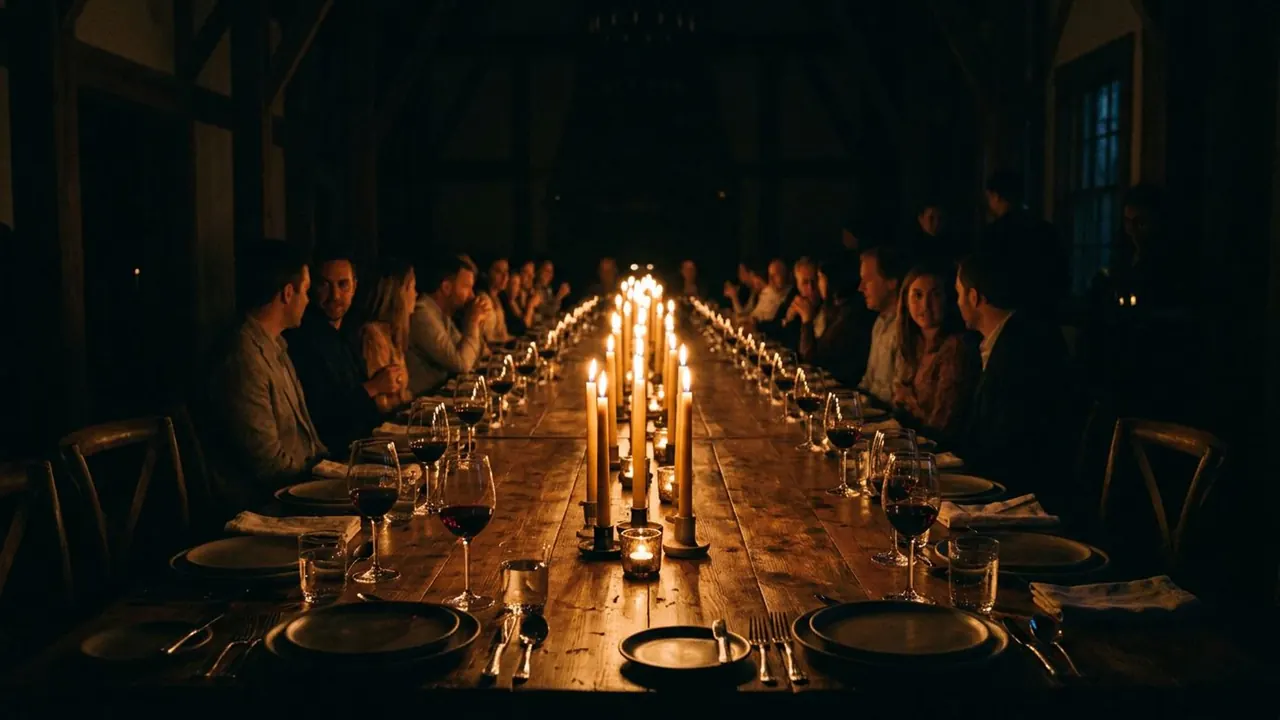
Small warm flames light the scene from close range and flicker.
Opens a video model with the prompt in it. The price is on the page before you sign in.
What it is for
A flame is a small warm source that has to sit close to be useful, so the face is lit from near at hand and the room behind it disappears. The scene shrinks to whatever the candle can reach.
It also moves. A flame wanders and the light on a face wanders with it, which keeps a still frame alive without any camera movement at all.
How it works
A candle puts out roughly one candela, so the falloff is brutal. Double the distance and you have lost two stops, which is why the wall two metres away records as black.
Colour sits around 1900K, well warmer than a tungsten bulb, so faces go amber and anything blue in the room dies. Several candles grouped together read as one larger softer source while keeping the same colour.
The flame is usually below eye level, so the light comes from underneath. That is part of the look, and it is also why candlelight shades toward the sinister without any other help.
When to use it
Use it for period interiors, for intimacy, for vigils and for anything that should feel older than electricity.
Avoid it when the audience needs to see the room. Candlelight is a scene about two faces and a table, whatever else was built.
Told apart from its neighbours
Underlighting is a placement, a source below the face pointing up, and it can be any colour or hardness. Candlelight is a named source that happens to sit low, warm and small.
The tell is falloff and colour. Underlighting can be even across a room. Candlelight cannot reach that far, and it is always warm.
On film
Stanley Kubrick shot the interiors of Barry Lyndon (1975) by candlelight using Zeiss Planar 50mm lenses at f/0.7, made for NASA, because no normal lens could gather enough light. The scenes hold a handful of faces around a table and lose the rest of the room to black.
- Barry Lyndon (1975)
The prompt
Replace the blanks, keep the rest. Then run it on a video model.
<subject> lit by candlelight, small warm flames close to the face, steep falloff into darkness, gentle flicker
What goes wrong
The light reaches the walls and the effect goes with it. Say the falloff is steep and that the background sits in darkness a short distance behind the subject.
The second failure is a still, even glow. Ask for a gentle flicker and for the source to sit low and close, and ban electric light and even exposure.
Leave out
electric light, even exposure
Watch for
Keep the falloff steep. Candlelight that reaches the walls is not candlelight.
Questions
Shoot it
Pay for the one run. No subscription, and the price is on the model page before you sign in.
Next to it in where the light comes from