Noir
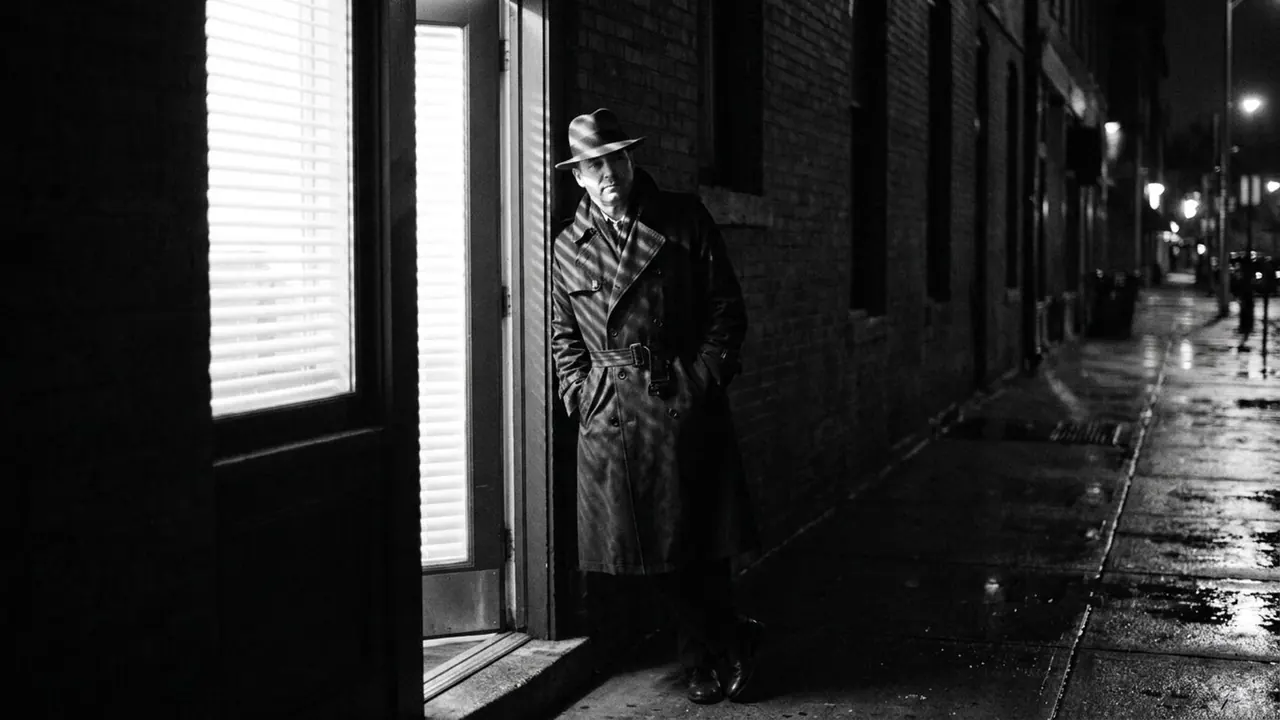
Black and white, hard shadow, wet streets and blind slats.
Opens a video model with the prompt in it. The price is on the page before you sign in.
What it is for
Light is rationed and shadow is everywhere. A face gets one hard source and the rest of the frame keeps what it can, which makes every scene feel like information is being withheld.
The pattern on the wall carries as much as the actor does. Blind slats, banister rails and window frames all become part of the composition, so the architecture is doing half the acting.
How it works
One small hard source does the work. Small sources cut sharp shadow edges, and a single one leaves the unlit side of a face with nothing filling it, so the blacks go to true black.
The slats come from a bright source behind a venetian blind, throwing hard parallel bands across the wall and across whoever is standing at it. Any grille or railing gives the same effect.
Wet streets are practical as well as atmospheric. Water turns a road into a mirror for street lamps and signs, which is how a night exterior gets enough light in frame to be readable.
Black and white removes the option of using colour to separate planes, so separation has to come from tone. That is why noir frames are built on strong contrast rather than on hue.
When to use it
Use it for crime, betrayal, night interiors and anyone withholding something. It suits low angles and cluttered foregrounds.
Skip it for daylight and for scenes that are meant to be plain. Flat light leaves a grey photograph, and the style has no other register to fall back on.
Told apart from its neighbours
Neo-Noir keeps the shadow scheme and brings colour back. Neon stands in for the old hard key, the streets stay wet, and the palette carries saturated hues.
The check is colour. Black and white with hard shadow means Noir. The same shadow scheme with saturated neon in it means Neo-Noir.
On film
Double Indemnity (1944) runs the pattern in a domestic interior, with blind slats falling across a living room while two people arrange a murder. The Third Man (1949) moves it outdoors, using wet cobbles and a single high source to make a familiar city unreadable at night.
- Double Indemnity (1944)
- The Third Man (1949)
The prompt
Replace the blanks, keep the rest. Then run it on a video model.
<subject> in black and white, hard single source, blind slat shadows across the wall, wet cobbled street, deep blacks
What goes wrong
Flat even light comes back and all you have is a grey photograph, which is the trap the entry warns about. Ask for a hard single source with deep black shadow and name the slat pattern.
The other failure is colour surviving in the grade. Ban colour explicitly, and ban soft even light, so the contrast has somewhere to go.
Leave out
colour, soft even light
Watch for
The shadow pattern does the work. Flat light leaves only a grey photograph.
Questions
Shoot it
Pay for the one run. No subscription, and the price is on the model page before you sign in.
Next to it in colour pushed hard