Reflections
- Mirror dialogue
- One-way-glass staging
A reflective surface gives a second version of the subject.
Opens a video model with the prompt in it. The price is on the page before you sign in.
What it is for
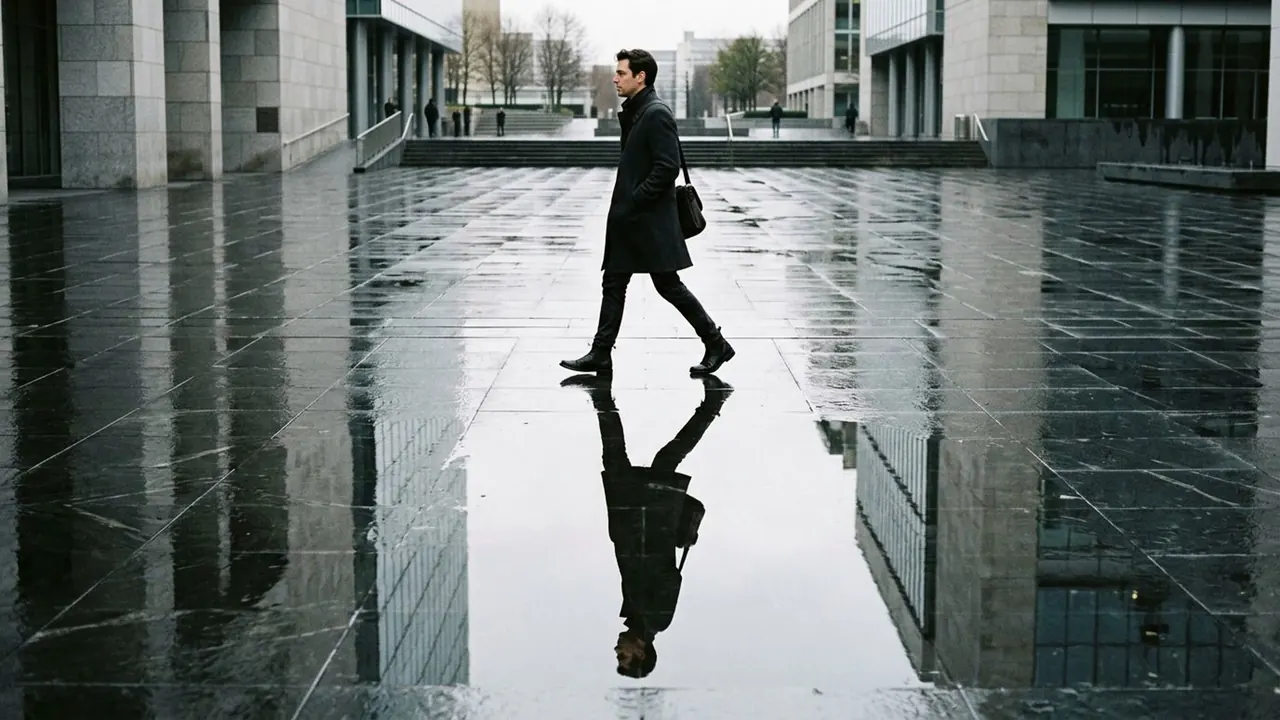
A reflective surface returns a second version of the subject, so one frame holds a person and their double. The audience gets two views of somebody who is only standing there once.
It also lets a shot show what is behind the camera. A mirror, a puddle or a window can put an offscreen space into the picture without moving the lens.
How it works
Name the surface. Water breaks the reflection into fragments, glass returns a faint ghost over what is behind it, and a mirror returns a near copy.
Decide which image is sharp. Focusing on the reflection puts the real subject soft, and focusing on the subject makes the reflection an impression. Both are usable and they say different things.
Keep the angle honest. A reflection lands at the same angle it arrives, so a camera looking straight into a mirror sees itself, and a camera slightly off axis sees the room instead.
When to use it
Use it for a divided character, for surveillance, and for any moment where somebody looks at themselves and the audience should see both the looking and the looked at.
Leave it alone in a straightforward scene. A reflection always suggests a second self, which is a large idea to bring into a small moment.
Told apart from its neighbours
A frame within a frame surrounds the subject with something in the scene. A reflection duplicates the subject instead. A mirror can do both at once, and they are separate effects.
A window shot looks through glass at a subject. A reflection shot looks at what the glass gives back.
On film
Orson Welles ends The Lady from Shanghai (1947) in a hall of mirrors, where the characters are surrounded by copies and nobody can tell which body to shoot at. Wim Wenders builds the long peep-show scene of Paris, Texas (1984) on one-way glass, so Travis sees Jane clearly and sees his own reflection laid over her at the same time.
- Paris, Texas (1984)
- The Lady from Shanghai (1947)
- Contact (1997)
The prompt
Replace the blanks, keep the rest. Then run it on a video model.
<subject> with their reflection in <surface>, both visible in the same frame, reflection sharp enough to read
What goes wrong
The model returns a reflection that is too faint to read, or drops it entirely. Say the reflection is sharp enough to read and name what it shows.
The second failure is a mirror image that does not match the subject. Describe the subject once and say the reflection shows the same person from the other side.
Leave out
matte surface, single image
Watch for
Name the surface. Water, glass and polished floor reflect very differently.
Questions
Shoot it
Pay for the one run. No subscription, and the price is on the model page before you sign in.