Negative Space
- Unbalanced framing
- Short-sided composition
Emptiness takes most of the frame and the subject holds a corner of it.
Opens a video model with the prompt in it. The price is on the page before you sign in.
What it is for
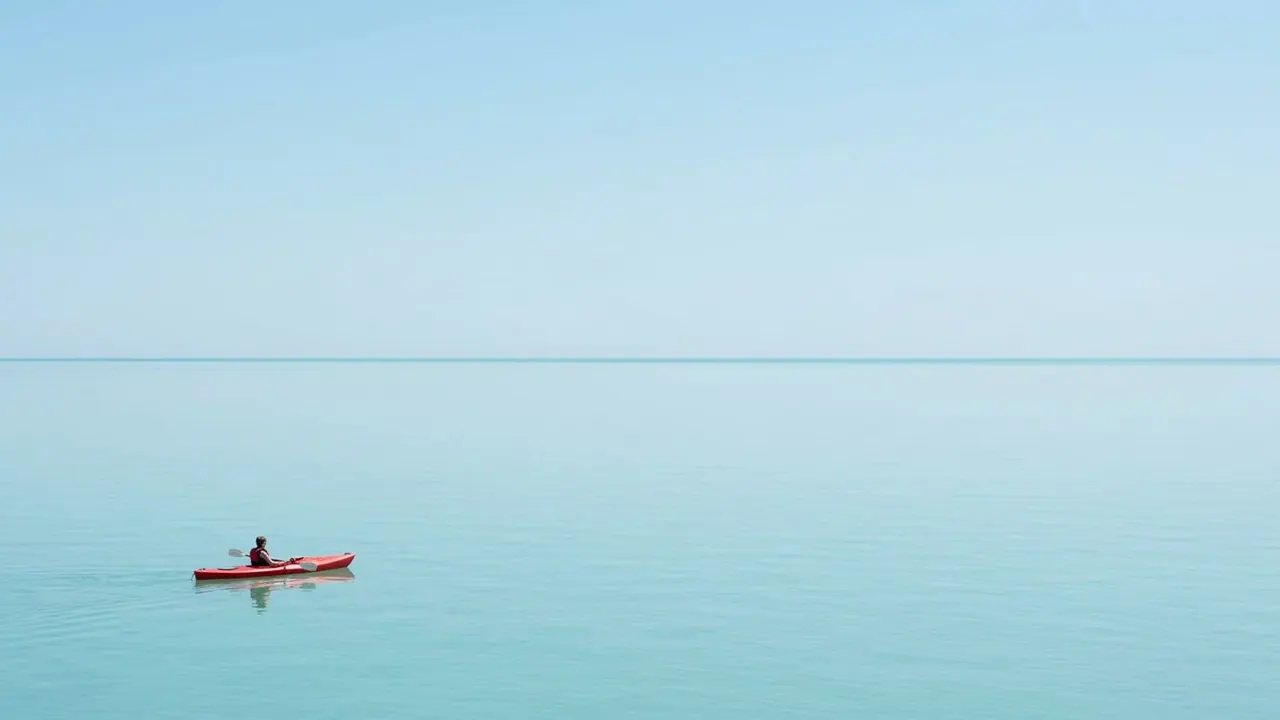
Most of the frame holds nothing and the subject holds a corner of it. The emptiness is the measure the audience reads the subject against.
It is the fastest way to make a person look alone. The same face in a filled frame reads as busy, and in an empty one it reads as isolated, with no change to the performance.
How it works
Give the subject a small share of the frame, often under a fifth, and let one continuous surface take the rest: a wall, a sky, water, fog, shadow.
That surface has to stay even. A texture, a horizon or a second object turns the empty area into a background, and the subject stops being alone in it.
Place the subject near an edge rather than in the middle. Emptiness on all sides reads as a mistake, and emptiness on one side reads as a decision.
When to use it
Use it for isolation, for loss, for scale, and for any title or graphic that needs somewhere to sit.
Drop it when the surroundings carry information. An empty frame throws away the context a scene may have spent time establishing.
Told apart from its neighbours
A void is a large emptiness that reads as a presence in its own right, often something the audience is meant to worry about. Negative space is quieter and its job is to isolate the subject.
A clean frame removes obstruction and the subject can still fill it. Negative space needs the subject to be small.
On film
Pawel Pawlikowski frames Ida (2013) with the faces pushed to the bottom of a 4:3 picture and a large empty area above them. The composition holds shot after shot, so the emptiness stops reading as a choice about one frame and starts reading as the condition the characters live in.
- Ida (2013)
- Mr. Turner (2014)
The prompt
Replace the blanks, keep the rest. Then run it on a video model.
<subject> small against a large empty field, negative space dominating the frame, subject isolated in one area
What goes wrong
Models fill space. You have to state that the empty area stays empty, or a helpful cloud, lamp or second figure arrives to balance the frame.
The second failure is a subject enlarged to a comfortable size. Say what fraction of the frame the subject takes, such as a small figure in the lower left corner.
Leave out
filled frame, busy background
Watch for
Say the empty area stays empty. Models fill space unless told not to.
Questions
Shoot it
Pay for the one run. No subscription, and the price is on the model page before you sign in.