Ukiyo-e Indigo
- Edo woodblock palette
- aizuri-e
- Japanese print colours
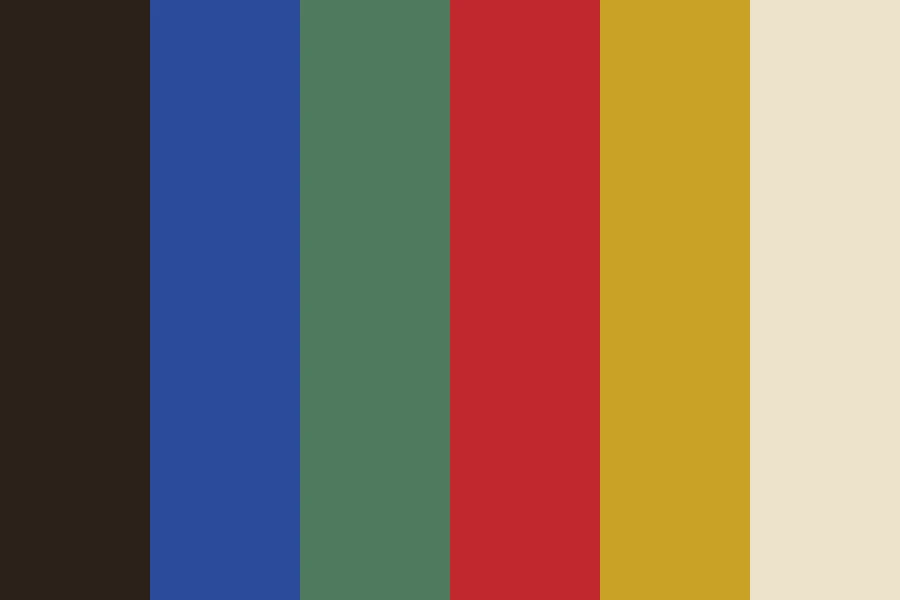
Two blues carrying the picture, with one earth red and a dull mustard as accents.
Opens an image model with the palette in the prompt. The same words work on a video model.
- #12304F
- #3E6FA0
- #7D8C6A
- #C4553C
- #D9A441
- #F2EADB
What it is for
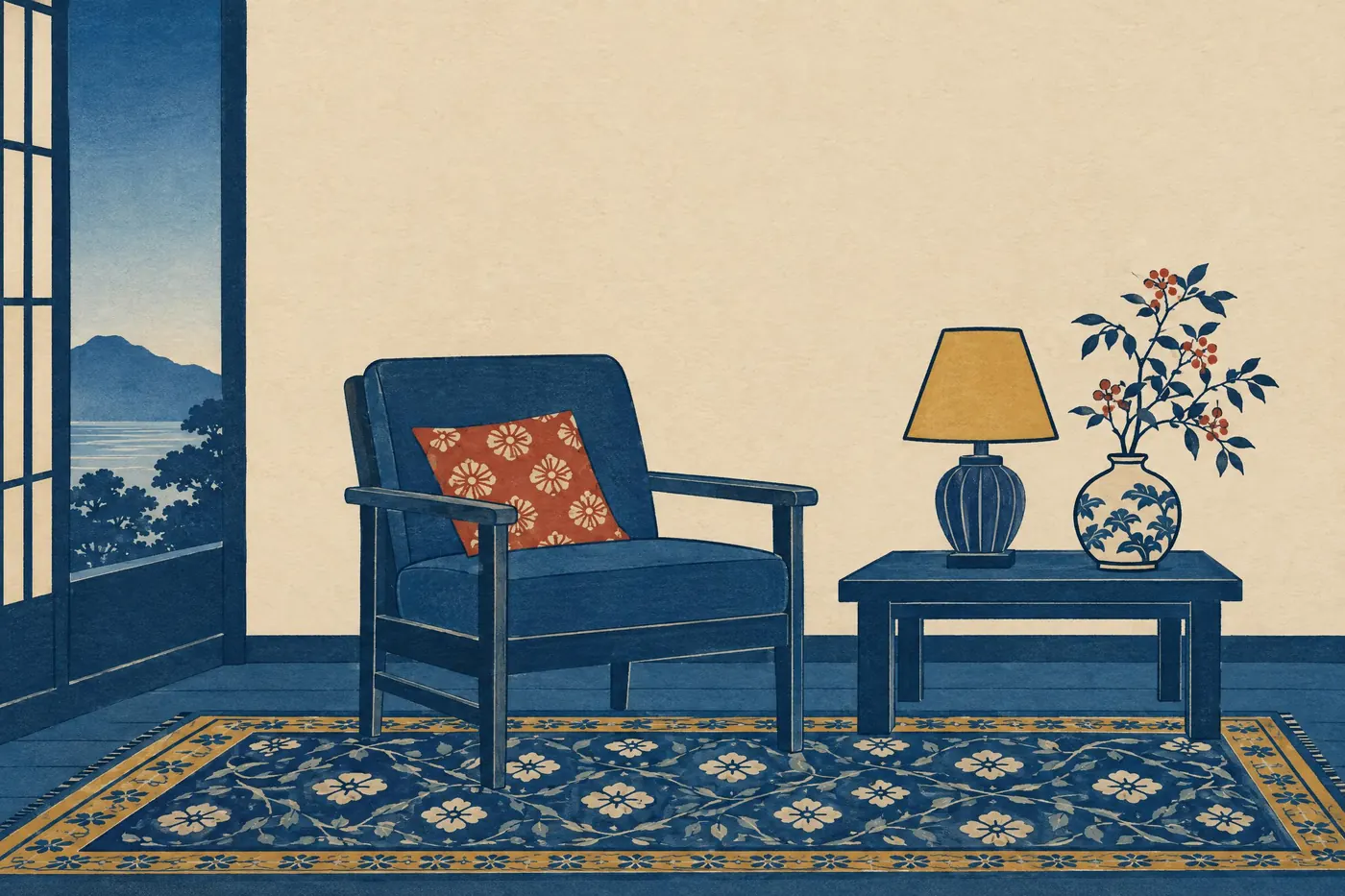
A woodblock print is one flat colour per block, so the palette is a list of blocks rather than a range of tones. That is why the colours read as deliberate: somebody carved a separate board for each one.
Indigo does most of the work because it was the one dye that was cheap and lightfast. Prussian blue arrived from Europe around 1830 and gave printers a second blue, which is the moment the famous waves and skies became possible.
How it works
Build the picture out of blue. Deep indigo for the darks and Prussian blue for the middle, with everything else in small amounts.
Keep the paper warm. Mulberry paper is a soft off-white with a yellow bias, and a clean white ground makes the blues look cold and modern.
Allow exactly one gradient, in the sky or the water. Everything else is a flat area with a hard edge.
When to use it
Use it for landscape, weather, water and anything that should read as a print rather than a photograph.
Leave it alone when the subject needs modelled light. There is no shading in this palette to describe a round surface with.
Told apart from its neighbours
A medieval manuscript is also flat and unmixed, but it leans on red and gold against cream. This leans on blue against warm paper.
An analogous scheme would keep every hue next to its neighbour. Here the earth red sits opposite the blues, which is what stops the print going flat.
Where it was used
Hokusai's Great Wave is a Prussian blue print with almost nothing else in it, and Hiroshige built a whole travel series on the same two blues. European painters bought the prints as wrapping paper and took the flat colour straight into their own work.
- Hokusai
- Hiroshige
- Edo period woodblock prints
The prompt
Run it as it stands, or drop the colour clause into a prompt you already have. It works in an image prompt and in a video prompt.
<subject>, ukiyo-e woodblock palette of deep indigo and Prussian blue with one earth red and a dull mustard, printed flat on warm off-white paper, mid saturation throughout, no shading and no blending except a single soft gradient in the sky
What goes wrong
The colours come back saturated and modern. Say mid saturation on warm off-white paper, printed flat.
The picture arrives shaded like a painting. Say flat areas with hard edges and one soft gradient in the sky only.
Leave out
bright modern colours, shading, purple, photographic depth
Watch for
The blues carry the picture and everything else is an accent. Give the red a very small part of the frame.
Questions
Paint it
Pay for the one run. No subscription, and the price is on the model page before you sign in.