Patent Drawing
- patent illustration
- figure drawing patent
- USPTO drawing
Ink line with hatched shading, every part numbered, and no colour at all.
Opens an image model with the prompt in it. The price is on the page before you sign in.
What it is for
A patent has to describe an invention in a way a stranger could rebuild, using ink that reproduces on any press. That forces hatching instead of tone and numbers instead of captions, and the result reads as serious, old and slightly obsessive.
How it works
Black ink on white. All shading is hatching: parallel lines close together for dark, further apart for light, crossed where darker still. Each part carries a number on a thin leader line. A figure label sits below. There is no background, no shadow and no colour.
When to use it
Use it for anything that should look inventive, documented or archival. Avoid it where warmth matters, because hatched ink on white is a cold surface by design.
Told apart from its neighbours
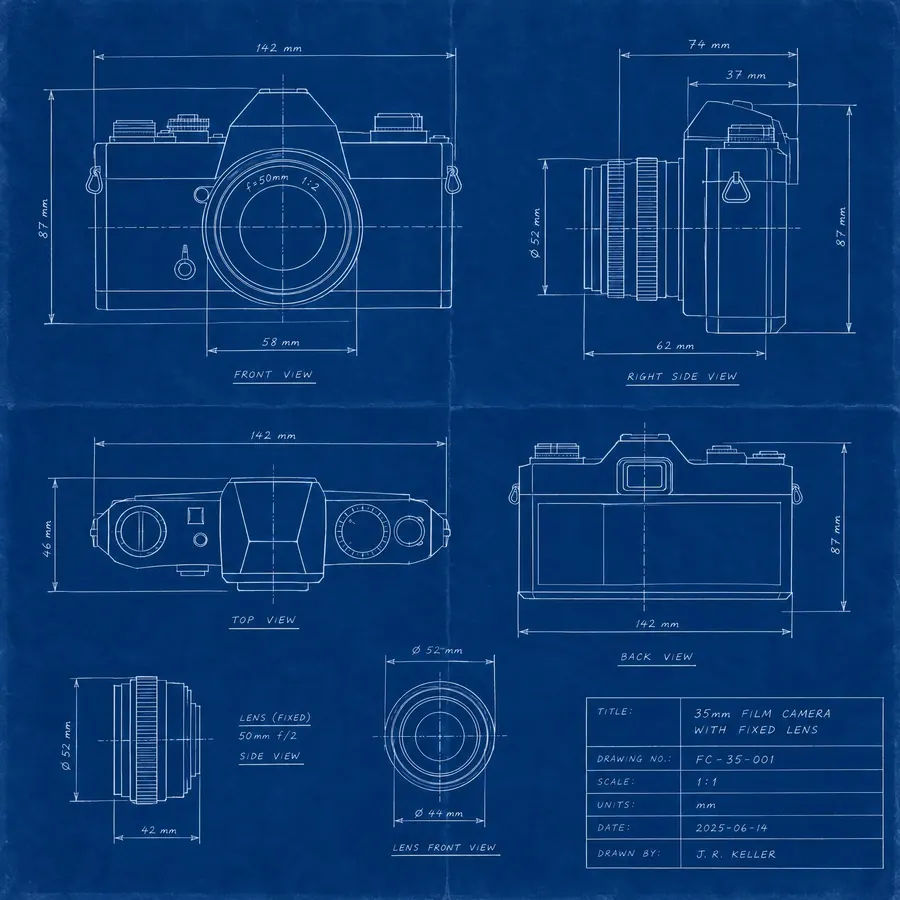
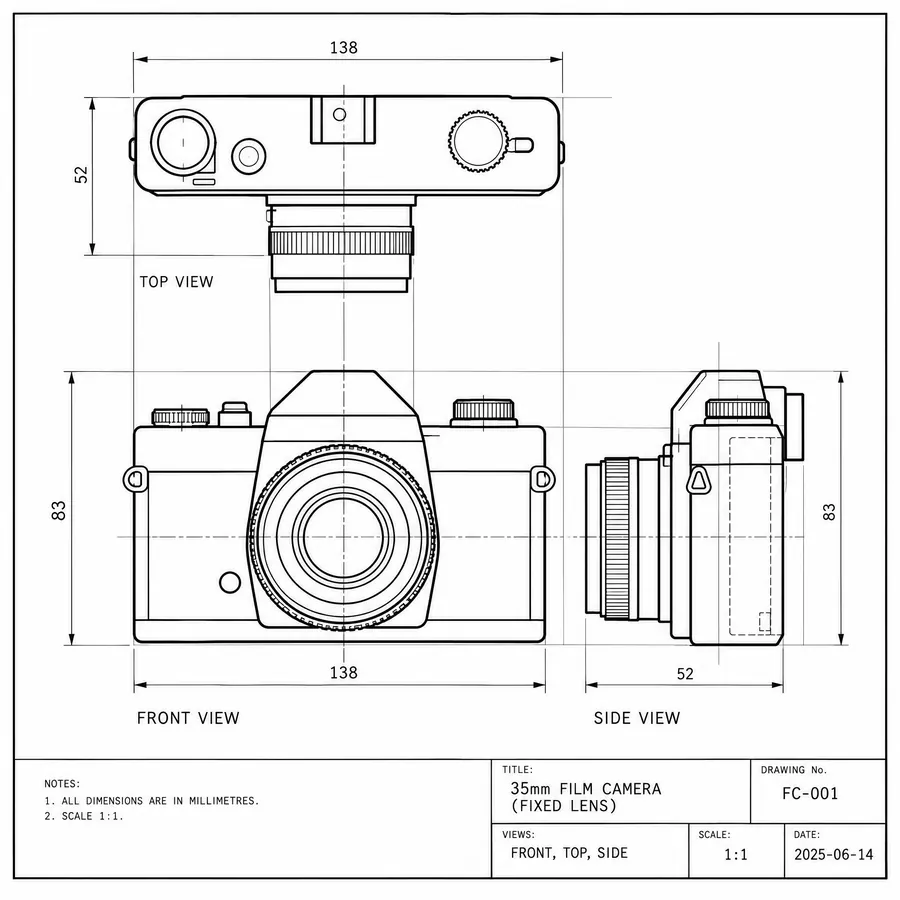
Orthographic Projection carries dimensions rather than part numbers and usually shows several flat views. Cutaway opens the object up. Xerographic Line is rough on purpose where this is deliberately stiff.
Where it is used
It carries a poster, a packaging panel, an editorial illustration and any picture that wants to look like evidence.
- Patent offices worldwide
- Editorial illustration, packaging and posters
The prompt
Replace the blanks with your own character, keep the rest. Then run it on an image model.
<character> drawn as a patent illustration, black ink line on white paper with no colour anywhere, shading built only from fine parallel hatching and cross hatching rather than from tone, every notable part given a small number with a thin leader line pointing at it, a figure label such as FIG. 1 set beneath the drawing, a three quarter view of the whole subject, no background and no ground shadow, slightly stiff and mechanical linework
What goes wrong
A neat ink drawing comes back with grey shading. Ask for shading built only from hatching, and add the numbered parts with leader lines and a FIG. label.
Leave out
colour, grey wash, photographic shading, a background, a ground shadow, soft edges
Watch for
The numbers and the leader lines are the style. Without them it is a pen drawing, and with them it is a legal document, which is the whole difference.
Questions
Draw it
Pay for the one run. No subscription, and the price is on the model page before you sign in.