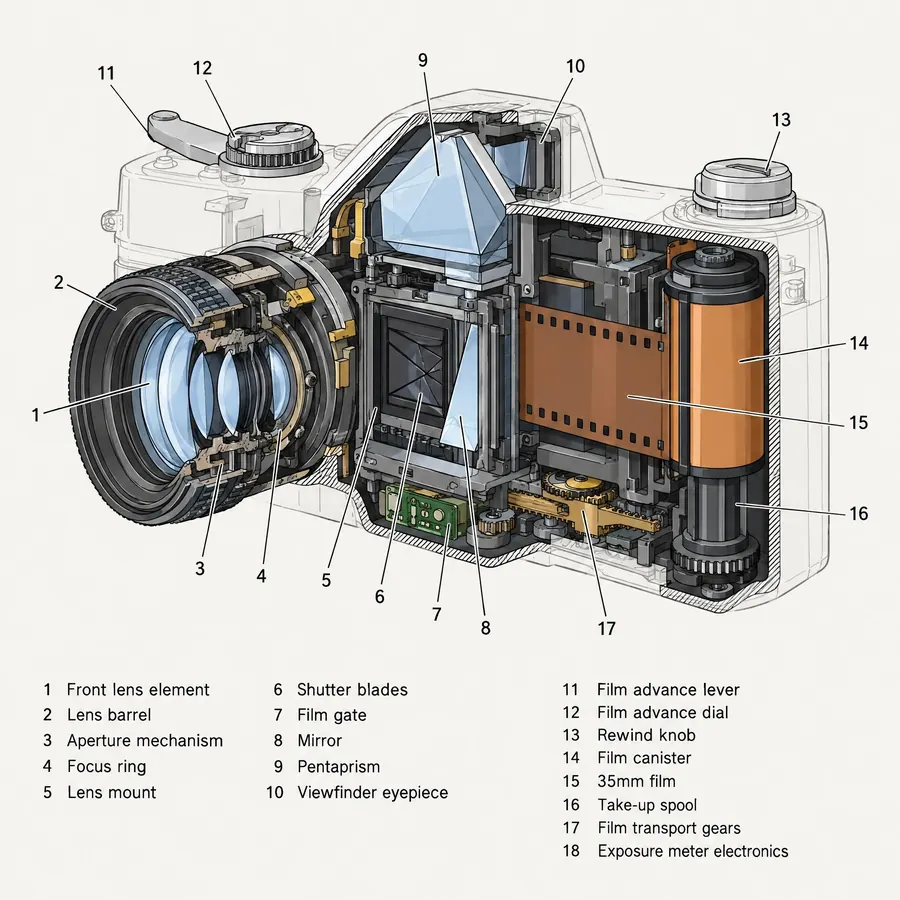
Exploded Diagram
- exploded view drawing
- assembly diagram
- parts diagram
Every part pulled apart along one axis, with dashed lines showing where each returns.
Opens an image model with the prompt in it. The price is on the page before you sign in.
What it is for
Pulling a thing apart along one line shows how it goes together and in what order, which a photograph of the finished object can never do. The dashed lines are the sentence: this goes here, then that.
How it works
Parts separate along a single straight axis, in the order they assemble, with even gaps and a shared centre line. Dashed lines connect each part to its seat. The drawing is clean line with flat colour and no shading. Numbers on leader lines identify the parts.
When to use it
Use it for instructions, service pages and any product story about construction. Avoid it for something with no separable parts, where there is nothing to explode.
Told apart from its neighbours
Exploded view in the photography catalogue is the same idea photographed rather than drawn, with real light and real materials. Cutaway keeps the object whole and opens one side. Orthographic Projection keeps it assembled.
- Exploded view
- Cutaway
- Orthographic Projection
Where it is used
It suits an instruction sheet, a product page, an infographic and any picture whose subject is how something is made.
- Assembly instructions and service manuals
- Product marketing and editorial illustration
The prompt
Replace the blanks with your own character, keep the rest. Then run it on an image model.
<character> drawn as an exploded diagram, every separate part pulled apart along one straight axis in the order it assembles, thin dashed lines running between each part and the place it belongs, even gaps between the parts and everything aligned on a common centre line, clean black line drawing with light flat colour and no shading, each part given a small number on a leader line, a plain white background with no ground and no shadow
What goes wrong
Parts float in all directions with no connection. Ask for one straight axis, assembly order, a common centre line and dashed lines back to each seat.
Leave out
shading, a photographic render, parts in a random arrangement, a background, perspective distortion, overlapping parts
Watch for
One axis, in assembly order. Parts scattered in every direction is a mess rather than a diagram, and the dashed lines are what turn a scatter into an explanation.
Questions
Draw it
Pay for the one run. No subscription, and the price is on the model page before you sign in.