Blueprint
- blueprint style
- cyanotype plan
- white on blue drawing
White line on a deep cyan ground, with no shading and no colour anywhere else.
Opens an image model with the prompt in it. The price is on the page before you sign in.
What it is for
The blue is an accident of chemistry that became a language. A contact process reversed the drawing, so the lines came out white and the paper went blue, and a century later the colour still says plan rather than picture before a single line is read.
How it works
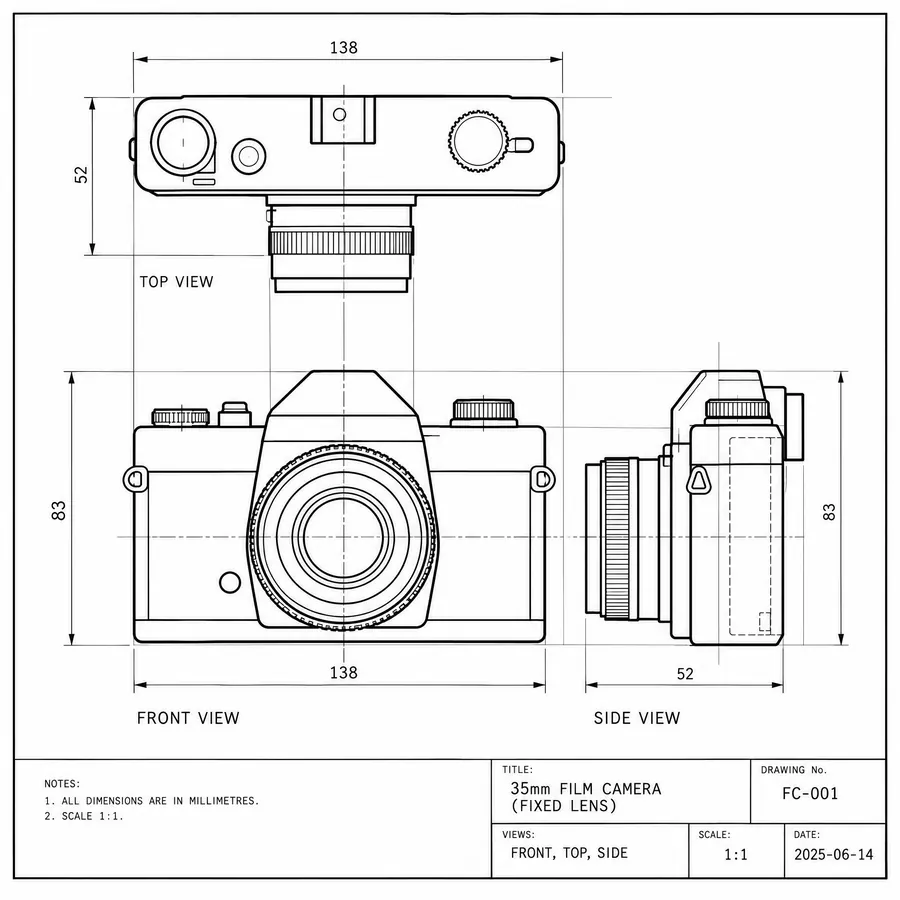
Thin white lines carry every edge. There is no tone, so nothing is shaded and nothing is lit. Dimension lines run outside the object with an arrow at each end and a measurement written along them. Centre lines use a long dash short dash pattern. A ruled title block sits in the lower right with the name, the scale and a date.
When to use it
Use it for anything about planning, making or engineering, and for packaging that wants to look considered. Avoid it when the object has to look real, because a blueprint refuses every cue that makes something look real.
Told apart from its neighbours
Orthographic Projection is the same discipline on white paper with black line. Cyanotype in the print catalogue is the photographic process the colour came from. Wireframe shows every hidden edge and has no dimensions.
- Orthographic Projection
- Cyanotype
- Wireframe
Where it is used
It carries a packaging panel, a title card, an explainer and any picture about how something is put together.
- Engineering and architectural drawing offices
- Title sequences, packaging and editorial illustration
The prompt
Replace the blanks with your own character, keep the rest. Then run it on an image model.
<character> drawn as a blueprint, thin white lines on a deep prussian blue ground with no other colour anywhere, no shading and no tone of any kind, dimension lines with arrowheads at both ends and small handwritten measurements along them, centre lines marked as long dash short dash, a ruled title block in the lower right corner, faint fold creases and slightly uneven blue where the paper was exposed
What goes wrong
A blue tinted photograph comes back. Ask for white lines on blue with no tone anywhere, then add the dimension lines and the title block, which are the two things a photograph cannot have.
Leave out
colour, shading, gradients, a light source, perspective, a white background, thick lines
Watch for
Ask for the fold creases and the uneven blue. A clean digital blue rectangle reads as a filter, and the flaws of a contact printed sheet are what make it read as a document.
Questions
Draw it
Pay for the one run. No subscription, and the price is on the model page before you sign in.