German Expressionism
Sets and shadows are built at impossible angles to show a state of mind.
Opens a video model with the prompt in it. The price is on the page before you sign in.
What it is for
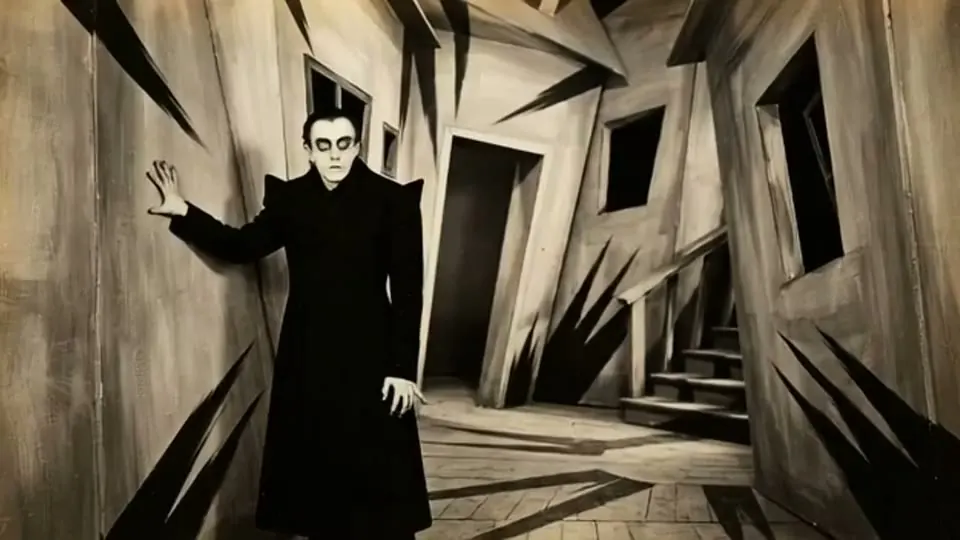
The set is bent to match a state of mind. Walls lean, windows are the wrong shape, and a corridor narrows toward a door that should not fit. The distortion tells the audience whose head they are inside.
It also refuses realism on purpose. Nothing in the frame claims to be a place you could visit, which frees the image to carry an idea instead of a location.
How it works
The architecture is built at impossible angles. Nothing meets at ninety degrees, floors slope, and the vanishing points disagree with each other.
Shadows are painted onto the walls and the floor. Real lighting cannot bend that far, so the darkness is part of the set rather than a consequence of the lamps. The painted shadow stays put when a figure moves, which is a tell you can use on purpose.
Contrast runs to the extremes. Whites blow out and blacks crush, with very little in between, because the flat mid tones would make the painted sets look painted.
When to use it
Use it for madness, for a nightmare, and for a scene that is meant to be remembered rather than witnessed. It suits horror and psychological drama.
Avoid it whenever the audience needs to believe in the place. The style announces itself, so it cannot be a background.
Told apart from its neighbours
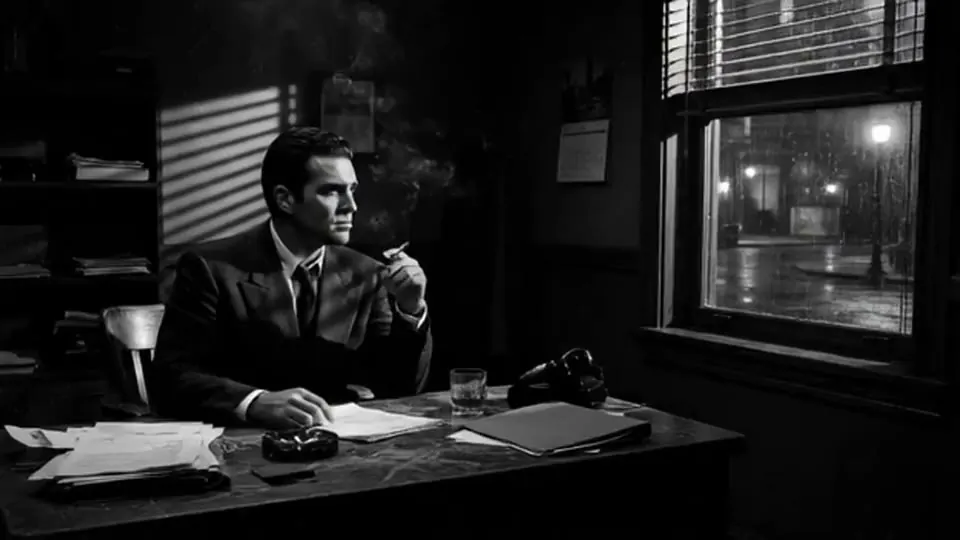
Film noir inherited the low-key lighting and kept the buildings real. Expressionism bends the buildings. If the architecture is plausible, the name is noir.
The quickest test is the shadow. A noir shadow comes from a lamp you could point at. An expressionist shadow is on the wall whether or not a light could put it there.
On film
Robert Wiene shot The Cabinet of Dr. Caligari (1920) on sets with the shadows painted directly onto the flats, which is where the technique is usually traced from. F. W. Murnau used the same angular staging in Nosferatu (1922), including the shadow of a hand climbing a staircase wall.
- The Cabinet of Dr. Caligari (1920)
- Nosferatu (1922)
The prompt
Replace the blanks, keep the rest. Then run it on a video model.
expressionist scene around <subject>, distorted angular set, painted shadows on the walls, extreme contrast, tilted architecture
What goes wrong
The model returns a normal room with a tilted camera. Tilting the camera is a different technique. Say the set itself is distorted, with leaning walls and angular architecture.
The other failure is soft realistic light. Ask for the shadows to be painted on the walls and for extreme contrast with no mid tones.
Leave out
naturalistic set, even light
Watch for
Paint the shadows into the set. Real lighting cannot bend that far.
Questions
Shoot it
Pay for the one run. No subscription, and the price is on the model page before you sign in.
Next to it in noir and the dark genres