Film Noir
Hard shadow, venetian blinds, and a world lit at night.
Opens a video model with the prompt in it. The price is on the page before you sign in.
What it is for
Noir lights a world where most of the frame is dark and the part you can see is the part somebody chose to show you. A face half in shadow reads as a person with something held back.
The style carries its own morality. Nobody in the frame is clean, and the lighting says so before the dialogue does.
How it works
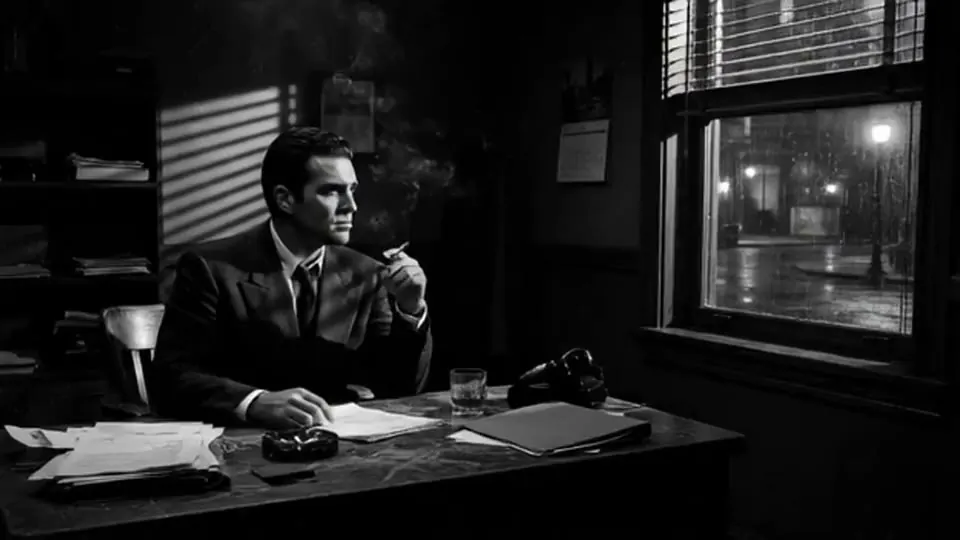
One hard source, placed low or to the side, and almost no fill. The shadow falls where it falls and nothing lifts it. Black areas stay black rather than grading up to grey.
The blind slats are the signature because they put the bars of a cage on a wall without anybody mentioning a cage. Rain and wet pavement do the same job for the street, turning every light source into a second light source.
Black and white is the historical form. The contrast ratio does the work, so the palette matters less than the difference between the lit side and the dark side of a face.
When to use it
Use it for crime, for interrogation, for a scene where somebody is lying. It suits a small room at night and a single lamp.
Leave it alone in daylight exteriors and anything warm. Noir lighting on a kind scene reads as a joke, because the shadow promises a threat the scene never delivers.
Told apart from its neighbours
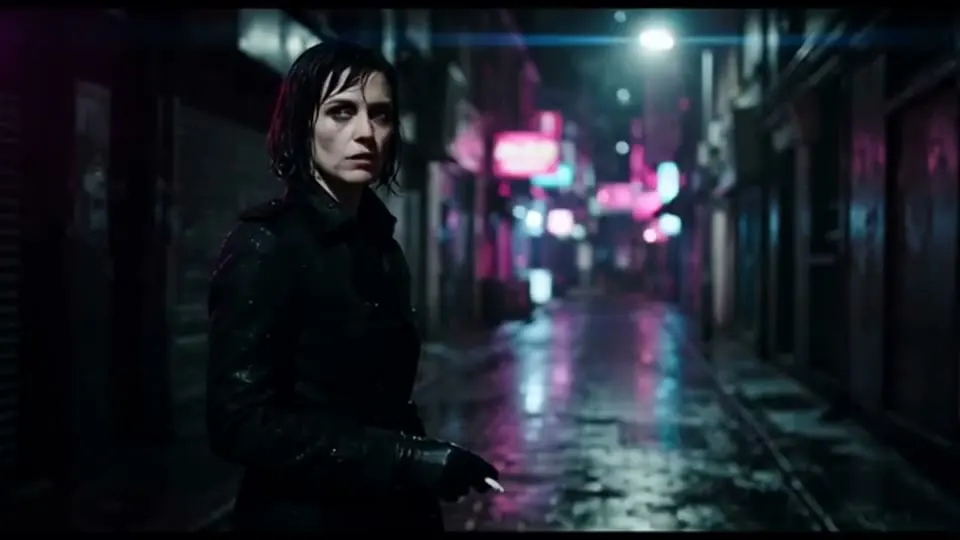
Neo-noir keeps the shadow scheme and shoots it in colour, usually with neon standing in for the hard key. If the image has saturated colour in it, you are in neo-noir.
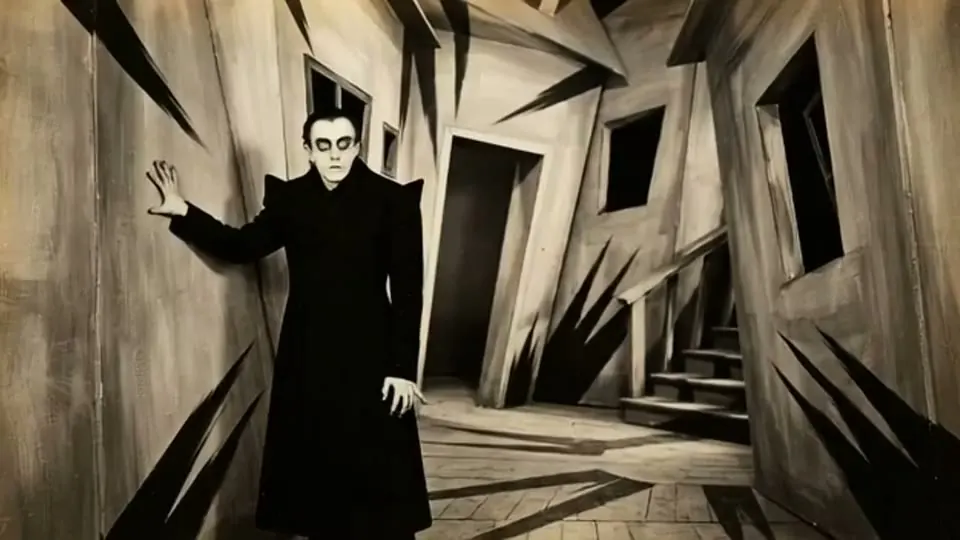
German expressionism bends the set itself, with shadows painted onto the walls at angles no lamp could make. Film noir keeps the architecture honest and lets real light carve it.
On film
Billy Wilder built Double Indemnity (1944) out of shuttered rooms, and the blind slats across Fred MacMurray are the shot that the whole style is remembered by. Carol Reed shot The Third Man (1949) on wet Vienna cobbles at night, where every street lamp turns the ground into a second source and a man can hide inside his own doorway.
- Double Indemnity (1944)
- The Third Man (1949)
The prompt
Replace the blanks, keep the rest. Then run it on a video model.
film noir on <subject>, hard single source, deep black shadow, blind slats across the wall, wet street outside, black and white
What goes wrong
The model returns a dim scene rather than a contrasted one. Dim is flat, and flat is the opposite of the look. Ask for a hard single source, deep black shadow, and no fill light.
The other failure is a grey image. If the blacks lift, the style goes with them. Say the shadows stay crushed and the lit side stays bright.
Leave out
soft even light, bright colour
Watch for
It is a lighting style before anything else. The shadow does the work.
Questions
Shoot it
Pay for the one run. No subscription, and the price is on the model page before you sign in.
Next to it in noir and the dark genres