Wildlife photography
- nature photography
- bird photography
- safari photography
A 600mm lens from fifty metres, the animal's eye sharp and the background melted away.
Opens an image model with the prompt in it. The price is on the page before you sign in.
What it is for
The distance is not a choice. An animal which can see the photographer behaves differently or leaves, so the working distance starts at about fifty metres and often runs to two hundred. A 400mm to 600mm lens is simply what fills a frame from there.
That long lens brings a second gift. At f/4 and fifty metres the depth of field is thin and the background compresses to a smooth wash, so grass, branches and a distant fence all dissolve. The animal is left on a plain ground it never stood on.
How it works
Name the focal length, the aperture and the distance together: 600mm at f/4 from fifty metres. All three are needed, because the model treats a long lens as a crop otherwise.
Drop the camera to the animal's eye level. Say from a low hide, or lying on the ground, or from a boat at water level. Say the background is far behind and out of focus.
Say the eye is sharp and holds a catchlight. Then name the shutter: 1/1000 for a walking animal, 1/2000 or faster for a bird in flight.
When to use it
Use it for a mammal, a bird, a reptile, an insect at distance, a herd, a nest, a hunt. Anything wild which will not tolerate a camera nearby.
Leave it alone for a pet or a farm animal. Those allow a normal lens at two metres, and a 600mm frame of a dog looks like surveillance.
Told apart from its neighbours
Sports photography uses the same lens at the same aperture, and it stands at the edge of the pitch. The difference is the light and the clock: a stadium is lit and a match starts on time.
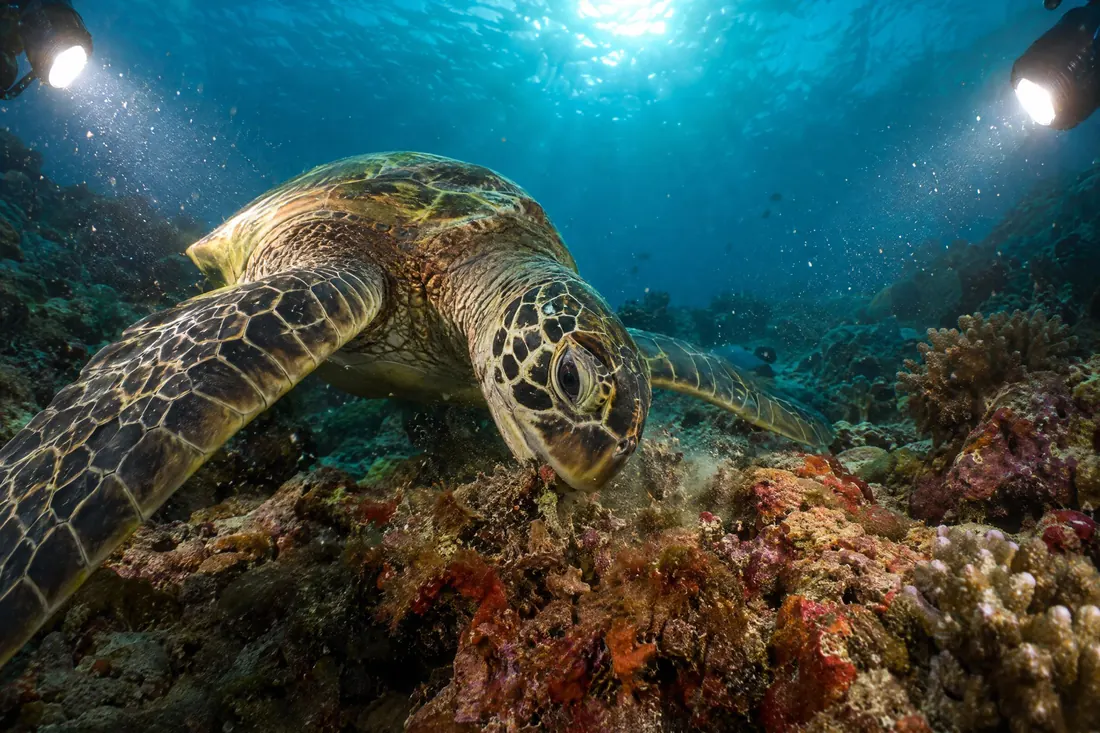
Underwater photography inverts the geometry completely. Water takes out colour and contrast within a metre, so a diver works at thirty centimetres with a wide lens.
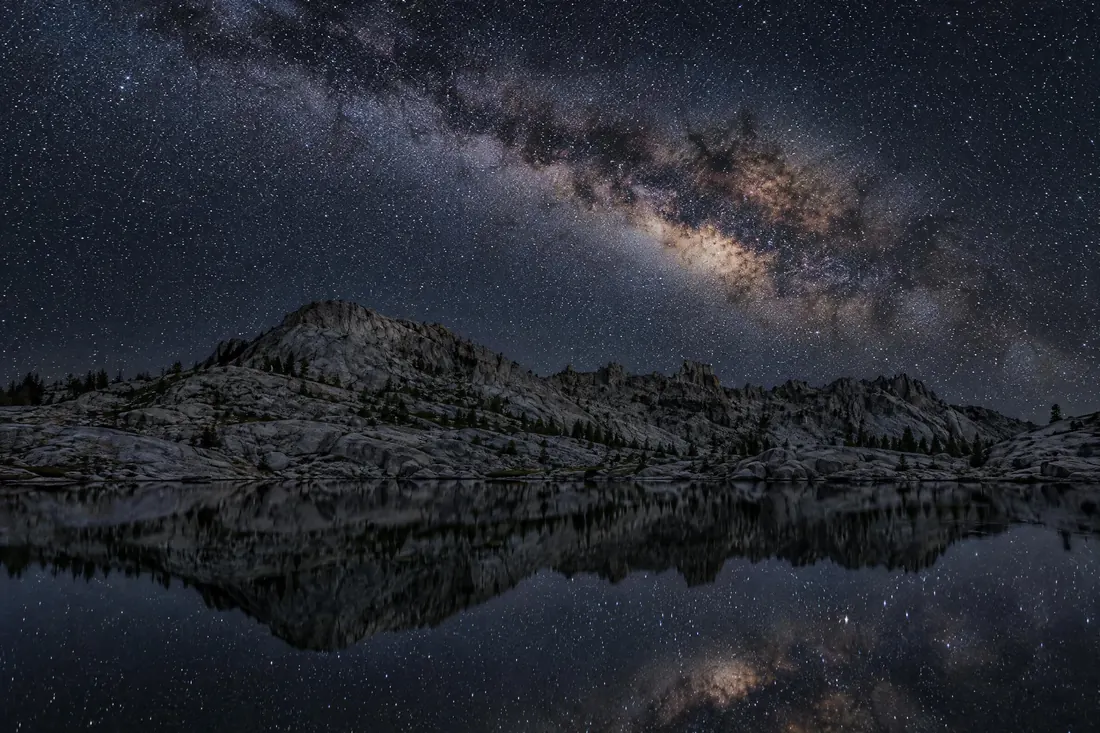
Landscape photography would put the same animal in its valley at 24mm. Wildlife photography removes the valley on purpose and leaves the animal.
Where it is used
The Wildlife Photographer of the Year competition has run at the Natural History Museum in London since 1965, and it publishes the working numbers under every winning frame. The 500mm and 600mm f/4 lenses dominate that list year after year. They cost as much as a car, which is why hides, remote triggers, long waits and early light do most of the work for everybody else.
- Wildlife Photographer of the Year entries
- natural history magazines
- hide and safari work
The prompt
Replace the blanks with your own subject, keep the rest. Then run it on an image model.
<animal>, wildlife photography, 600mm lens at f/4 from fifty metres, camera at the animal's own eye level from a low hide, the eye sharp and holding a catchlight, the background melted to a smooth wash of colour, early morning light
What goes wrong
The animal comes back sharp against a sharp background, and the picture reads as a snapshot at a zoo. Say f/4, say the background is fifty metres behind and melted to a wash.
The camera looks down on the animal. Say the camera is at the animal's own eye level, and name the position: a low hide, the ground, a boat at water level.
Leave out
a wide angle lens, a fence or an enclosure, a person in frame, flat frontal flash
Watch for
Height gives it away. A picture taken from standing height reads as a zoo visit, so put the camera at the animal's own eye level.
Questions
Shoot it
Pay for the one run. No subscription, and the price is on the model page before you sign in.