Portrait photography
- headshot
- studio portrait
- environmental portrait
One face, a long lens two metres away, one soft light, and the room deleted.
Opens an image model with the prompt in it. The price is on the page before you sign in.
What it is for
A portrait lens sits between 85mm and 135mm for a physical reason. At those focal lengths the camera stands about two metres from the face, and at two metres a face keeps its true proportions. A 35mm lens at half a metre enlarges the nose and shrinks the ears.
The shallow depth of field does the second job. It deletes the room. One sharp face against a soft plain tone is the cheapest way to say that this person is the subject and nothing else is.
How it works
Name the focal length and the aperture together: 85mm at f/2, or 135mm at f/2.8. The focal length sets the working distance, and the working distance sets the shape of the face.
Put the camera a little above eye level. The person looks up a few degrees, which opens the eyes and lengthens the neck. Eye level is neutral, and below eye level makes a person loom.
Use one main light with a soft edge: a large source close to the person, about 45 degrees to one side and a little above. Add a weak fill opposite, and let the background fall half a stop darker than the face.
When to use it
Use it when the face is the whole subject: a headshot, an author picture, a staff page, a record sleeve, a book cover.
Leave it alone when the place matters. An 85mm lens at f/2 destroys the room, so a person in their own workshop needs a wider lens and a smaller aperture.
Told apart from its neighbours
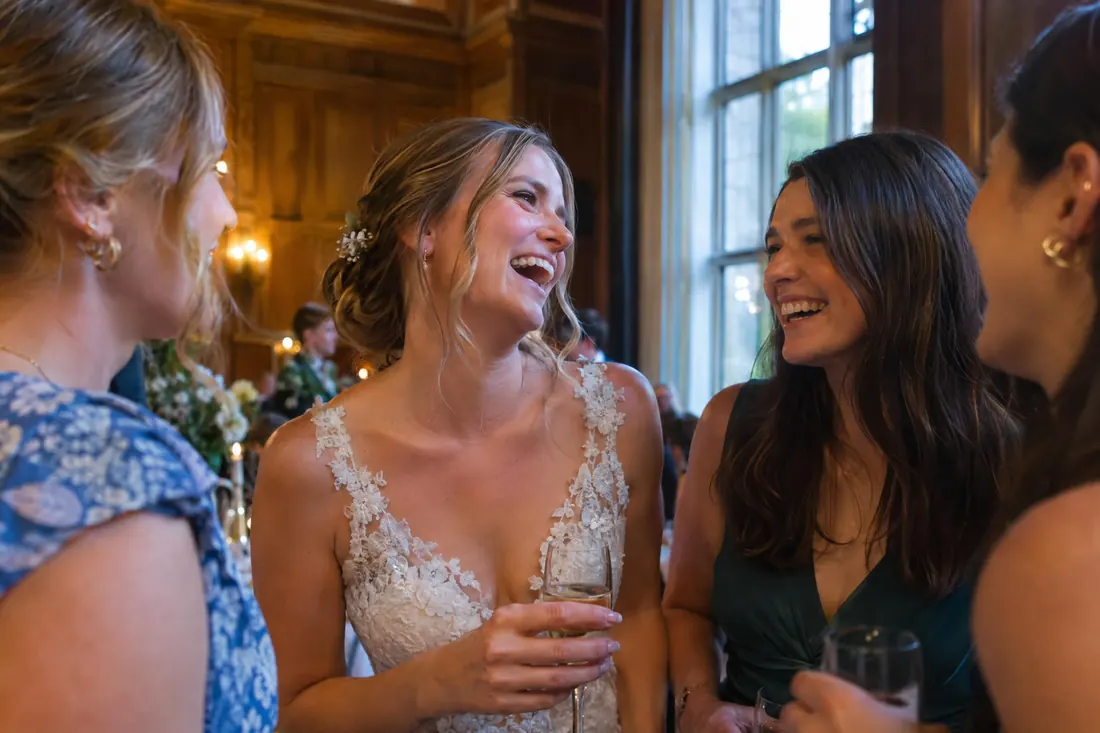
Wedding photography works at 35mm from inside a group and takes whatever light the room has. Portrait photography controls the light and stands back.
Fine art photography can use a portrait as its material, but the print and the series are the work. A portrait is a likeness of one person.
The commercial set in this catalogue has Hero three-quarter and On white for objects. A portrait applies the same care to a face, with one light instead of a lighting plan.
Where it is used
Kodak named a colour film after the job. Portra, sold since 1998, is balanced to hold skin tone rather than saturated colour, and it is still the standard portrait negative. The studio half of the look is older. The Hollywood stills departments of the 1930s fixed the plan of one large soft light at 45 degrees with a weak fill, and that plan still lights most company headshots.
- press and staff headshots
- record sleeves
- National Portrait Gallery commissions
The prompt
Replace the blanks with your own subject, keep the rest. Then run it on an image model.
<subject>, portrait photography, 85mm lens at f/2, camera two metres away and slightly above eye level, one large soft light at 45 degrees with a weak fill on the other side, the background a plain tone thrown out of focus, the near eye sharp
What goes wrong
The face comes back wide, with a large nose and small ears. That is a short lens at a short distance. Say 85mm or longer, and say the camera stands two metres back.
The whole room comes back sharp. Say the aperture, say the background is out of focus, and say how far behind the person the background sits.
Leave out
wide angle distortion, a busy background, flat on-camera flash, both eyes out of focus
Watch for
At 85mm and f/2 the depth of field is a few centimetres. Say which eye carries the focus, or the model puts it on an ear.
Questions
Shoot it
Pay for the one run. No subscription, and the price is on the model page before you sign in.
Next to it in people