Technicolor Three Strip
- three strip
- dye transfer colour
- glorious technicolor
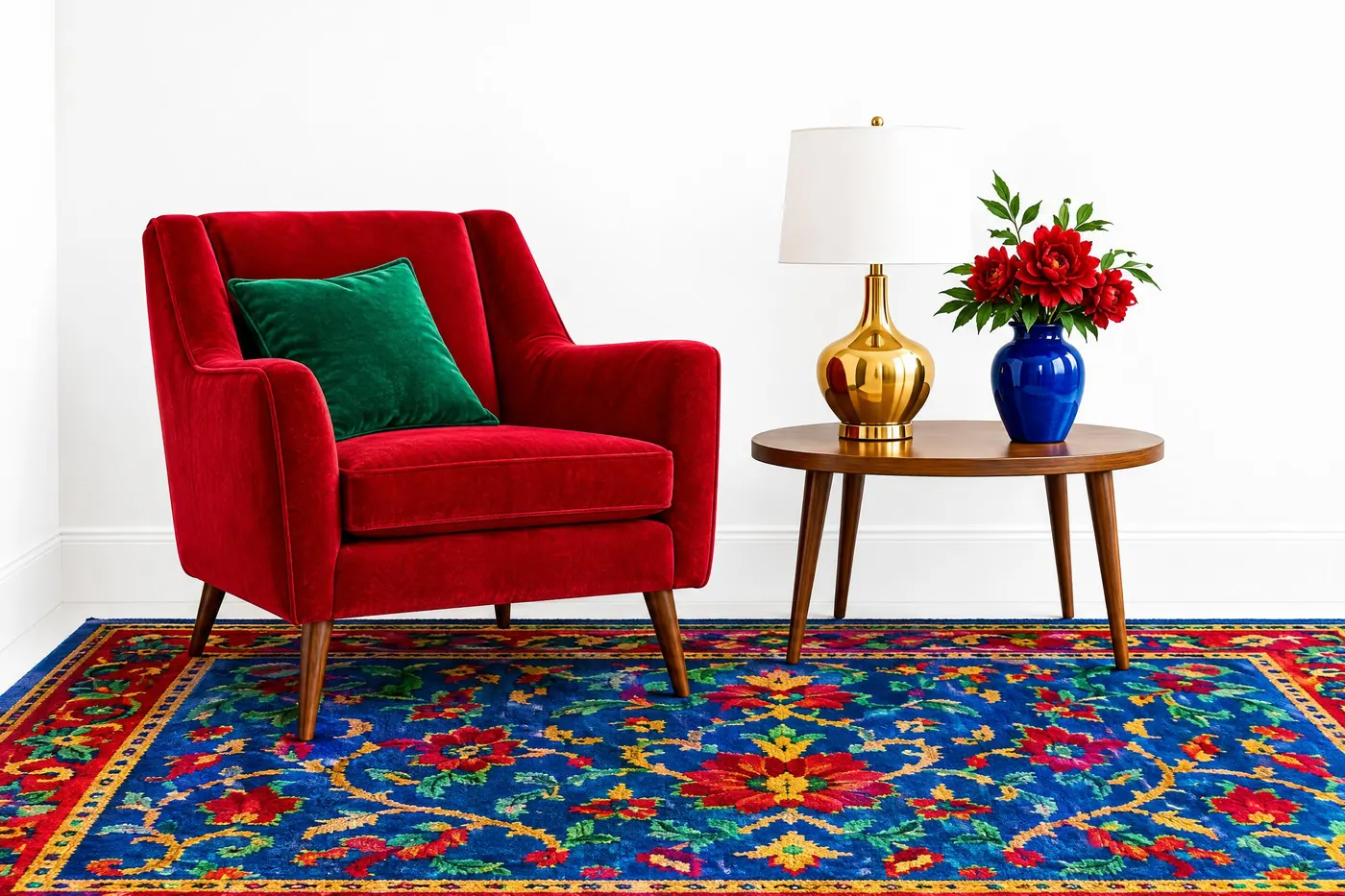
Ruby, emerald and sapphire at full strength, on brilliant white.
Opens an image model with the palette in the prompt. The same words work on a video model.
- #C8102E
- #E9A81C
- #1E7B4D
- #2151A1
- #F8F5EC
What it is for
Three separate strips of film each recorded one colour, and the prints were dyed rather than exposed. Dye sits denser than emulsion, so the reds and greens arrive at a strength no ordinary colour film reaches.
That is why the palette still reads as unreal. Nothing in daylight is that saturated and that clean at the same time, so a viewer takes it as a made world rather than a photographed one.
How it works
Name the three: ruby red, emerald green, sapphire blue. Those are the colours the process was built around and they carry the look on their own.
Keep them separate. The strength comes from each colour being pure, so a blended or shaded version of any of them loses the effect immediately.
Put everything on brilliant white and keep the shadows coloured rather than grey. Grey is what a modern camera gives you and it is the one thing this process never produced.
When to use it
Use it for anything meant to look like a made world: a musical, a fantasy, a costume piece, a poster, a title card, a toy advertisement.
Leave it alone for anything documentary. Colour this strong reads as a set, and no amount of realistic subject matter talks a viewer out of it.
Told apart from its neighbours
Bubblegum Pop is as saturated but has no dark end. This one keeps deep ruby and deep sapphire, so it still has weight.
A triadic scheme is the same idea as a relationship rather than as a process. This palette names the three specific colours the dye could reach.
Where it was used
Three strip ran from 1932 to the mid 1950s and was expensive enough that a studio only spent it on something worth showing off. That is why the surviving examples are musicals, fantasies and spectacle, and why the palette now means all three.
- The Wizard of Oz (1939)
- The Red Shoes (1948)
- Singin' in the Rain (1952)
The prompt
Run it as it stands, or drop the colour clause into a prompt you already have. It works in an image prompt and in a video prompt.
<subject>, a dye transfer palette of ruby red, emerald green and sapphire blue at full strength with warm gold in the highlights, every colour clean and separate rather than blended, brilliant white ground with no grey anywhere
What goes wrong
The colours come back correct but dull, because the model laid them on a grey ground. Say brilliant white ground and no grey anywhere.
The three hues blend into each other at the edges. Say each colour is a clean separate area rather than a blend.
Leave out
pastel tints, earth colours, grey shadows, a desaturated ground
Watch for
The white has to stay white. A grey ground drops the whole palette and it stops reading as dye.
Questions
Paint it
Pay for the one run. No subscription, and the price is on the model page before you sign in.