Amber and Cyan
- neon noir
- sodium and neon
- street light and sign
Amber light sources against cyan haze, on a black wet ground.
Opens an image model with the palette in the prompt. The same words work on a video model.
- #06070A
- #0E3B49
- #22B8D6
- #F4A62A
- #B45309
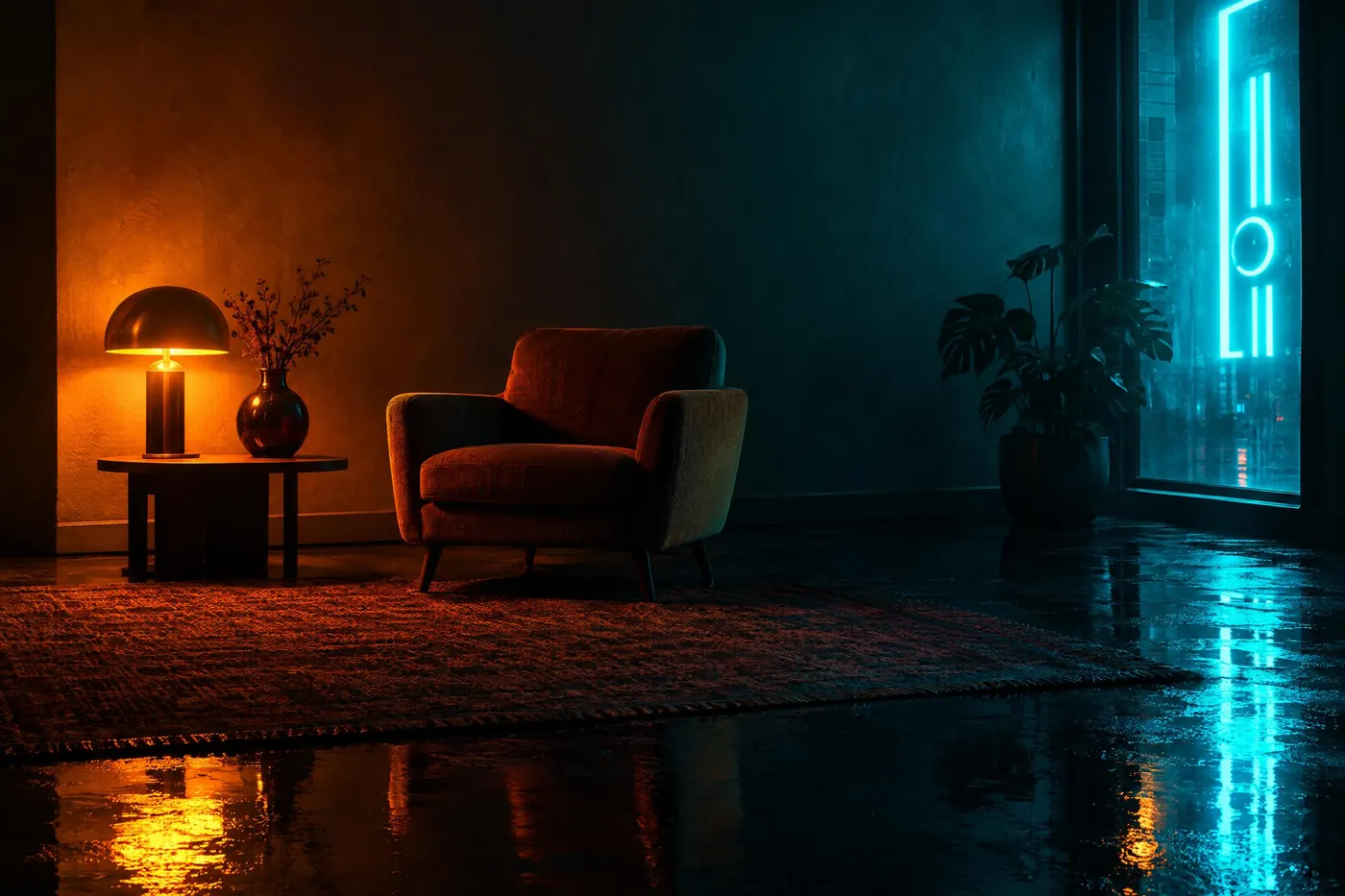
What it is for
Sodium street lamps really are amber and neon signs really are cyan, so the pair is plausible in a way invented colours are not. The viewer accepts the city before they notice the palette.
Wet ground doubles every source. One lamp becomes two, which is why this palette needs far fewer lights than it appears to use.
How it works
Put the colour in sources: lamps, signs, windows, headlights, screens. Naming the sources is what stops a model laying a flat tint over everything.
Fill the air between the sources with cyan haze. The haze is what makes the light visible as a beam rather than only as a pool.
Keep the ground black and wet. Reflection is half of this palette and the black is what the two colours are read against.
When to use it
Use it for a city at night, a street, a rooftop, a car interior, a bar exterior, anything that has to feel late and populated.
Leave it alone in daylight and indoors in a bright room. Both colours disappear the moment there is white light to compare them against.
Told apart from its neighbours
Teal and orange is a grade, applied to footage after the fact, and it lives in the cinematic catalogue with the other grades. This is a set of light sources chosen before the camera turns over, and it puts the two colours in different parts of the frame rather than in the shadows and the skin.
A warm and cool split divides the picture by the temperature of the light. This palette names the two specific colours that real street lighting produces.
Where it was used
The 1982 original built it out of necessity: a night city set, rain to hide the edges, and practical signs to light it. Every neon city since has quoted it, and the 2017 sequel rebuilt the same palette with a larger amber.
- Blade Runner (1982)
- Collateral (2004)
- Blade Runner 2049 (2017)
The prompt
Run it as it stands, or drop the colour clause into a prompt you already have. It works in an image prompt and in a video prompt.
<subject>, amber sodium light sources against cyan neon haze, both colours coming from lamps and signs inside the frame rather than from a wash over the picture, black wet ground reflecting both, no daylight and no white light, shadows that stay black
What goes wrong
The whole picture comes back with an even blue tint and orange skin. Say the colours come from lamps and signs in the frame, not from a wash.
The shadows lift and the black goes grey. Say the shadows stay black and there is no daylight and no white light.
Leave out
daylight, white light, grey shadows, an even tint over the whole frame
Watch for
This is lighting, not grading. Say the amber and the cyan come from sources in the frame or a model tints the whole picture instead.
Questions
Paint it
Pay for the one run. No subscription, and the price is on the model page before you sign in.