Concrete and Moss
- brutalist palette
- weathered concrete
- grey and green
Four warm greys with two greens growing out of the damp ones.
Opens an image model with the palette in the prompt. The same words work on a video model.
- #C9C6BE
- #A8A49B
- #7E7C75
- #55564F
- #6E8154
- #3E4A32
What it is for
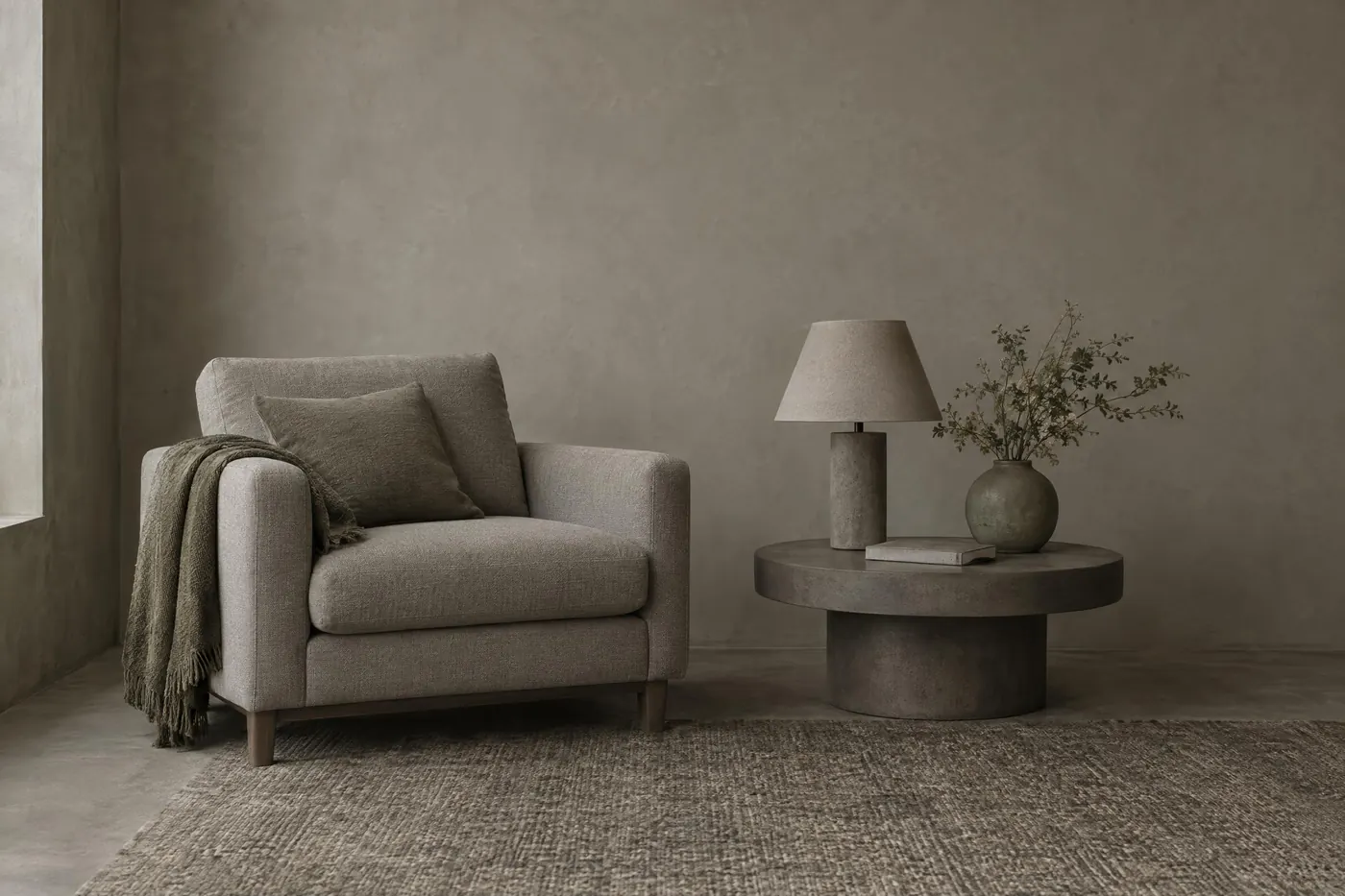
Concrete is never one grey. It stains, it holds water, and it grows things, so a real concrete surface has four or five values in it and a green wherever the rain runs.
Drawing that is what makes a grey picture look old rather than unfinished. The moss is the evidence of time.
How it works
Make the greys warm, not neutral. Cement has sand in it, and a cold grey reads as steel instead.
Build four values so the surface has variation. One flat grey looks like a render, not a material.
Put the green only where water would sit: bases, edges, undersides, joints. Placement is most of the effect.
When to use it
Use it for weight, age, architecture and outdoor things: a building study, garden products, a label, a record sleeve, an editorial spread.
Leave it alone for anything that must look new or clean. The whole palette is about weathering.
Told apart from its neighbours
Volcanic Basalt shares the greys but its greys are cold and its one colour is hot. This one is warm grey with a cool green.
Verdigris is a metal patina, much greener and much more saturated. Concrete stains; copper transforms.
Where it was used
Architecture photography of post war buildings gave this set its reputation, and outdoor furniture brands adopted it because it makes a new product look as though it has already survived a winter.
- brutalist architecture photography
- Barbican guides
- outdoor furniture catalogues
The prompt
Run it as it stands, or drop the colour clause into a prompt you already have. It works in an image prompt and in a video prompt.
<subject>, concrete and moss palette of four warm grey concrete tones from pale to dark, with two dull greens in the damp areas only, low saturation, matte surfaces, flat daylight, no bright colour anywhere
What goes wrong
A photograph of a wall arrives instead of the subject. The palette is the colour set, not the material itself. Name your own subject first.
The green spreads evenly and the surface turns into paint. Say the greens sit only in the damp and shaded areas.
The greys come back cold and the concrete reads as metal. Say the greys are warm.
Leave out
clean white, bright green, gloss, saturated accents
Watch for
The greens belong in the dark and damp parts. Spread them evenly and the concrete turns into a painted wall.
Questions
Paint it
Pay for the one run. No subscription, and the price is on the model page before you sign in.
Next to it in material