Tetradic
- double complementary
- rectangular harmony
- four colour scheme
Two complementary pairs at once. The richest scheme, and the hardest to hold.
Opens an image model with the palette in the prompt. The same words work on a video model.
- #E07A2F
- #2F6FA8
- #5C9A4A
- #B03A48
- #F1EDE4
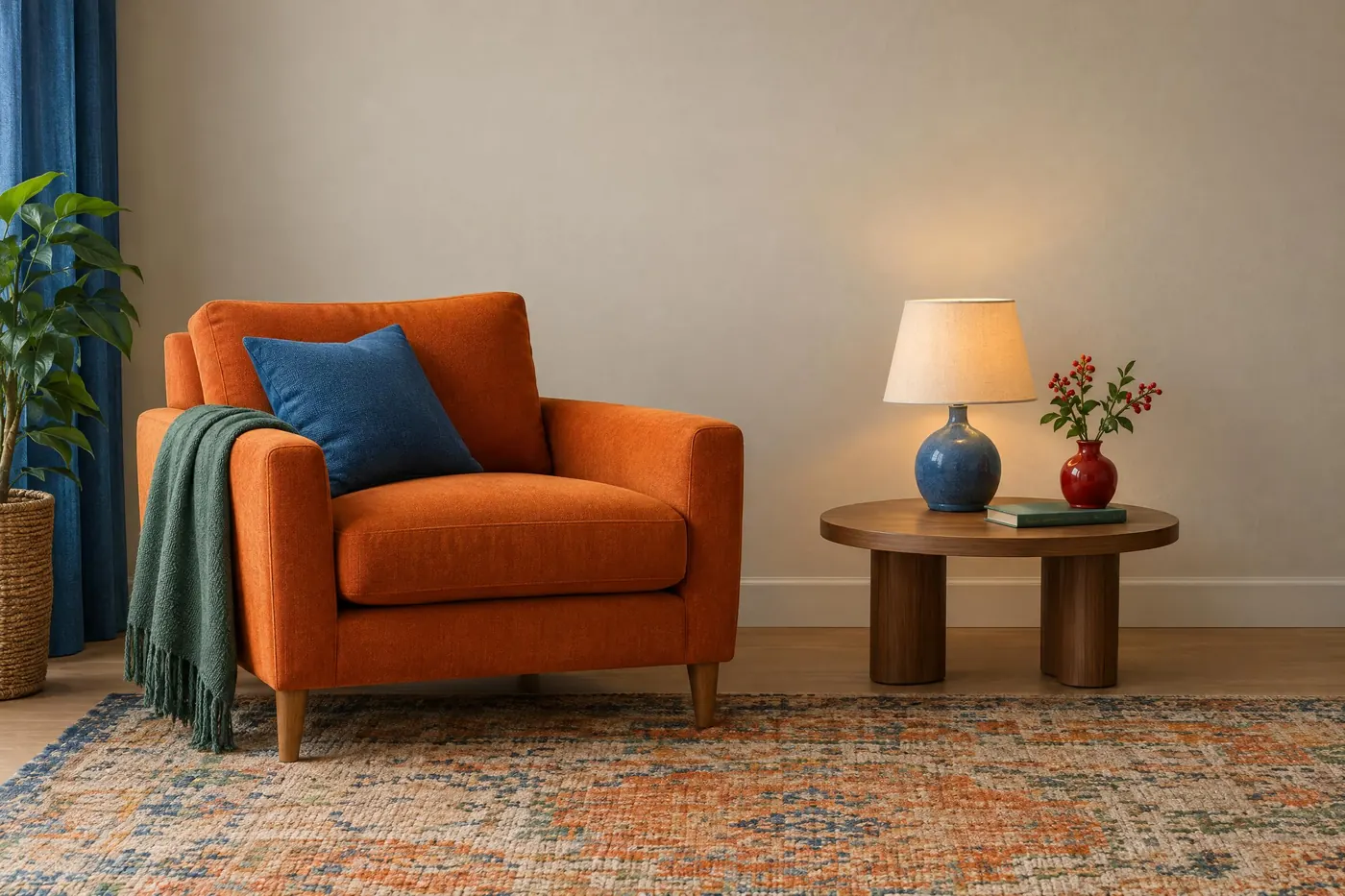
What it is for
Two complementary pairs give a picture more colour than any other scheme can hold without turning to noise. When it works it looks abundant rather than busy.
The difficulty is the point: it is the scheme that most obviously separates somebody who has thought about it from somebody who has not.
How it works
Choose two complementary pairs, so four hues in two oppositions. Orange with blue and green with red is the standard rectangle.
Rank them before you place anything. One pair leads and takes most of the picture. The second pair appears in small amounts only.
Balance the warm and cool totals across the frame rather than colour by colour. Four hues split evenly between warm and cool is what keeps it from tipping.
When to use it
Use it for abundance: a festival, a market, a food event, a carnival, a textile, a pattern that has to reward a second look.
Leave it alone when the picture is small or fast. Four hues need room, and at thumbnail size they average into brown.
Told apart from its neighbours
Triadic has three hues and no oppositions. Tetradic has four and two oppositions, which is roughly twice the noise and twice the reward.
A limited palette can also hold four colours, but it does not require them to be related. Here the four are two pairs.
Where it was used
Matisse's cut-outs run on it constantly, which is why they feel full rather than cluttered. So does most of Tropicalia, and so does almost every Persian carpet: two oppositions, ranked, with one of them quiet.
- Matisse cut-outs
- Tropicalia
- Persian carpet
The prompt
Run it as it stands, or drop the colour clause into a prompt you already have. It works in an image prompt and in a video prompt.
<subject>, tetradic palette of two complementary pairs, orange with blue and green with red, one pair dominant and the second used only in small accents, warm and cool balanced across the frame, a neutral ground
What goes wrong
All four arrive at once and average into mud. Say one pair dominates and the second pair appears only as accents.
The frame tips warm or cool. Say the warm and cool totals are balanced across the whole picture, not within each shape.
Leave out
four colours at equal weight, a fifth hue, an even warm-cool split
Watch for
Four colours need a hierarchy or they cancel. Pick one pair to lead before you start.
Questions
Paint it
Pay for the one run. No subscription, and the price is on the model page before you sign in.
Next to it in relationships on the wheel