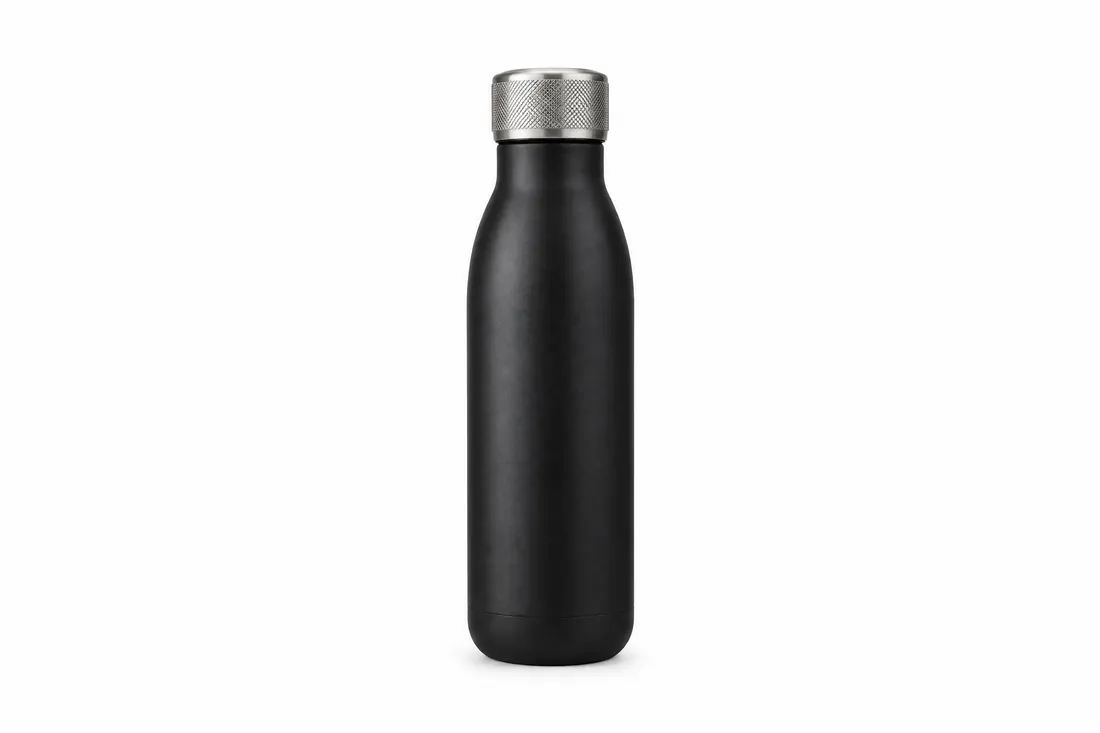
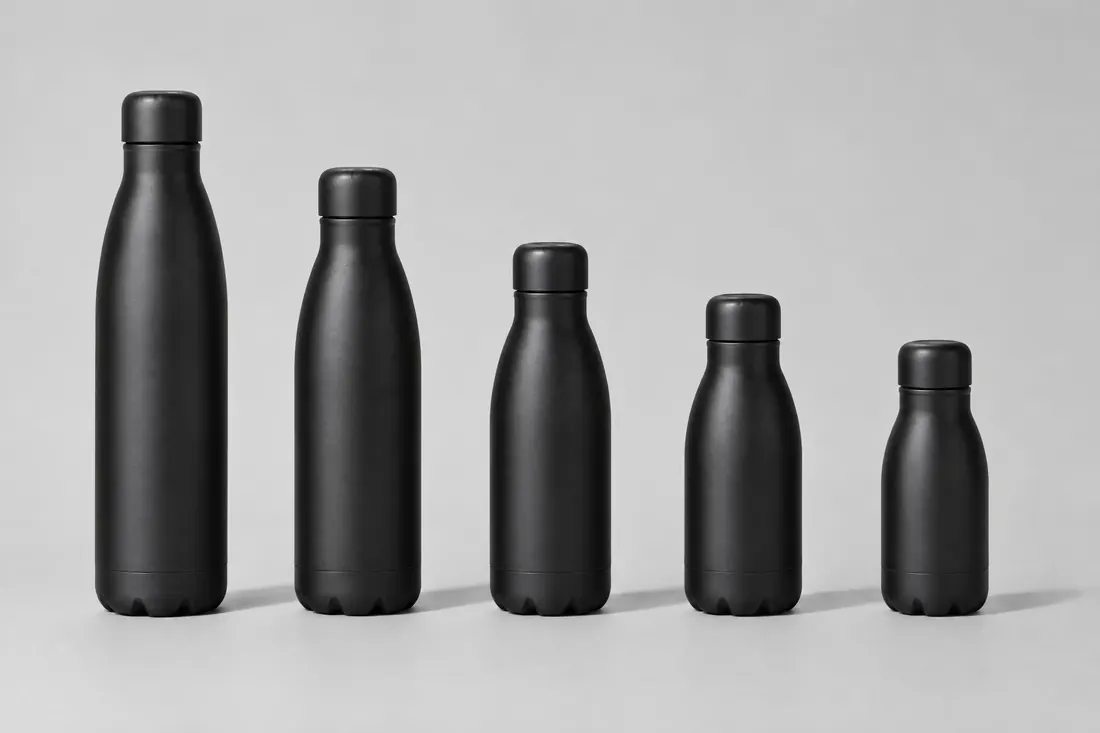
Hero three-quarter
- three-quarter product angle
- 45 degree view
- hero angle
The product turned 30 to 45 degrees so the front, the side and the top all read at once.
Opens an image model with the prompt in it. The price is on the page before you sign in.
What it is for
It is the most used angle in product work because it is the cheapest way to show depth. Two faces and the top in one frame tell the eye how big the thing is and how it is put together.
It also flatters. A turned object reads as an object in a room, while a square-on view reads as a drawing of one. That small turn is the whole difference between a hero image and a spec diagram.
How it works
Turn the product 30 to 45 degrees off square. Under 30 and the side face is a sliver. Over 45 and the front face, which carries the brand, starts to shrink.
Put the camera a little above the top of the product and tip it down. Use a longer lens from further back, because a wide lens this close bows the straight edges.
Key from the upper left with one large soft source, and bounce white into the right so the dark side keeps its detail. One key means one shadow, short, falling back and to the right.
Work the edges. A thin specular line along the top edge and down the near vertical edge separates the product from a grey ground, and a black card just out of frame draws the far edge in.
When to use it
Use it at the top of a product page, on a brochure cover, in an advertisement, and any time one image has to do all the work.
Leave it alone for a size comparison or a technical sheet. Those want a square-on view, because perspective makes two products hard to measure against each other.
Told apart from its neighbours
Cinema publishes Three Quarter as a camera angle, and there it means the angle on a person's face: the head turned so that both eyes and one cheek read. This entry is the same geometry pointed at an object, and the decision is which two faces of the box you show.
On white keeps the product square and flat for a grid. Hero three-quarter turns it and gives it a ground, a shadow and a direction of light, so it can carry a page on its own.
Where it is used
The motor industry settled on the front three-quarter as the opening frame of a brochure in the 1950s, and every configurator on the web still opens on it. Braun published its products turned a few degrees off square through the Dieter Rams years, which set the look that hardware makers copy today. Nintendo and Sony have shown new consoles at a three-quarter with a pale ground and a short shadow at every reveal since the PlayStation 2 in 2000.
- car brochure covers
- console hardware reveals
- Braun catalogue photography
The prompt
Replace the blanks with your own subject, keep the rest. Then run it on an image model.
<product> turned about 35 degrees off square so the front face and one side face both read, camera a little above the top of the product and angled down, hero product shot, one large soft key from the upper left, a white bounce at the right to keep the dark side open, a short soft shadow falling back and to the right, plain pale grey ground, a thin specular line along the top edge to separate the product from the background
What goes wrong
The model returns the product square on. Say turned about 35 degrees off square, and say that the front face and one side face both read.
The edges bow outward. That is a wide lens too close. Say a long lens from further back, and say the vertical edges stay straight.
Leave out
straight-on square view, wide lens distortion, low camera, busy background, two shadows in different directions
Watch for
Camera height decides it. Too high and the top face swallows the front. Too low and the product looms and the label bends.
Questions
Shoot it
Pay for the one run. No subscription, and the price is on the model page before you sign in.