Daguerreotype
- dag
- cased plate
A mirror bright silver plate that flips between a positive and a negative as you tilt it.
Opens an image model with the prompt in it. The price is on the page before you sign in.
What it is for
A daguerreotype holds more detail than any process that came after it, and it holds no grain at all. The image is a deposit of tiny silver and mercury particles, far smaller than any film grain, so the plate takes magnification without breaking up. That resolution is the first thing a viewer sees in the object, and it is the first thing a prompt loses.
The second thing is that the picture moves. The plate is a mirror with a faint image laid over it, so it reads as a positive against a dark reflection and as a negative against a bright one. A viewer tilts the case to find the face. No later process behaves this way, which is why the object matters here as much as the picture on it.
How it works
Start from the plate. A copper sheet carries a thin layer of silver, polished until it is a mirror. The maker fumes it with iodine vapour to make it sensitive, exposes it in the camera, then develops it over heated mercury vapour. Nothing is printed and nothing is repeated, so the plate that sat in the camera is the finished photograph.
Say that the image is laterally reversed. The process has no negative stage, so the left hand comes back on the right. Buttons, lettering and a hair parting all swap sides, and that reversal is one of the plainest signals of the process. Say it in the prompt, because a model will not infer it from the date.
Finish with the housing and the tone. A bare plate tarnishes in air, so it goes under cover glass with an embossed brass mat around it, and the whole sandwich sits in a hinged case of leather or moulded thermoplastic. The tone is cool silver grey, never brown, and a studio often brushed dry pink pigment onto the cheeks and gold onto the jewellery. Ask for the mat, the case and the blue purple tarnish creeping in from the plate edge.
When to use it
Use it for one face or one small object that has to look precious and exact. The process was a portrait process, and the sixth plate size, about 70 by 83 millimetres, was cut to be held in one hand and looked at closely.
Leave it alone for movement or for a crowd. The exposure ran from several seconds to several minutes, so a busy street records as empty pavement and a moving hand records as nothing at all.
Told apart from its neighbours
Cinema publishes Sepia and Monochrome at /techniques/cinema/ as colour grades. Both take colour out of a modern photograph and leave the rest alone. A daguerreotype is not a grade: it is a mirror plate in a case, its tone is cool silver rather than warm brown, and its detail is finer than any film can hold.
Cinema also publishes Film Grain. A daguerreotype has none. Say no grain anywhere in the prompt, because a model adds grain to anything it reads as old.
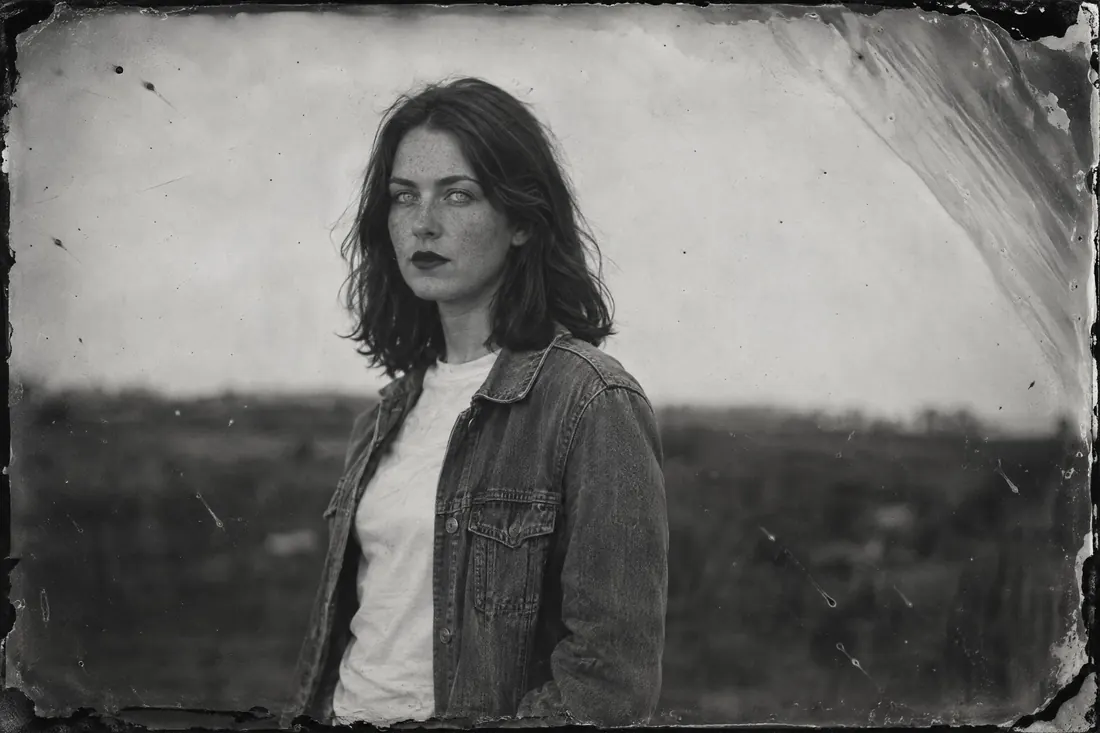
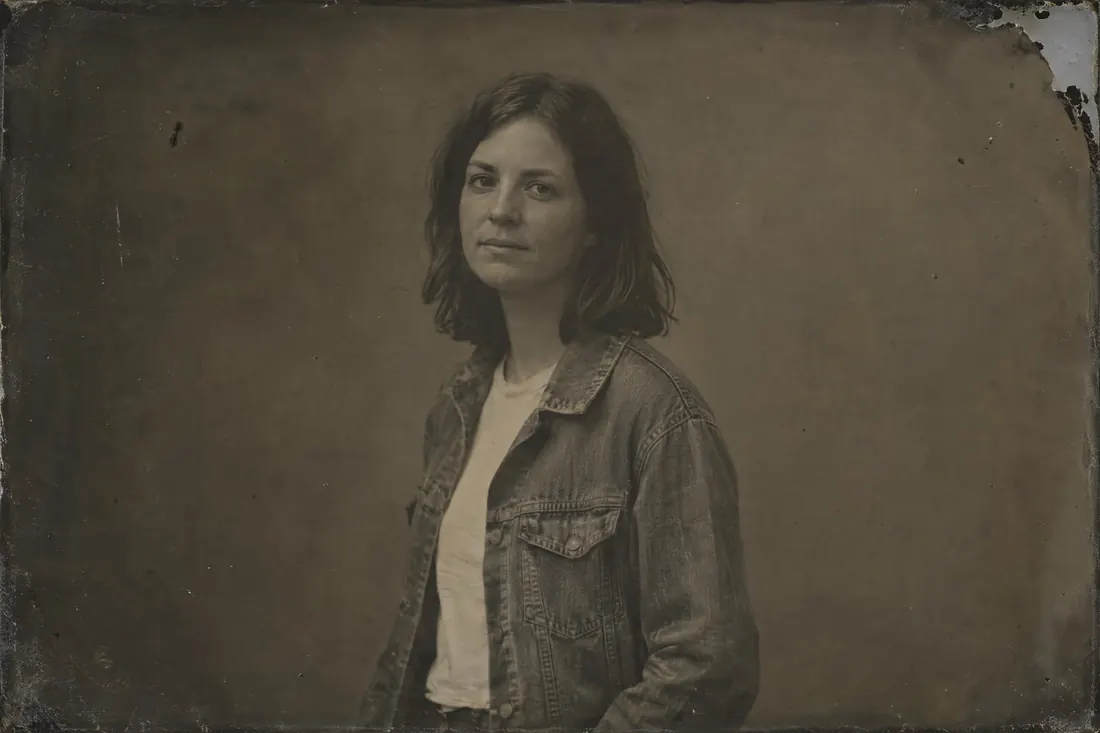
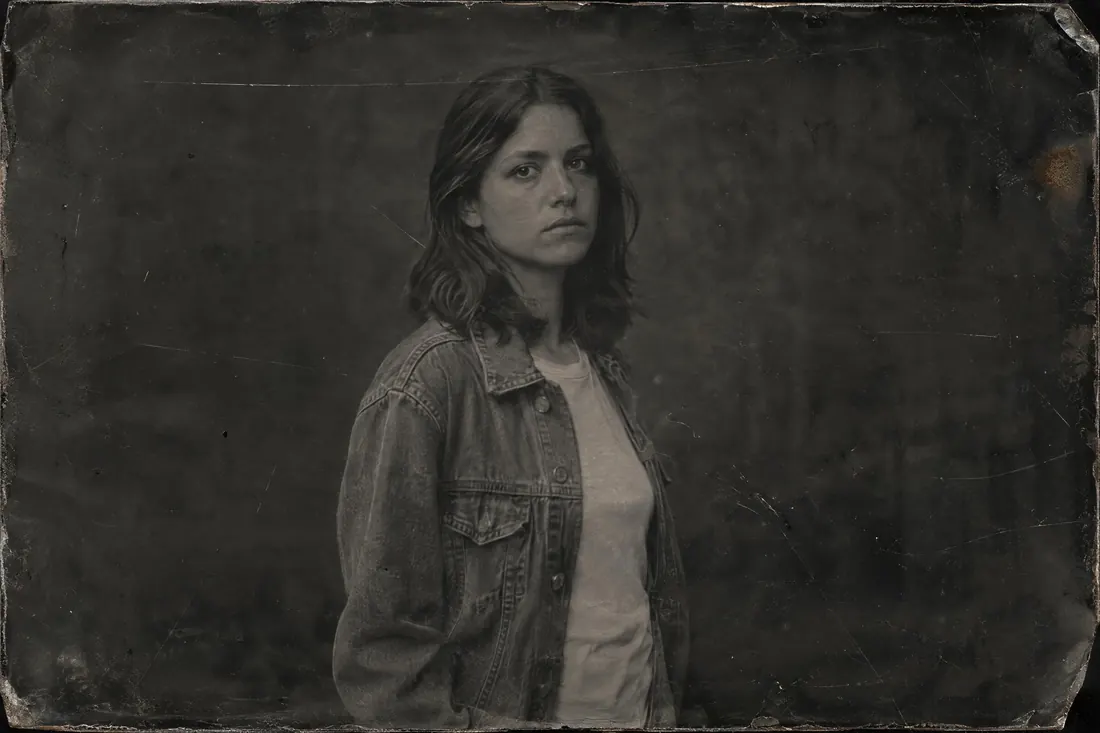
An ambrotype and a tintype come from the later collodion process and read as flat grey positives over a black backing. Neither one is a mirror, and neither one flips as you tilt it.
Where it is used
The French government bought the process and published it free to the world in August 1839, and portrait studios opened within two years. Faster lenses and the bromine accelerators of 1841 cut the exposure from minutes to seconds, and a studio still clamped the sitter's head in an iron brace to hold it steady. American studios sold millions of cased plates through the 1840s and 1850s, most of them sixth plates of about 70 by 83 millimetres. Moulded thermoplastic cases arrived in 1854 and carry the relief patterns most people picture when they think of the object.
- 1840s portrait studios
- cased portrait miniatures
- museum cased image collections
The prompt
Replace the blanks with your own subject, keep the rest. Then run it on an image model.
<subject>, daguerreotype from 1845, polished silvered copper plate with a mirror surface that flips between a positive and a negative as the angle changes, laterally reversed, extremely fine detail with no grain anywhere, cool silver grey tone with hand tinted pink on the cheeks, sealed under cover glass behind an embossed brass mat in a hinged case, a still unsmiling face held through a long exposure
What goes wrong
The model returns a soft, grainy, brown photograph on paper, because it read the date and reached for Sepia. Say polished silvered copper plate, mirror surface, cool silver grey tone, and no grain anywhere.
The second failure is a relaxed smile. Say the exposure is long, the face is still and unsmiling, and the head rests in a brace.
Leave out
grain, sepia toning, paper texture, a smile, a white paper border, a soft focus lens
Watch for
It is an object, not a print. Ask for the mirror plate, the brass mat and the case, or a model returns a brown photograph on paper.
Questions
Shoot it
Pay for the one run. No subscription, and the price is on the model page before you sign in.
Next to it in silver on metal and glass