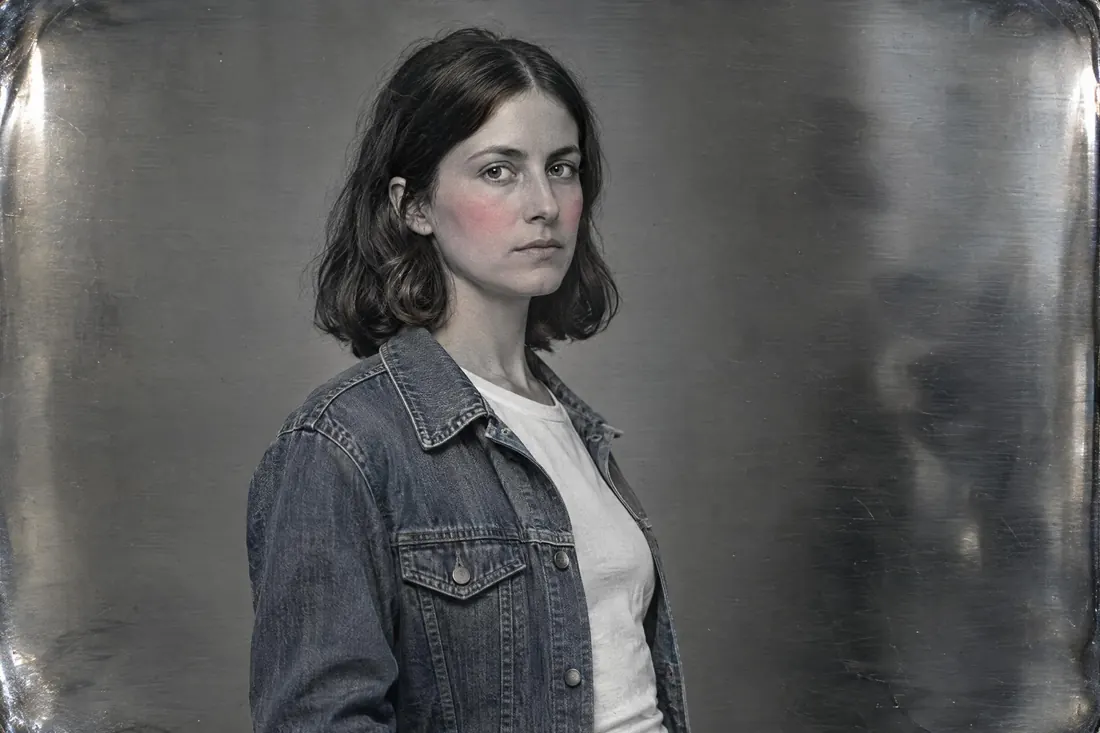
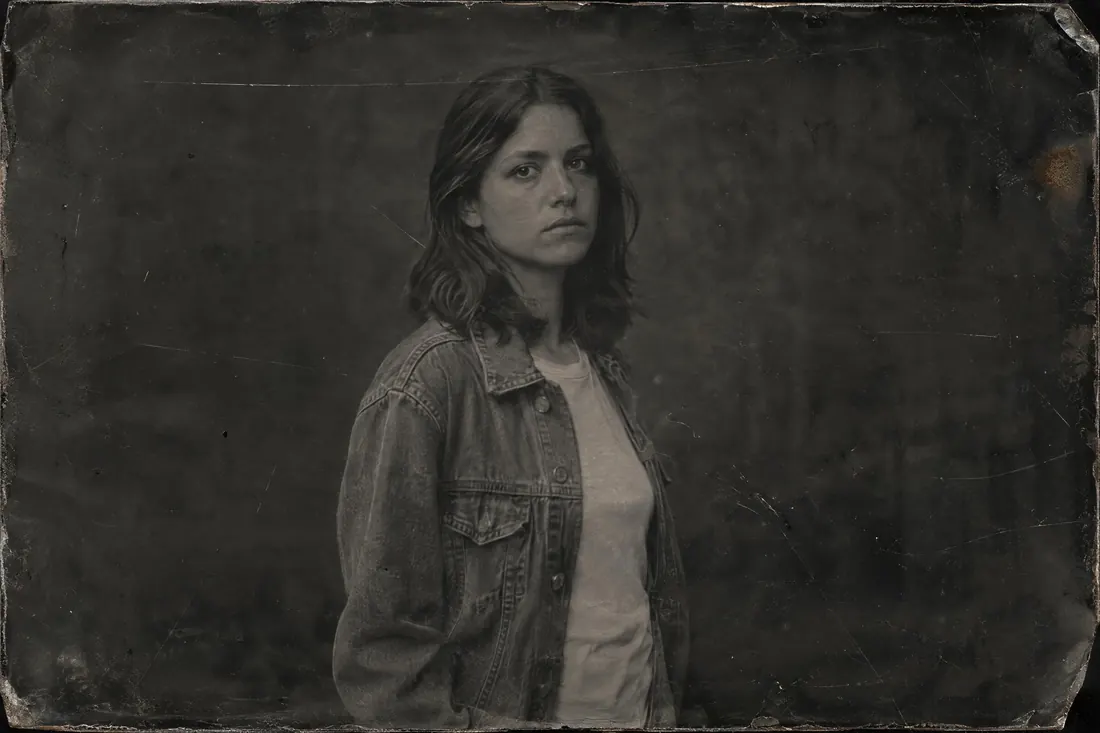
Ambrotype
- collodion positive
- glass positive
A thin collodion negative on glass, backed with black, so it reads as a soft grey positive.
Opens an image model with the prompt in it. The price is on the page before you sign in.
What it is for
An ambrotype works by a trick of backing. The plate is a collodion negative, exposed short on purpose so the silver stays thin. Thin silver scatters light and reads pale, and the clear glass beside it reads as whatever sits behind the plate. Put black behind it and the clear areas go dark, so the thin negative reverses in the eye and reads as a positive.
The result is quiet. Highlights come from scattered light rather than from bare paper, so they top out at a creamy grey, and the blacks are only as black as the lacquer. That short, soft scale is the whole character of the process, and it is the reason an ambrotype looks gentle beside the hard silver of a daguerreotype.
How it works
Underexpose on purpose. The plate wants about a quarter of the exposure a printing negative needs, so the silver stays thin and pale. Say thin and underexposed in the prompt, and say low contrast, because a model reads old and reaches for crushed blacks.
Back the glass with black. A maker painted the rear of the plate with black lacquer, or laid black velvet or black paper behind it, or used dark red glass from the start. The backing is the part that fails with age. Ask for it to flake at a corner, so the picture goes transparent in patches and the face breaks up.
Set the tone and the housing. The tone runs from a warm grey to a creamy off white, never cool silver and never brown. There is no mirror surface, and the image sits inside the glass rather than on top of it. The plate then goes under cover glass, behind an embossed brass mat, in a hinged case, exactly like a daguerreotype.
When to use it
Use it for a soft, plain, seated portrait of one or two people, or for a small group that can hold still. It suits a picture that should look worn and gentle rather than precise.
Leave it alone when the image has to be sharp or bright. There is no deep black available and no true white, so a high contrast subject flattens out and loses its shape.
Told apart from its neighbours
A daguerreotype is the case it is most often confused with, because both sit under glass in the same hinged box. Tilt them and the difference is plain: the daguerreotype is a mirror that flips, and the ambrotype is a flat grey picture in a sheet of glass.
A tintype is the same collodion positive on blackened iron rather than on glass. It is darker, flatter and more silvery, and it has no cover glass at all.
Cinema publishes Sepia and Monochrome at /techniques/cinema/. Both are grades over a normal photograph. An ambrotype is not brown and not neutral: it is a creamy grey with a hard black lacquer under it, and the backing is part of the picture.
Where it is used
James Ambrose Cutting patented the process in the United States in 1854, and studios sold ambrotypes hard from about 1855 to 1865. They cost a fraction of a daguerreotype, needed no polished plate and no mercury, and they were the first photograph an ordinary family could afford. Studios in Britain sold them as collodion positives, since the American patent did not apply there. The cheaper tintype and the printed carte de visite both took the trade away by the middle of the 1860s. Most surviving plates have lost part of the backing, so the faces read broken and half transparent.
- late 1850s portrait studios
- cased American portraits
- museum cased image collections
The prompt
Replace the blanks with your own subject, keep the rest. Then run it on an image model.
<subject>, ambrotype from 1858, a thin underexposed collodion negative on glass backed with black lacquer so it reads as a positive, low contrast with a warm grey to creamy tone, the image sitting inside the glass rather than on the surface, no mirror shine anywhere, the black backing flaking at one corner so the glass goes clear, under cover glass with a brass mat in a hinged case
What goes wrong
The model returns a hard, contrasty black and white photograph. Say the plate is underexposed and thin, the contrast is low, and the highlights stop at a creamy grey.
The second failure is a mirror. Say there is no mirror shine anywhere, the picture sits inside the glass, and a black lacquer backing sits behind it.
Leave out
a mirror surface, high contrast, deep blacks, paper texture, gloss, a printed border
Watch for
The low contrast is the point. An ambrotype as bright and as sharp as a daguerreotype has turned into one.
Questions
Shoot it
Pay for the one run. No subscription, and the price is on the model page before you sign in.
Next to it in silver on metal and glass