Overhead Top-Down
- overhead
The camera looks straight down from close range onto a surface.
Opens a video model with the prompt in it. The price is on the page before you sign in.

What it is for
Looking straight down at a surface removes depth and leaves arrangement. A desk, a meal, a body on a floor, and what the audience reads is where everything sits in relation to everything else.
It also feels authored. Nobody stands in this position, so the frame announces that somebody has chosen to show you this, laid out flat.
How it works
Ninety degrees, from a few feet up. The lens axis runs perpendicular to the surface, which means the edges of the table or the floor run parallel to the edges of the frame.
Rigging is usually a jib, a wall-mounted arm or a ceiling grid. Light comes from the side rather than from the camera, or the rig casts its own shadow into the middle of the shot.
A few degrees off ninety and the illusion goes. Parallel lines start to converge, the surface gains a far edge, and the shot reads as a high angle that failed to commit.
When to use it
Use it for anything laid out: food, tools, a map, a hand arranging objects. It is also the standard frame for a body on the ground, because the angle refuses to take a side.
Avoid it in dialogue. A face seen from directly above is a forehead, and the eyeline has nowhere to go.
Told apart from its neighbours
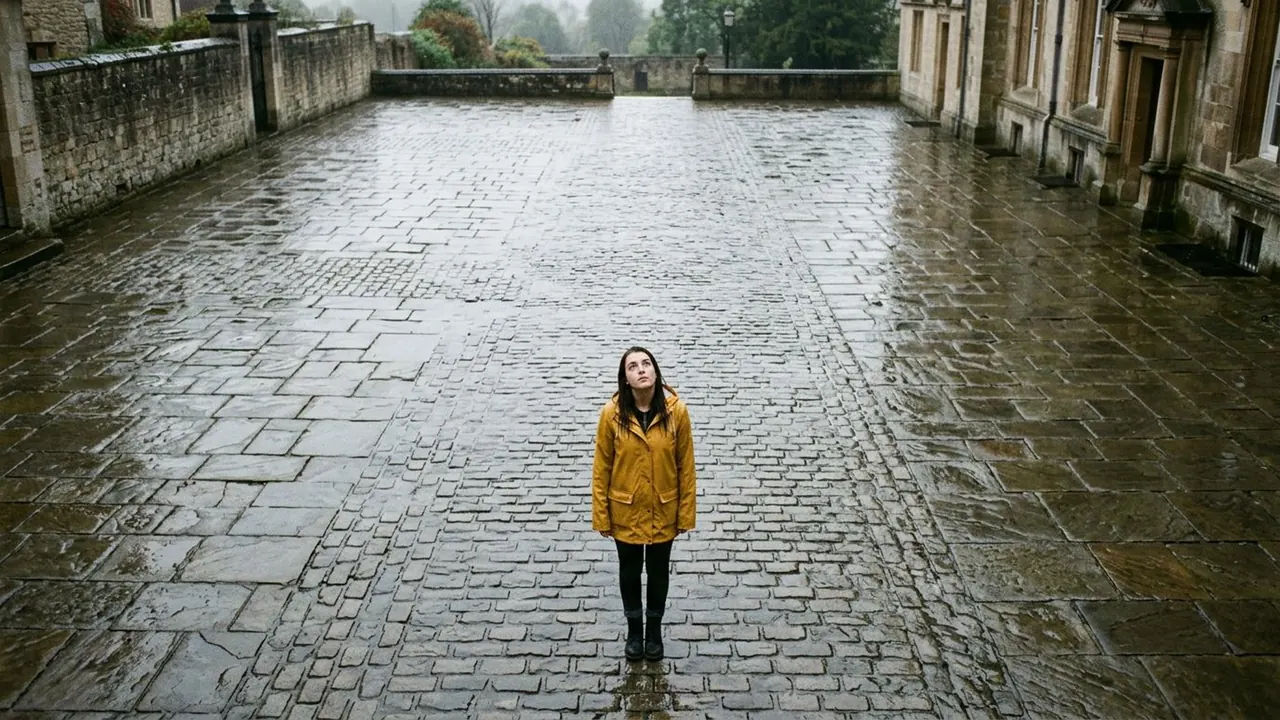
A bird's eye view is the same ninety degree look from far higher, where a landscape fills the frame instead of a surface. This one stays close and keeps the texture of what it is looking at.
A high angle looks down at a slant and keeps a horizon somewhere in the frame. If you can see where the floor stops, the shot is a high angle.
On film
Lars von Trier shoots Dogville (2003) from directly above so the chalk outlines of the town read as a plan, and the film's staging only makes sense from that angle. Wes Anderson uses the same ninety degree look in The Grand Budapest Hotel (2014) for hands, letters and objects, cut in flat against the rest of the coverage.
- Dogville (2003)
- The Grand Budapest Hotel (2014)
The prompt
Replace the blanks, keep the rest. Then run it on a video model.
overhead shot looking straight down at <subject>, camera directly above, flat plan view, close range
What goes wrong
Models deliver eighty degrees and call it done. Say straight down, ninety degrees, directly above, and add that the edges of the surface run parallel to the frame.
The other failure is the rig in the picture, or a shadow where the camera is. Name the direction the light comes from so it does not arrive from the lens.
Leave out
angled, eye level
Watch for
Straight down means ninety degrees. A few degrees off and it reads as a high angle.
Questions
Shoot it
Pay for the one run. No subscription, and the price is on the model page before you sign in.
Next to it in the height ladder