Bird's-Eye View
- top down
- overhead still
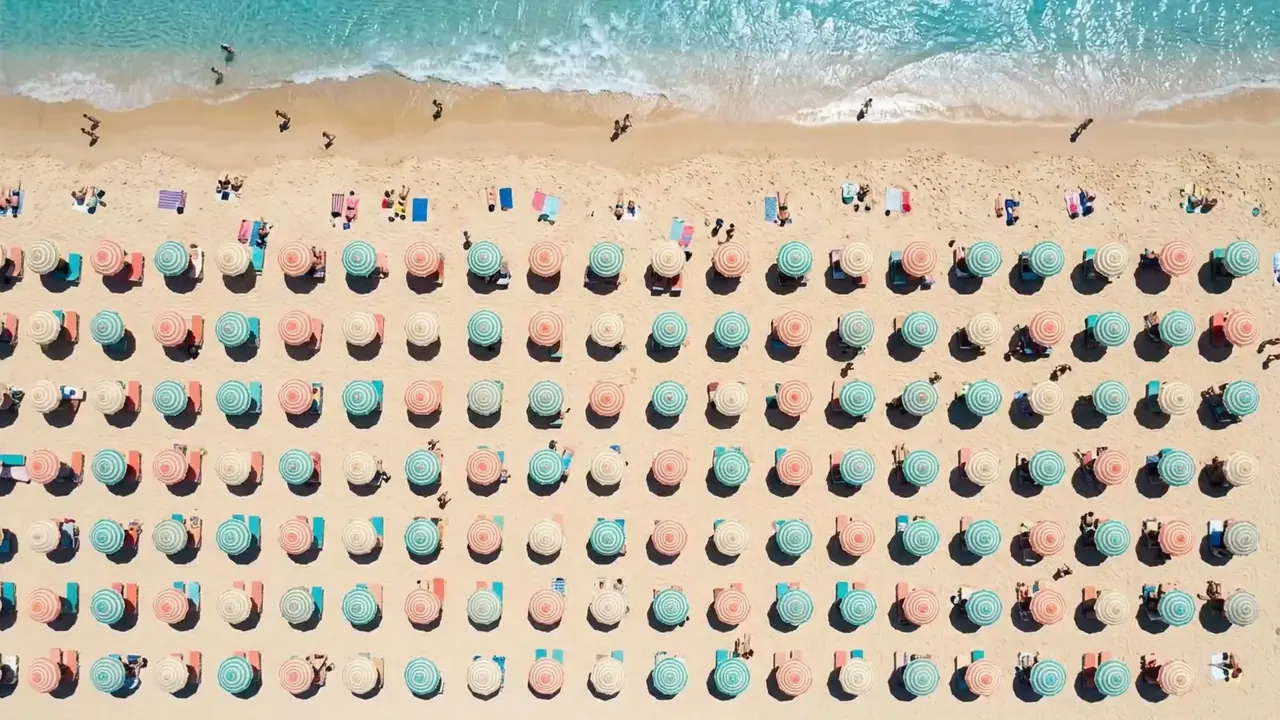
The camera looks straight down from high above, and the scene reads as a map.
Opens a video model with the prompt in it. The price is on the page before you sign in.
What it is for
From this height a scene stops being a place and becomes a pattern. Roads, tables, crowds and rooftops read as shape and spacing, and the people inside them are marks.
That is the trade the angle offers. It hands the audience the whole layout in one frame, and it takes away every face in exchange.
How it works
The camera sits far above the subject and looks straight down, so the ground fills the frame and the shot has no horizon in it. Height is what separates this from an ordinary overhead: hundreds of feet rather than a few.
Drones and helicopters do most of this work. A long lens flattens the ground further and pushes the picture toward graphics. A wide lens keeps a little falloff in the corners, which is often the only cue left that the ground is a real surface rather than a drawing.
When to use it
Use it to open on a place, to show a formation, and to say that one person is one of many. It also closes a sequence well, because pulling out this far ends whatever argument the scene was having.
Skip it for anything that lives on a face. At this distance an expression does not exist, and a model asked for emotion here will quietly drop the height to deliver it.
Told apart from its neighbours
An overhead top-down shot uses the same ninety degree look from a few feet up, aimed at a table, a bed or a body. A bird's eye view puts the camera far enough back that the scene becomes a map.
The test is what fills the frame. A surface and the things on it is an overhead. A landscape or a block of a city is a bird's eye view.
On film
Busby Berkeley put the camera directly above his dancers in the Warner musicals of the 1930s. The By a Waterfall number in Footlight Parade (1933) turns a pool of swimmers into a rotating pattern, and nothing in those frames reads as a person, which is the whole reason for the height.
- Footlight Parade (1933)
The prompt
Replace the blanks, keep the rest. Then run it on a video model.
bird's eye view high above <subject>, camera looking straight down, scene reading as a flat pattern below
What goes wrong
Models split the difference and return a high angle from twenty feet. Say the camera is high above and looking straight down, then name what the pattern below is made of.
The second failure is a subject enlarged to stay readable. Ask for the figures to be small, or the shot comes back as a person seen from a stepladder.
Leave out
eye level, low angle
Watch for
From this height people become shapes. Use it for pattern, not for faces.
Questions
Shoot it
Pay for the one run. No subscription, and the price is on the model page before you sign in.
Next to it in the height ladder