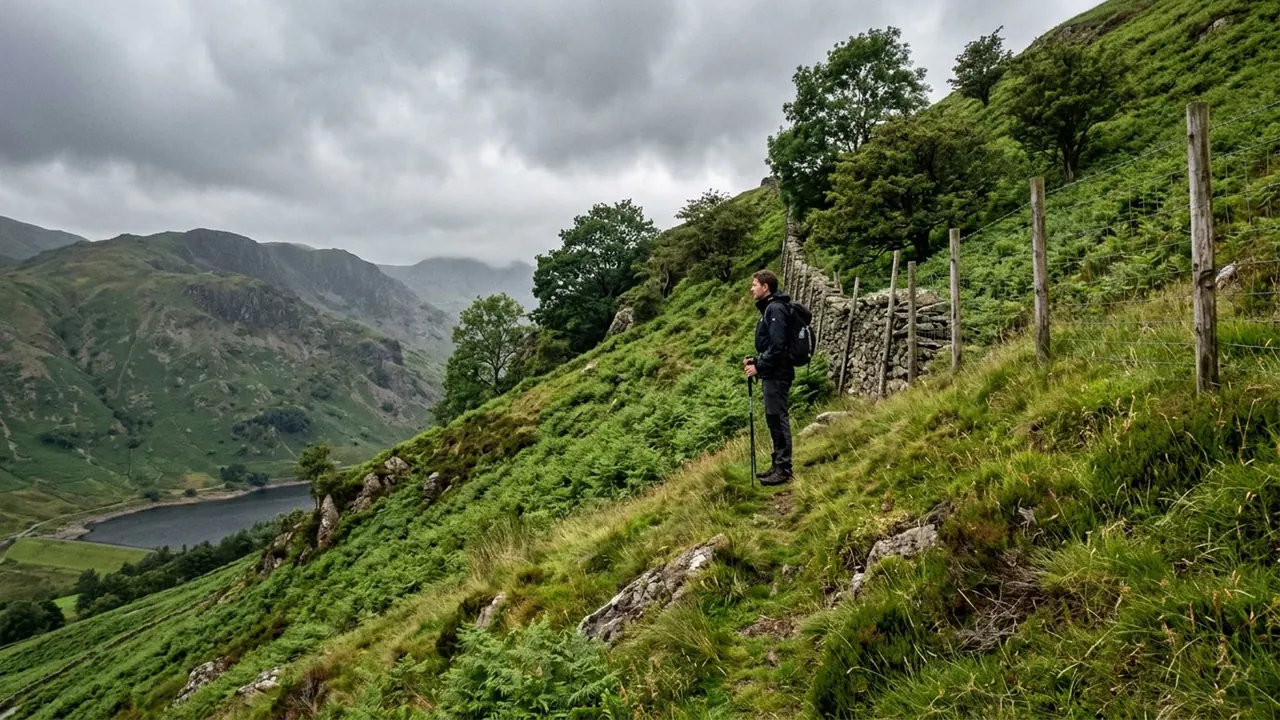
Dutch Angle
- canted angle
- oblique angle
- Dutch tilt
- Canted framing
The camera holds a fixed cant, so the horizon sits off level for the whole shot.
Opens a video model with the prompt in it. The price is on the page before you sign in.
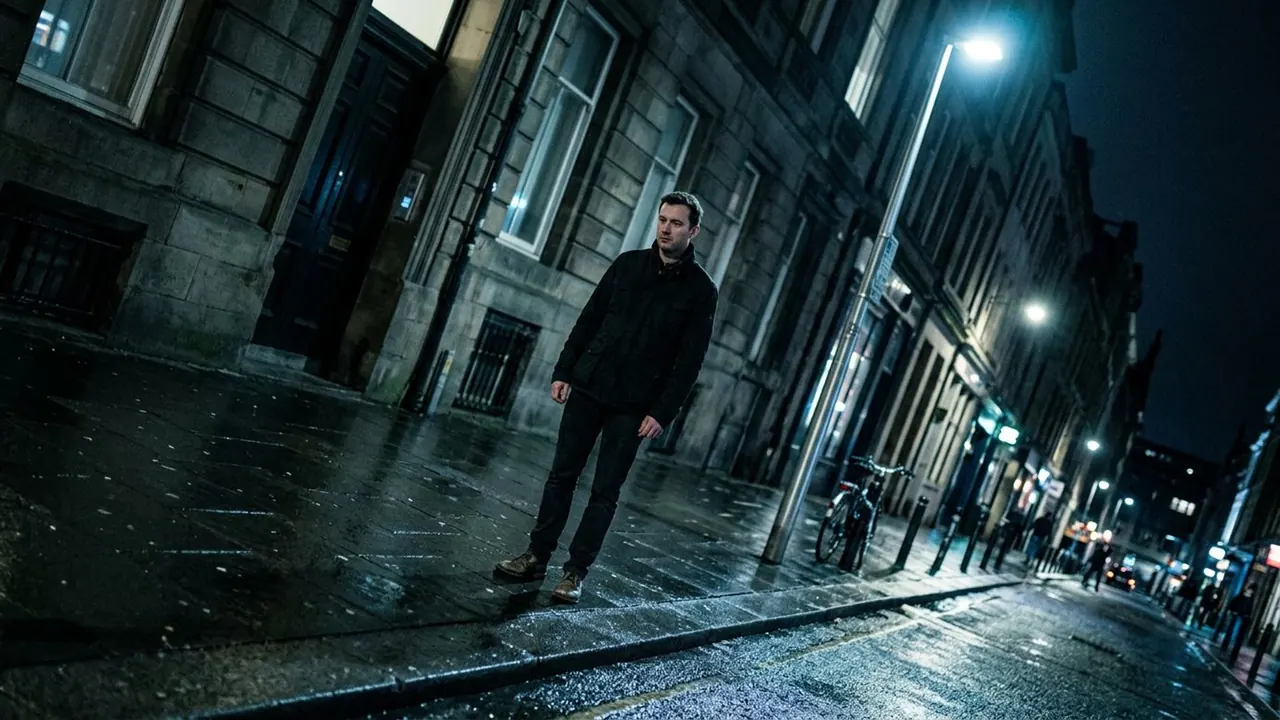
What it is for
The horizon comes off level and stays there, so the whole frame is wrong in a way the audience feels before they can name it. Nothing in the scene has to change.
It works because a level horizon is the one thing every viewer expects without being taught. Taking it away is the cheapest unease available to a camera.
How it works
The camera rolls on its lens axis and holds the new position. Five degrees is a whisper that reads as vague discomfort. Twenty degrees is unmistakable. Past thirty the shot becomes a statement about style.
The cant needs a straight line to work against. A horizon, a doorframe, a lamppost, the edge of a table. A canted shot of an open field has nothing to tilt against and reads as a mistake.
It holds for the length of the shot. A camera that rolls while recording is doing something else, and the movement reads as a transition rather than a state.
When to use it
Use it on the moment a character loses their footing, on a place that is not what it claims to be, and on action where the ground should stop feeling reliable.
Avoid using it everywhere. A film canted throughout resets the audience's sense of level, and the effect stops working by the second reel.
Told apart from its neighbours
A low angle points the camera upward and keeps the horizon level. A dutch angle rolls the camera sideways and can be shot from any height.
The test is which axis moved. Tilt up or down is a low or high angle. Roll to the side is dutch.
On film
Carol Reed cants a great many frames in The Third Man (1949), and the tilted Vienna streets became the reference point for the technique. Spike Lee uses the same device through Do the Right Thing (1989), leaning the frame further as the day gets hotter.
- The Third Man (1949)
- Do the Right Thing (1989)
The prompt
Replace the blanks, keep the rest. Then run it on a video model.
dutch angle on <subject>, camera canted off level, horizon tilted and held there, unsettled framing
What goes wrong
Models return a level frame, because level is what almost all of their footage looks like. Say the horizon is tilted and held there, and give the angle in degrees.
The second failure is a roll that moves through the shot. If the cant drifts, the result is a dutch roll rather than a dutch angle, so say the cant is fixed.
Leave out
level horizon, roll during the shot
Watch for
The cant is fixed. If it moves through the shot, you asked for a dutch roll.
Questions
Shoot it
Pay for the one run. No subscription, and the price is on the model page before you sign in.