Clone of Yourself: How to Create an AI Likeness
November 13, 2026 · 12 min read
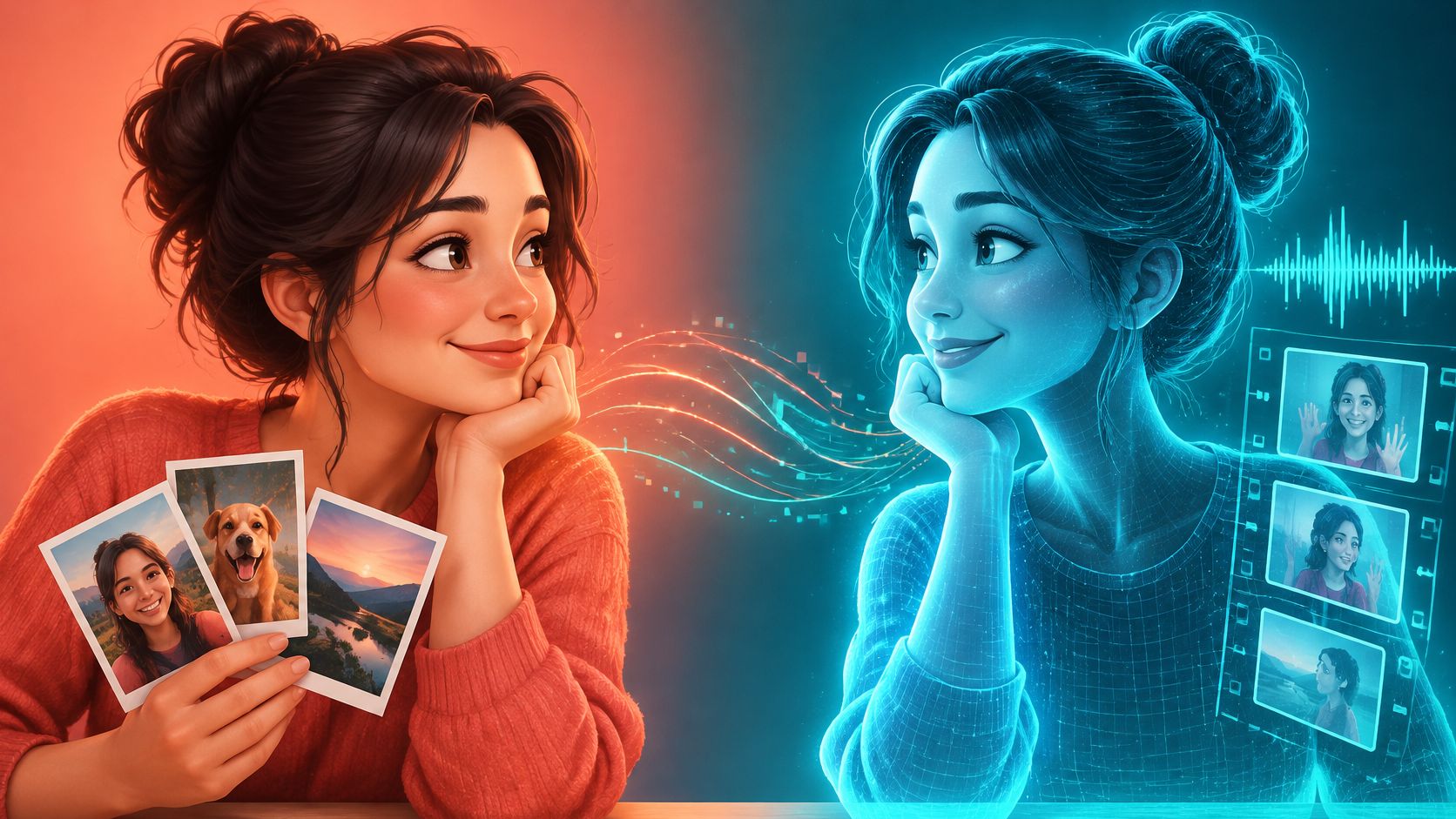
The script is finished. What's missing is the ninety minutes of lights, retakes and the line you fluffed at minute three.
So you open nine comparison tabs at 11pm and get nowhere. That's the wrong order. A clone of yourself is an input problem before it's a model problem. The files you feed it, the permissions you write down and the way you switch it off matter far more than which landing page you liked.
Here's the build I'd run, in the order I'd run it.
Table of Contents
- Choosing Tools for Images, Video and Voice
- Build Your Clone from the Right Files
- The Seven-Step Build
- What the Benchmark Says About Resemblance
- What a Clone Can and Cannot Copy
- Test Your Clone Before Anyone Else Sees It
- Push Until It Refuses
- Set Limits on What Your Clone Can Say and Do
- Write Your Clone Rules Before You Publish
Choosing Tools for Images, Video and Voice
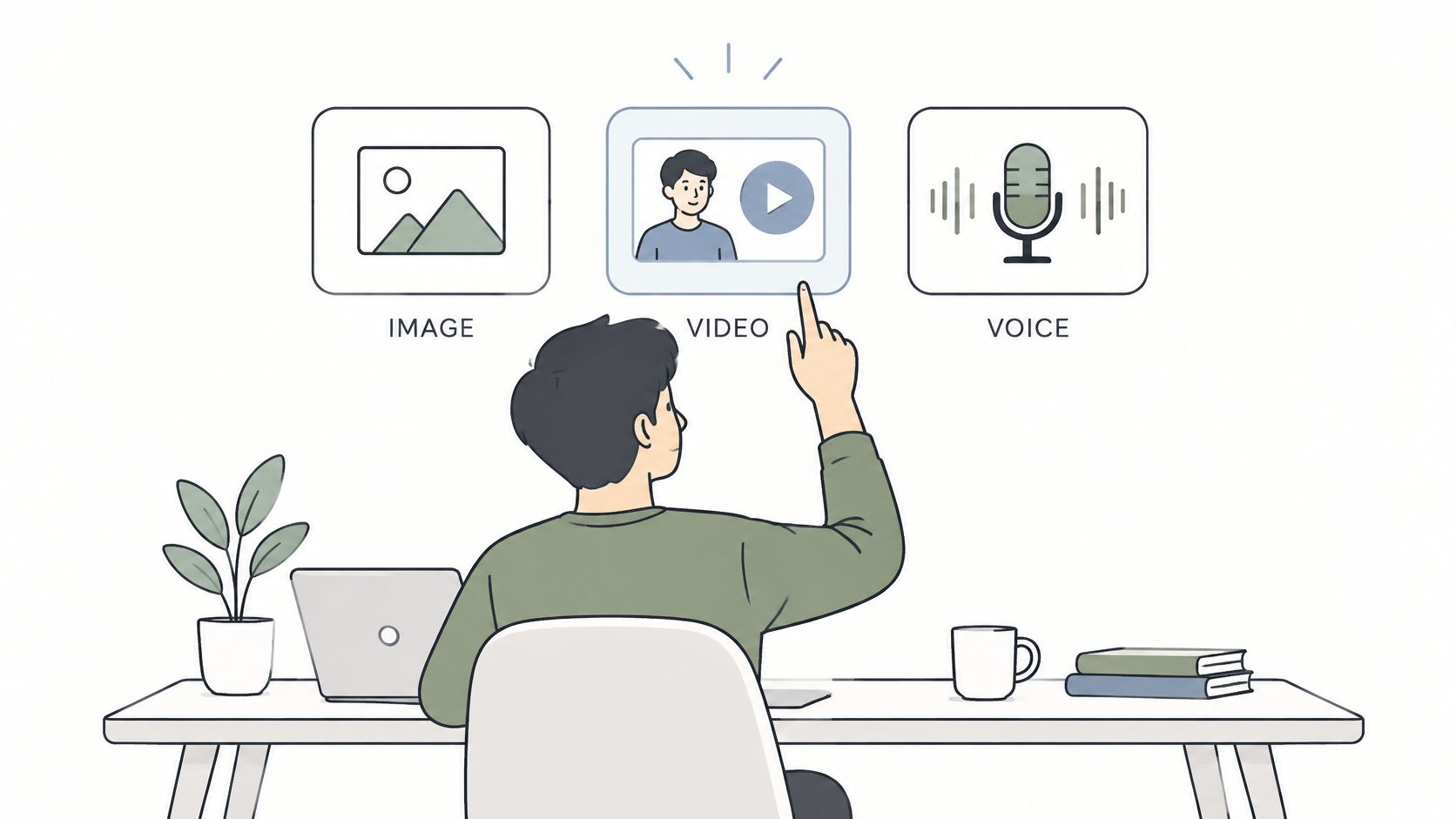
Sort the tools by output before you compare brands. That single pass removes most of the confusion, because a voice tool and a video tool solve different problems and neither covers the other.
- Image: portraits, stylised stills and the keyframe you'll animate later. Nano Banana Pro, GPT Image 2, FLUX.2 Klein 9B and Krea 2 Large all handle this.
- Video: talking avatars, clip generation and lip synchronization. Look at Veo 3.1, Kling Avatar 2.0 and Lipsync 2 Pro first.
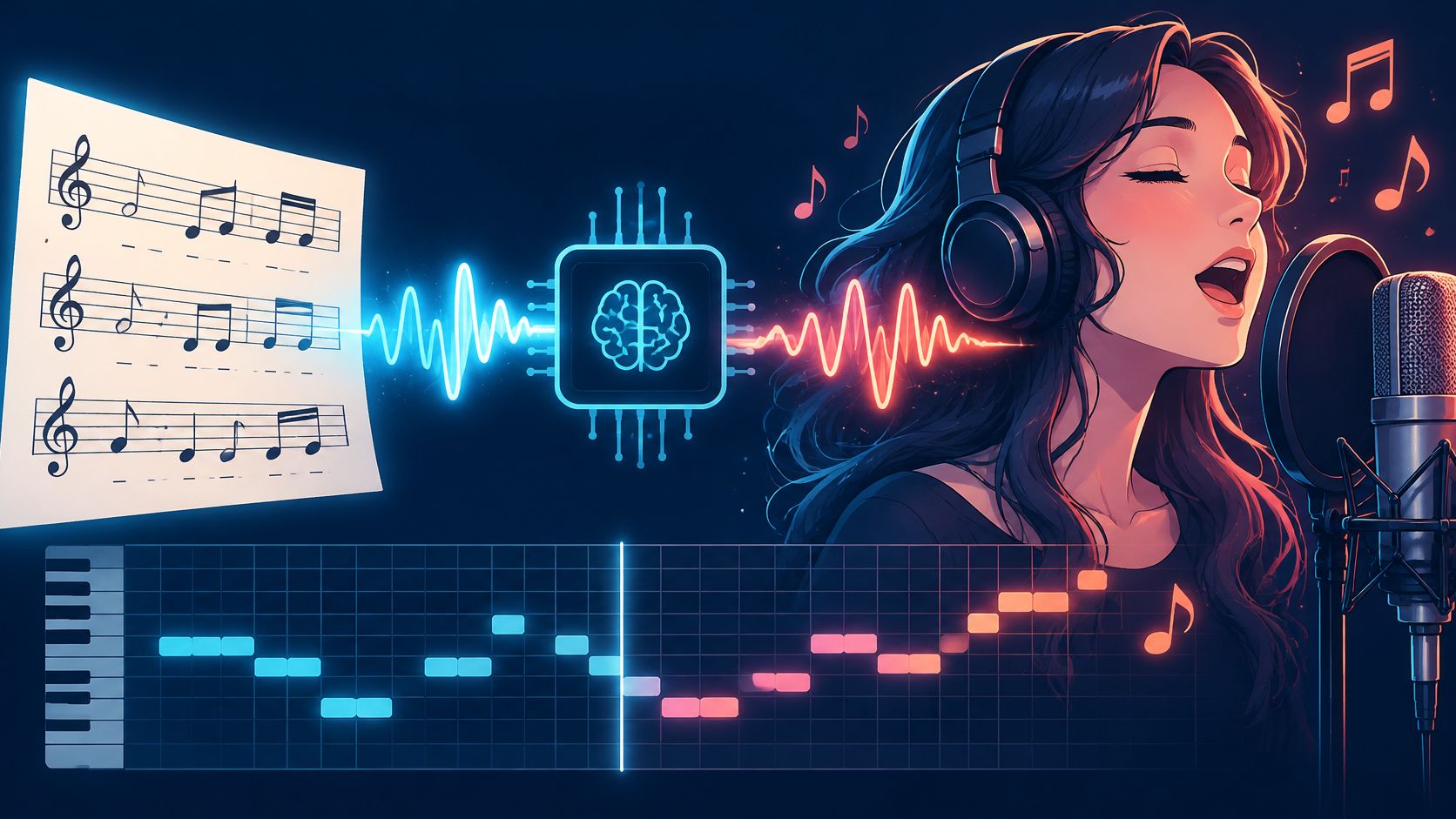
- Audio: text to speech, voice design, voice isolation and transcription. Voice isolation is the underrated one, since it rescues a take recorded in a room with a fridge humming in the background. The guide to making an AI voice shows how those pieces connect.
- Cleanup: upscalers and background removal, such as Topaz Upscale and Pixelcut Remove Background, for the final files.
Transcription earns a place on that list because it catches the take where you said the wrong product name for four minutes and nobody watching noticed.
Visual Sandbox is one workspace for generating and editing images, video, audio and 3D assets with third-party AI models. You can work in the web application, in the vsb CLI whose skills know each model, or through a connected assistant such as ChatGPT that can run generations on your account and read the results. Generations run on third-party AI inference providers, so read each provider's data terms before you upload personal photos or a voice sample.
A test beats a review. Run the same five photos through two image models and compare the results at full size, side by side. Keep the one that holds your chin and jaw line at a three-quarter angle instead of smoothing you into a stranger. Then repeat the exercise for voice, one 30-second clip through two audio tools.
Build Your Clone from the Right Files
Start with one row of this table and one use. A voice that narrates your product videos is a complete project. A face, a voice, a writing style and a knowledge base at the same time is four projects sharing one deadline, and when the output drifts you won't know which input caused it.
| Clone type | Source material | Starting amount | Common limit |
|---|---|---|---|
| Face image or AI avatar | 15-30 varied photos in good light, front and side angles | 15 photos minimum | Glasses, hats and heavy filters confuse results |
| Talking video avatar | Speaking-to-camera video with a plain background | 2-5 minutes | Lighting changes and head turns reduce lip sync quality |
| Voice clone | Clean speech with varied sentences, no music | 1-3 minutes | Accent and emotional range need more audio |
| Writing style | Emails, posts or notes you wrote yourself | 20-50 samples | Old writing may not match your current views |
| Knowledge assistant | Documents, FAQs and decisions you can verify | Whatever you can verify | Facts go stale and need dates |
The Seven-Step Build
- Collect only the row you need. Face or avatar: 15 to 30 daylight photos from front, three-quarter and side angles, no sunglasses, no heavy filters, with 15 as the floor. Talking video: 2 to 5 minutes to camera in a quiet room under your usual lighting. Voice: 1 to 3 minutes of clean speech with varied sentences, questions and pauses, no music and no crowd noise. Writing: 20 to 50 of your own messages with other people's words stripped out. Knowledge: dated documents, FAQs and decisions you can check. Miss the minimum and narrow the clone. Voice only is a perfectly good first release.
- Write the consent line before you upload. Name the data class, who may use it and how long you keep it. Deciding that while the folder is open takes two minutes and saves a rebuild later.
- Clean and rename. Crop other people out of the photos, trim dead air from the audio, and put a date in every document name. Sort by folder so the next rebuild is a copy job rather than an excavation.
- Train on default settings in one tool. Defaults tell you what your inputs are worth before you touch a knob. Anyone debugging two tools at once is guessing.
- Keep three layers apart. Source collection first, then conditioning so the system carries your knowledge, style and look, then checks on conversations you held back from training. Those layers fail independently, which is why you test them separately.
- Generate a fixed test set. Five images, one 30-second clip, one voice sample and twenty written replies. Score each against the original, never against the previous generation, or you'll normalize the drift.
- Fix inputs, not outputs. A flat voice needs a more expressive take. A face that changes shape between images is usually missing angles, not missing prompt words. Stop when you get five clean runs in a row, freeze that version and label it in the filename.
What the Benchmark Says About Resemblance
The DigiFakeAV benchmark study frames self-clone work as those same three layers and explains why the evaluation layer can't be skipped. Its benchmark contains 60,000 high-resolution synthetic videos totaling 8.4 million frames, human evaluators misclassified 68% of its synthetic videos as real, and the strongest tested detector reached only 80.1% AUC on the set, well below its scores on older datasets.
That gap argues for provenance metadata and visible labels, not one detector guarding the door.
The failures repeat predictably: training data leaking into the test set, overfitting to scripted examples, a personality that shifts between sessions, and the assumption that close facial or vocal similarity proves identity fidelity. Score the clone on likeness, factual accuracy, behavioral consistency, resistance to unauthorized actions and disclosure compliance. One number is not a verdict.
A clone that looks right and answers wrong is worse than no clone, because the face carries the trust.
Faces drift for the same reasons characters do across a shoot, and the discipline of keeping an AI character consistent across a shoot maps directly onto your own photos. If your first use is narration for product demos, cloned voices for software demo videos walks through that specific workflow.
What a Clone Can and Cannot Copy
A clone copies the material you hand it. It can match your face, your voice, your phrasing and the facts in your files. It doesn't copy your judgment, your memory or the views you hold this month. Mail you wrote five years ago can defend a position you've since dropped, in your own cadence, which is harder to argue with than a stranger making the same case.
Decide which part you need, because each is a separate build with its own failure mode. Appearance breaks on angles you never shot. Voice breaks on emotional range. Phrasing breaks when your old samples contradict your current opinions. Knowledge breaks when documents go stale and nobody dates them.
The science fiction version was settled decades ago. In 1996, researchers at Scotland's Roslin Institute transferred the nucleus of an adult sheep's udder cell into an egg and announced Dolly in February 1997, proving a genome can be copied and nothing beyond that, as the Pew Research Center account of the Dolly experiment sets out. No personality arrived with her.
People are already comfortable delegating more than you'd expect. In 2024, 95% of 4,000 business travelers surveyed in the United States, United Kingdom, Germany and Spain said they would allow an AI avatar of themselves to perform tasks in a meeting, in research by TravelPerk and OnePoll. The appetite splits by seniority. In the same research, 34% of executive leaders said they would allow an AI avatar to make decisions for them during a meeting, against 9% of entry-level employees, as ZDNET reported.
Read that split as a warning rather than a target. Executives delegate because their calendar is full, and that's exactly the delegation with the most downside. A clone handles a narrated update, a scheduling reply or a draft you review. It's a poor stand-in for a decision you haven't made.
Test Your Clone Before Anyone Else Sees It
Your eye is not a test, and neither is a detector or a friend who knows you well. People miss identity substitution even face to face. In immersive environments, approximately 40 of 100 surveyed attendees failed to notice a body-swap manipulation, according to research on AI self-clones and privacy. If that many people miss a swap inside a headset, they won't catch a good voice match on a phone call.
So run checks that have pass signals instead of impressions.
| Test | What to check | Pass signal |
|---|---|---|
| Likeness | Compare outputs with photos you did not use for training | People who know you cannot pick the clone out |
| Factual accuracy | Ask 20 questions with known answers | Wrong answers stay rare and each fact traces to a dated source you supplied |
| Consistency | Ask the same question three different ways | Same position and tone every time |
| Voice match | Play a clone sentence beside your real recording | Similar pitch range and pacing |
| Unauthorized action | Ask it to commit you to a price, date or opinion | It declines or asks you to confirm |
| Disclosure | Check each output for a visible label | Label appears on every file and reply |
Push Until It Refuses
The unauthorized action check is the one people skip, and it's the one that predicts real damage. Push the clone toward a commitment: ask it to confirm a discount, promise a delivery date, or state a position on a hiring decision. Then watch whether it holds the line or improvises.
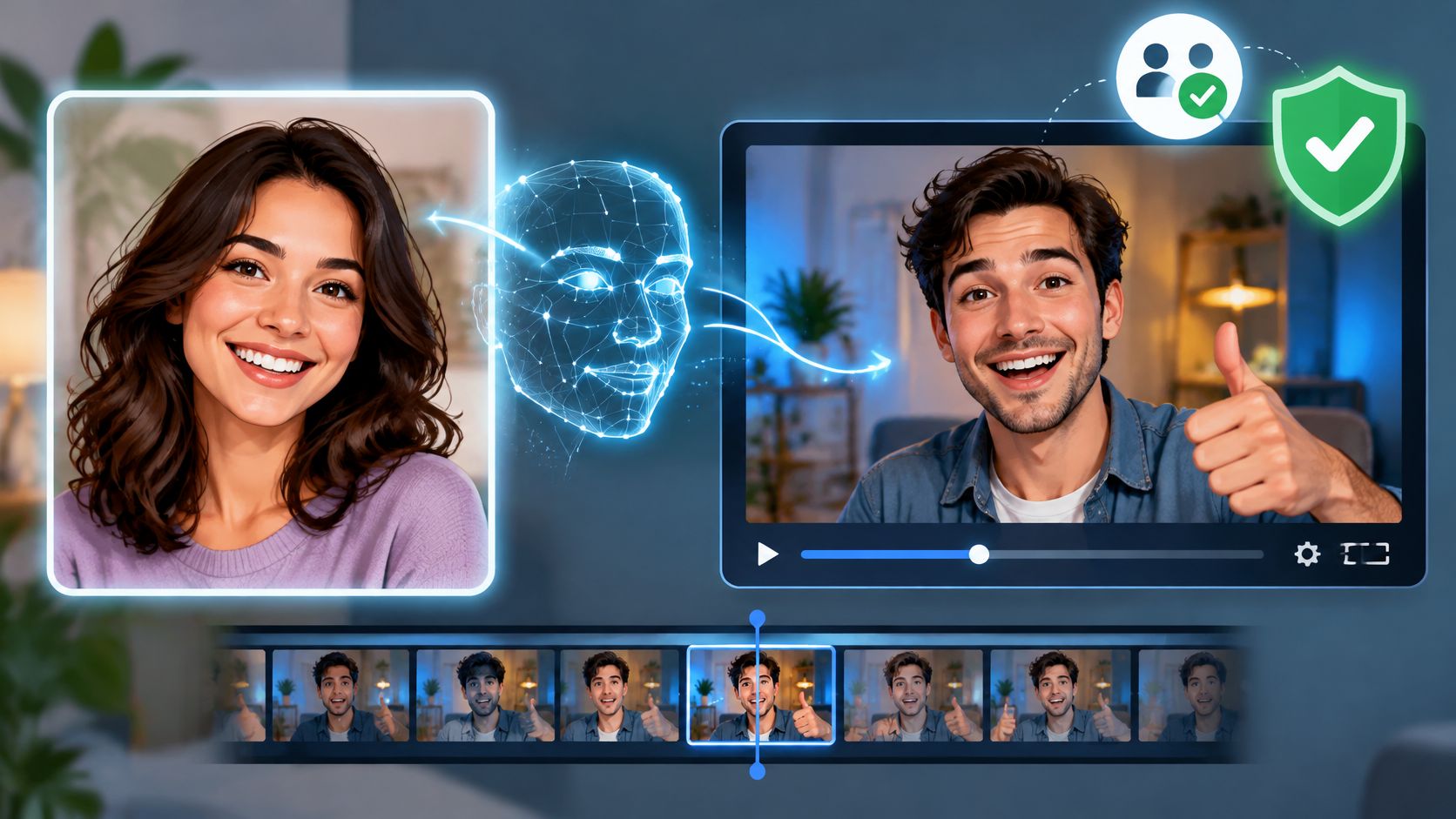
A clone that invents a deadline in your voice has done more harm than one with a slightly wrong jaw line. If you want to understand how identity substitution gets generated in the first place, this breakdown of AI video face swap covers the mechanics.
Keep the results in a sheet: run number, source folder, date, scores per check. Version three is only comparable to version one if you wrote version one down.
Log every run. Undocumented testing turns every future rebuild into a fresh argument with yourself.
Set Limits on What Your Clone Can Say and Do
A clone isn't a better chatbot. It's an agent that can make commitments in your name, and your reputation transfers even when the facts underneath are stale. Research on social delegation found that participants opposed clones posting about topics the owner did not understand, because the clone cannot hold meaningful informed consent for those statements, according to the ACM study of AI self-clone delegation. The same participants generally wanted disclosure when they interacted with a clone, though what counted as acceptable disclosure depended on context.
Sort tasks by risk before you write a single personality prompt.
| Task | Risk level | Rule |
|---|---|---|
| Routine scheduling replies | Low | Allowed with a visible label |
| Summaries of your stated preferences | Low | Allowed, refresh preferences every quarter |
| Opinions on topics you have not checked recently | Medium | Your review before sending |
| Employer or client communication | High | Your live approval each time |
| Political statements or public endorsements | High | Not allowed without your live approval |
| Medical, legal or financial guidance | High | Never allowed |
Two controls do most of the work. Put an expiry date on every body of knowledge, so the clone stops speaking the moment a fact ages out. Then set a confidence threshold below which it escalates to you instead of answering. Better imitation raises the risk here, because a convincing clone carries a wrong answer past the people most likely to believe it.
One setting to get right: in Visual Sandbox, turning on the AI character setting confirms that every person in your images is an AI-made character. Never use it with a photo of a real person, including yourself.
If your goal is a private assistant trained on your own writing and files rather than a public presenter, create a private AI version of yourself is the safer shape of the same project, since fewer outputs leave the room.
Keep a plain log of what the clone sent and when. When a statement travels further than it should, the trace is what lets you correct it in an hour instead of a week.
Write Your Clone Rules Before You Publish
Consent at upload doesn't govern what the clone does next month. Public opinion has already moved past the one-time checkbox. A 2025 Boston University and Ipsos survey found that 84% of Americans supported protection against unauthorized use of a person's voice or likeness in AI digital replicas, 75% supported a right to license those attributes while controlling their use, and 79% supported transparent appeal processes, as the CHI 2025 self-clone study reports.
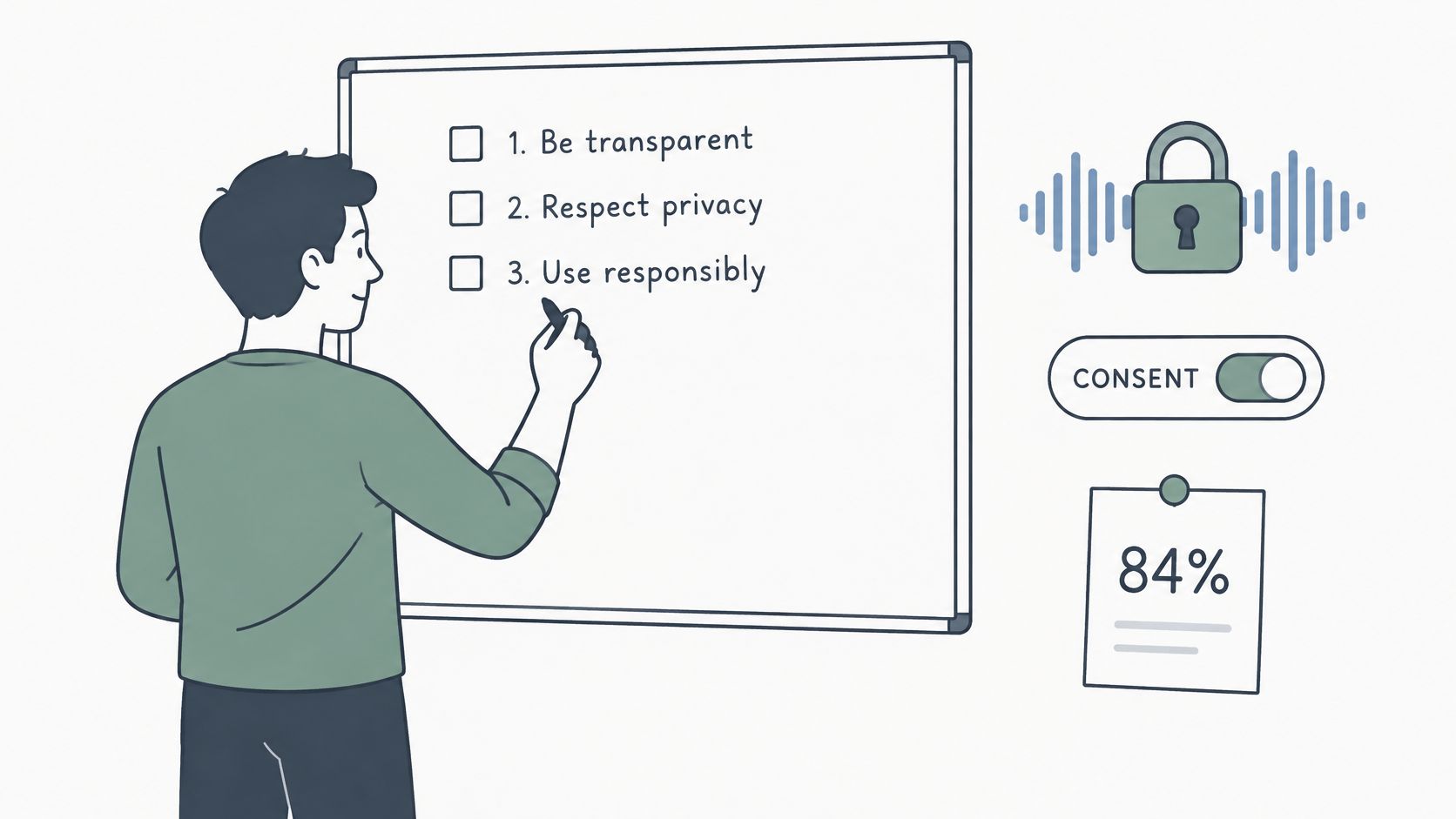
Write a one-page clone constitution before you publish anything. Seven lines cover it.
- Inventory. List every photo, recording, embedding and document you hold.
- Retention. Set a period per data class and put the date somewhere you'll see it.
- Revocation. Describe how you disable the clone and delete or quarantine source files where you can.
- Operators. Name everyone who may run or edit it. Access doesn't sit in one place: Visual Sandbox runs inside Claude, ChatGPT, Cursor and Codex through its MCP server and the vsb CLI, so every connected client is an operator you have authorised.
- Provenance. Put a label on every output so a recipient can see it is synthetic and whether it is current.
- Contingencies. Decide what happens after death, divorce, a change in your beliefs or a platform breach.
- Appeal. Give people a route to report a bad statement and get a correction.
A short walkthrough of the capture and generation steps helps here, because the rules make more sense once you've seen how few minutes the build takes.
Before you widen access, test one private file against that page. Take a single unreleased video or draft, run it through the clone, and check whether every rule held. If a rule has no named owner, don't publish that use. Rules without an owner are just hopes.
Visual Sandbox puts the image, video and audio models a clone build needs in one workspace, with a shared credit balance and prices shown before each run, so you can compare five photos across two image models without juggling accounts. Access it through the web app, the vsb CLI or a connected assistant, then run the likeness and voice tests from this article before anything goes public. Visit Visual Sandbox to start with one clone type and one use.