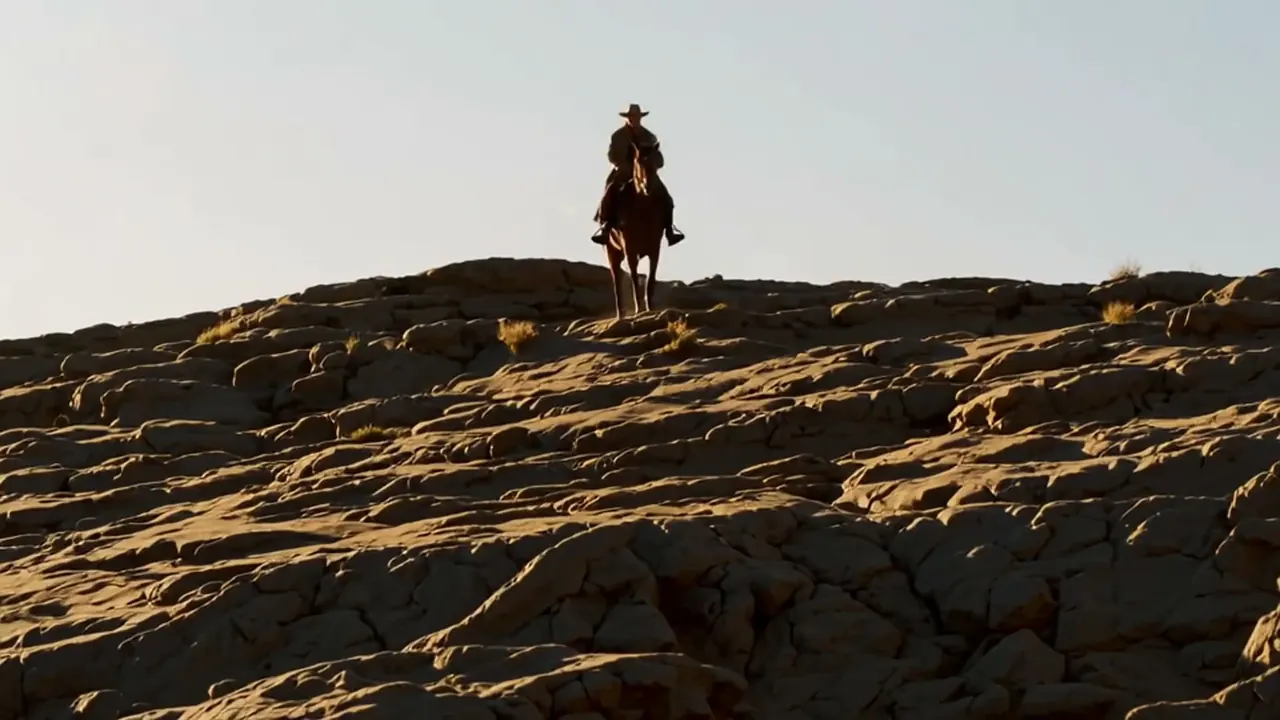
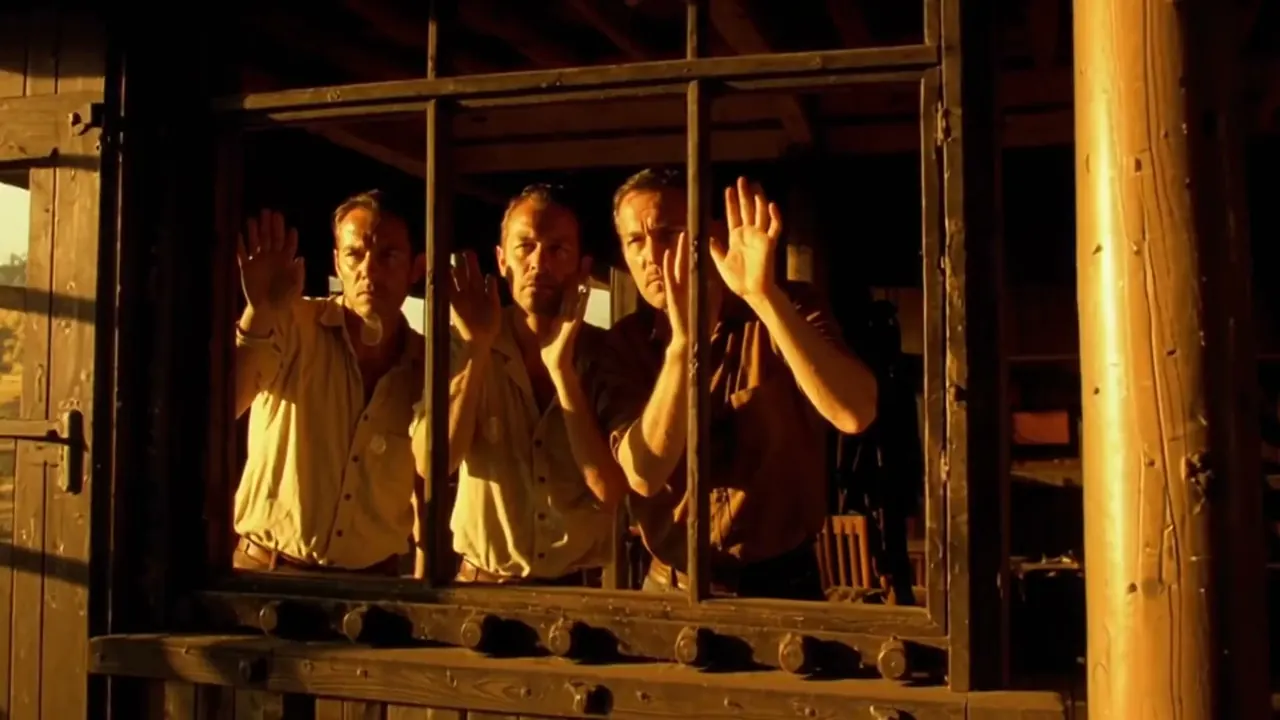
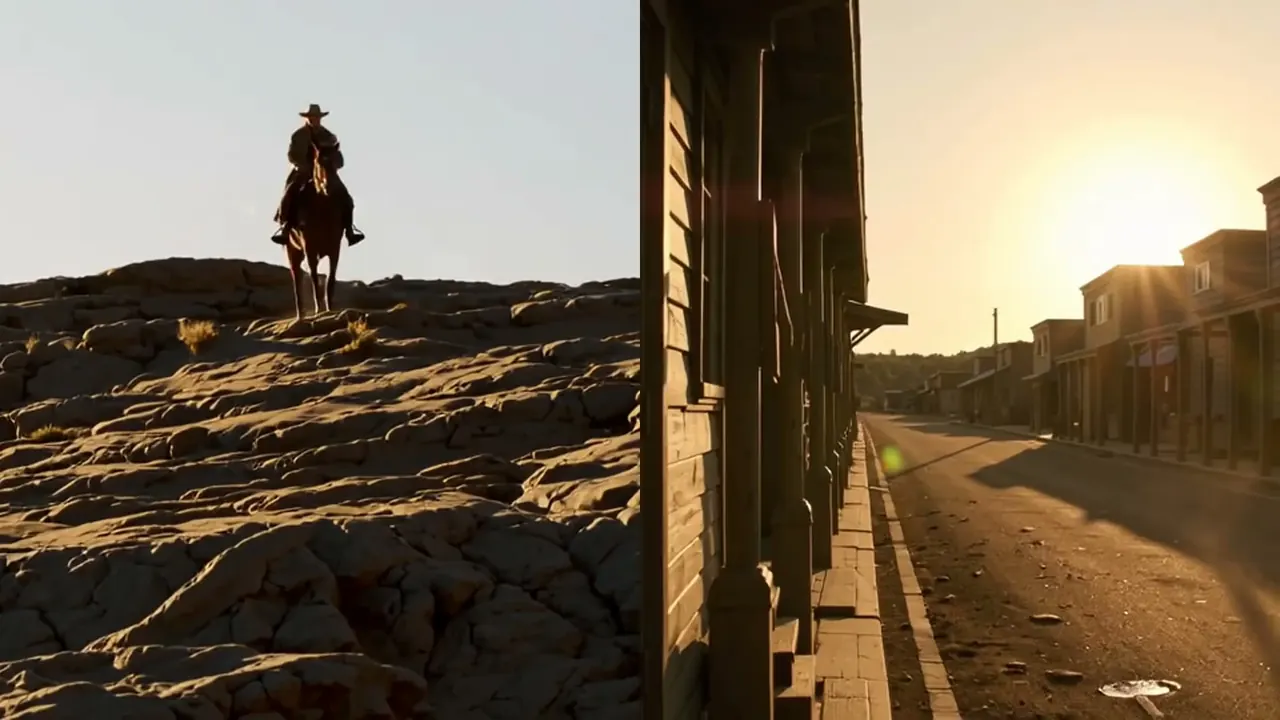
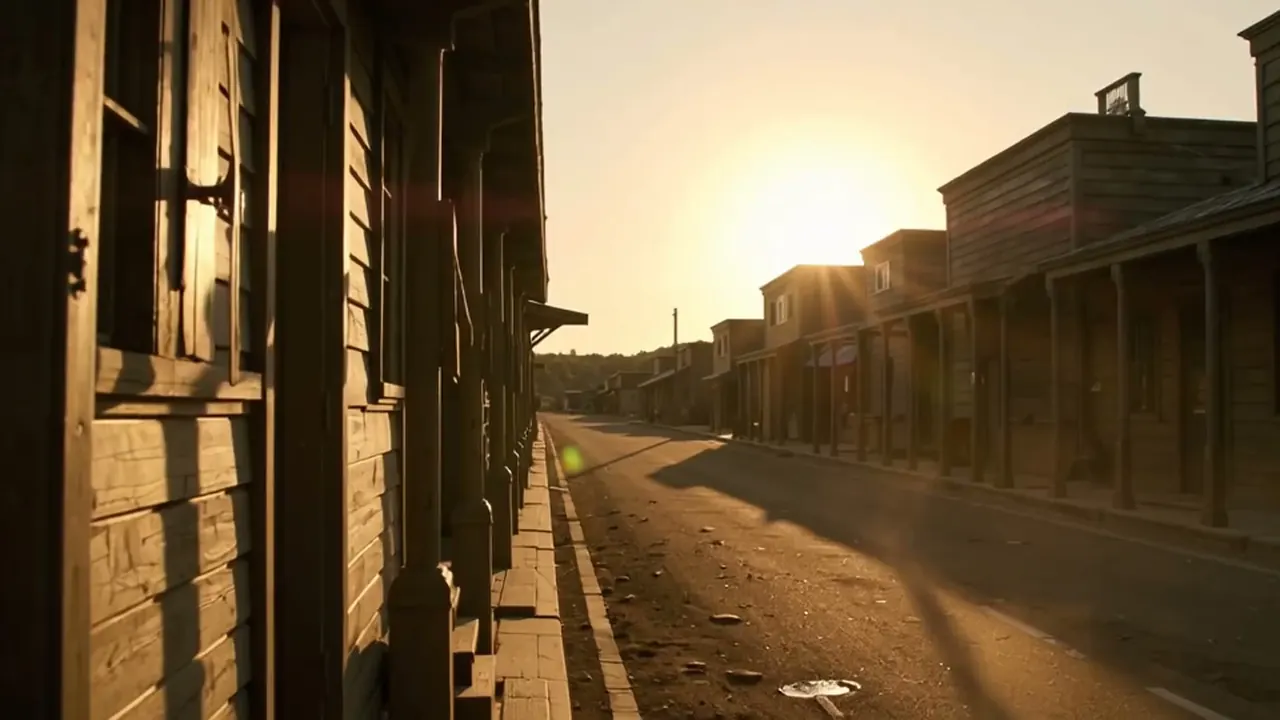
Montage
- Associative juxtaposition
- Idea generated by the cut
A run of short shots compresses a long stretch of time.
Opens a video model with the prompt in it. The price is on the page before you sign in.
What it is for
A run of short shots compresses a long stretch of time into a few seconds. Training, building, travelling, falling in love. The audience fills in everything the film skipped.
The word carries a second meaning from Soviet cinema, where montage means the idea produced by putting two unrelated shots together. Both senses are in use, and both depend on the cut doing the work rather than any single shot.
How it works
Each shot shows one visible step in a change, and the steps run in order. A montage where nothing progresses is a slideshow, because the audience has no way to read how much time has passed.
Consistency holds it together. Keep the palette, the light and the subject recognisable across the run, and let one variable move, whether that is skill, weather, season or the state of a building.
Every shot is a separate run. Prompt them with shared wording for everything that should stay fixed, and change only the element that is advancing.
When to use it
Use it when a process matters and its duration does not. Also use it for the associative version, where two shots side by side make a point neither one makes alone.
Skip it when the audience needs to feel how long something took. A montage removes duration, so a scene about endurance loses its subject.
Told apart from its neighbours
Cross-cutting alternates between two places at the same moment. A montage runs forward through time in one line of action, and it returns to nothing.
Quick cutting is a rate. A montage is a structure, and it can be cut fast or slow. The two often appear together without meaning the same thing.
On film
Sergei Eisenstein cuts the killing of workers against footage of cattle being slaughtered in Strike (1925), and the meaning comes from the join rather than from either shot. He set the argument out in his writing on montage, and October (1927) applies the same method to a sequence of religious images.
- Strike (1925)
- October (1927)
- Yi Yi (2000)
The prompt
Replace the blanks, keep the rest. Then run it on a video model.
sequence of short shots showing <process> with <subject>, time compressing across the run, each shot advancing the change
What goes wrong
A single prompt describing a process returns one continuous shot of it. Break the process into its steps, run each one, and assemble them.
The second failure is a run with no progression. Name the visible change in every prompt, such as the wall one course higher or the light an hour later, or the shots read as alternatives rather than as a sequence.
Leave out
one continuous shot, real time
Watch for
Render each shot on its own. Give each one a visible step in the change.
Questions
Shoot it
Pay for the one run. No subscription, and the price is on the model page before you sign in.