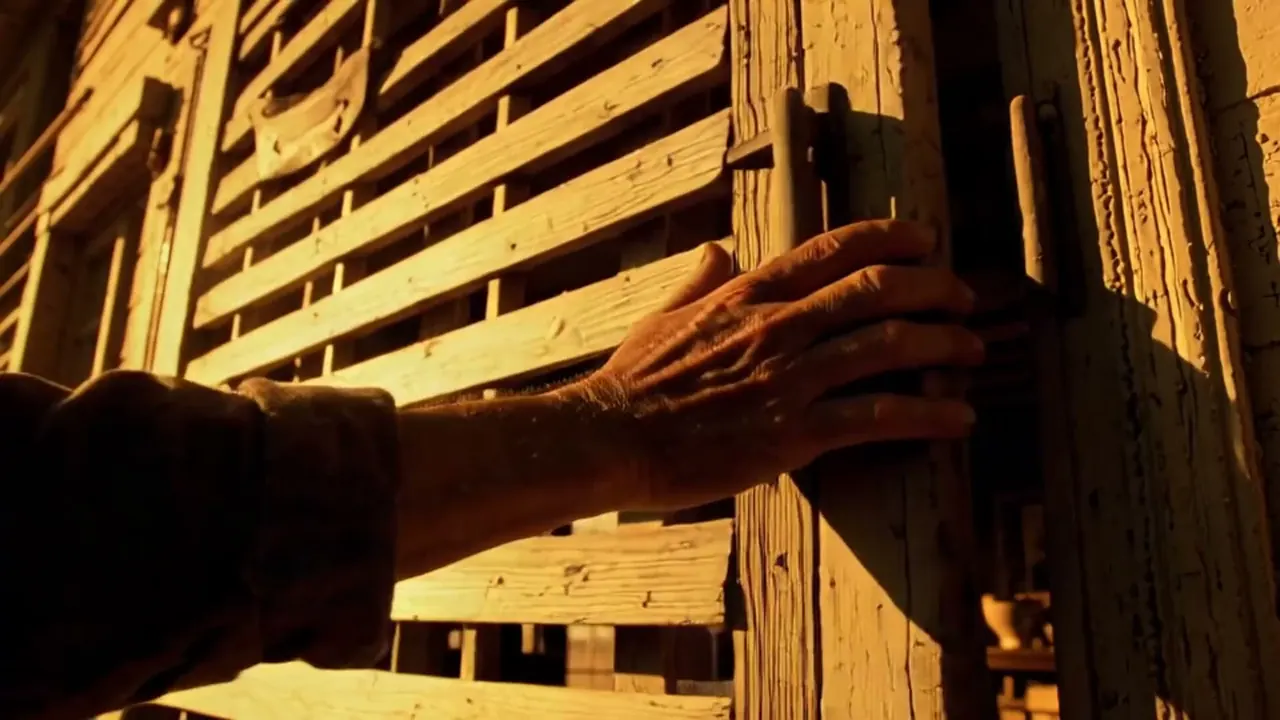
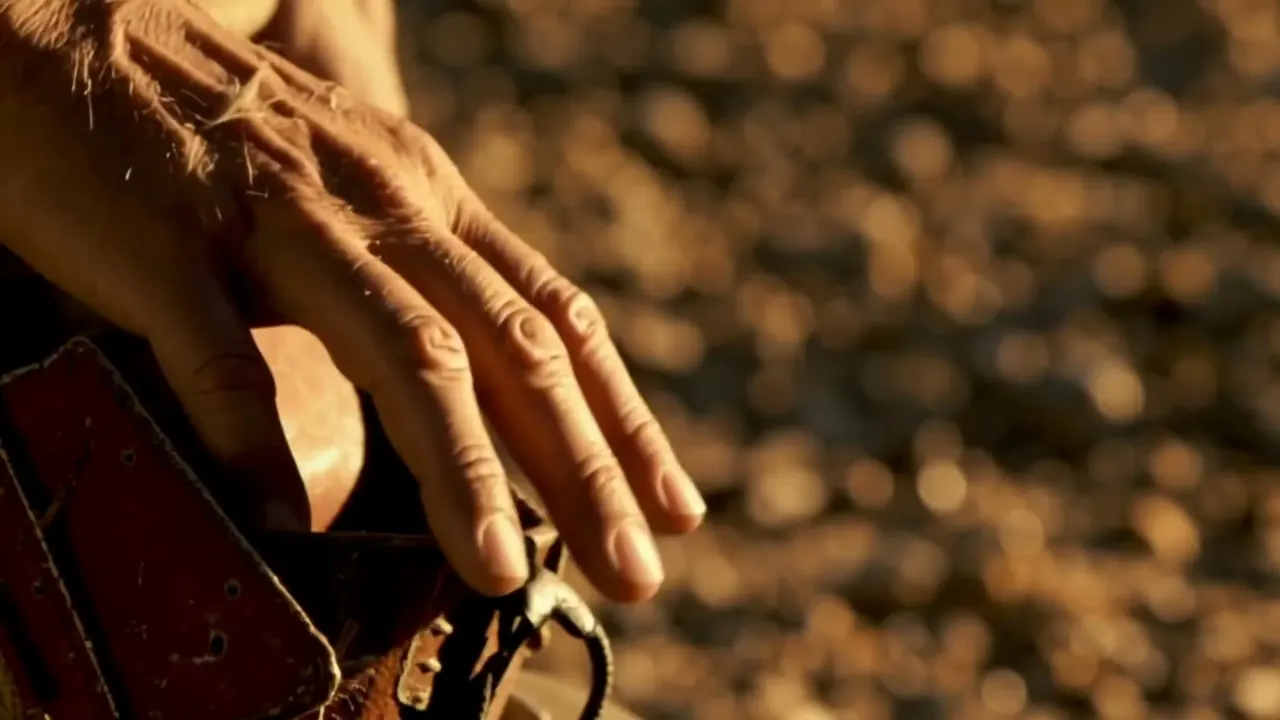
Match Split
Two halves from different shots meet on a seam and read as one frame.
Opens a video model with the prompt in it. The price is on the page before you sign in.

What it is for
Two halves taken from different shots meet on a seam, and the audience reads one frame. The trick is that nothing on screen ever existed as a single image.
It buys impossible geography. Two places, two times or two versions of one person can share a frame and appear to be standing in the same room.
How it works
The seam usually runs vertically down the middle, hidden on a wall edge, a doorframe or a post. A seam that falls on empty space is far harder to disguise.
Horizon, light level and colour temperature have to match across the join. A difference in any of the three is what the eye catches first, well before it notices the seam itself.
Two runs and a composite. Generate each half with the same wording for the light direction, the time of day and the camera height, then join them and feather the seam in a compositing step.
When to use it
Use it to put one performer opposite themselves, to join two locations, and for any shot where a single camera position cannot hold everything the scene needs.
Skip it when the camera has to move. A moving camera changes the parallax on each half at a different rate, and the seam opens up.
Told apart from its neighbours
A split screen shows the divide on purpose and asks the audience to watch two things at once. A match split hides the divide and asks the audience to see one thing.
The test is whether the line is meant to be seen. A visible frame edge is split screen. A seam disguised on an architectural line is a match split.
The prompt
Replace the blanks, keep the rest. Then run it on a video model.
left half from <shot A> and right half from <shot B> joined on a vertical seam, matched horizon and light
What goes wrong
The two halves come back with different light, and the seam announces itself. Write the light direction, the time of day and the colour temperature into both prompts using the same words.
The second failure is a mismatched horizon. Name the camera height and the eye line in both runs, or the floor on one side will sit higher than the floor on the other.
Leave out
single shot, cut
Watch for
Match the horizon and the light level across the seam, or the join announces itself.
Questions
Shoot it
Pay for the one run. No subscription, and the price is on the model page before you sign in.
Next to it in cuts that hide the join