Anime Pic Couple Ideas: 8 Pairings and How to Create Them
November 5, 2026 · 14 min read
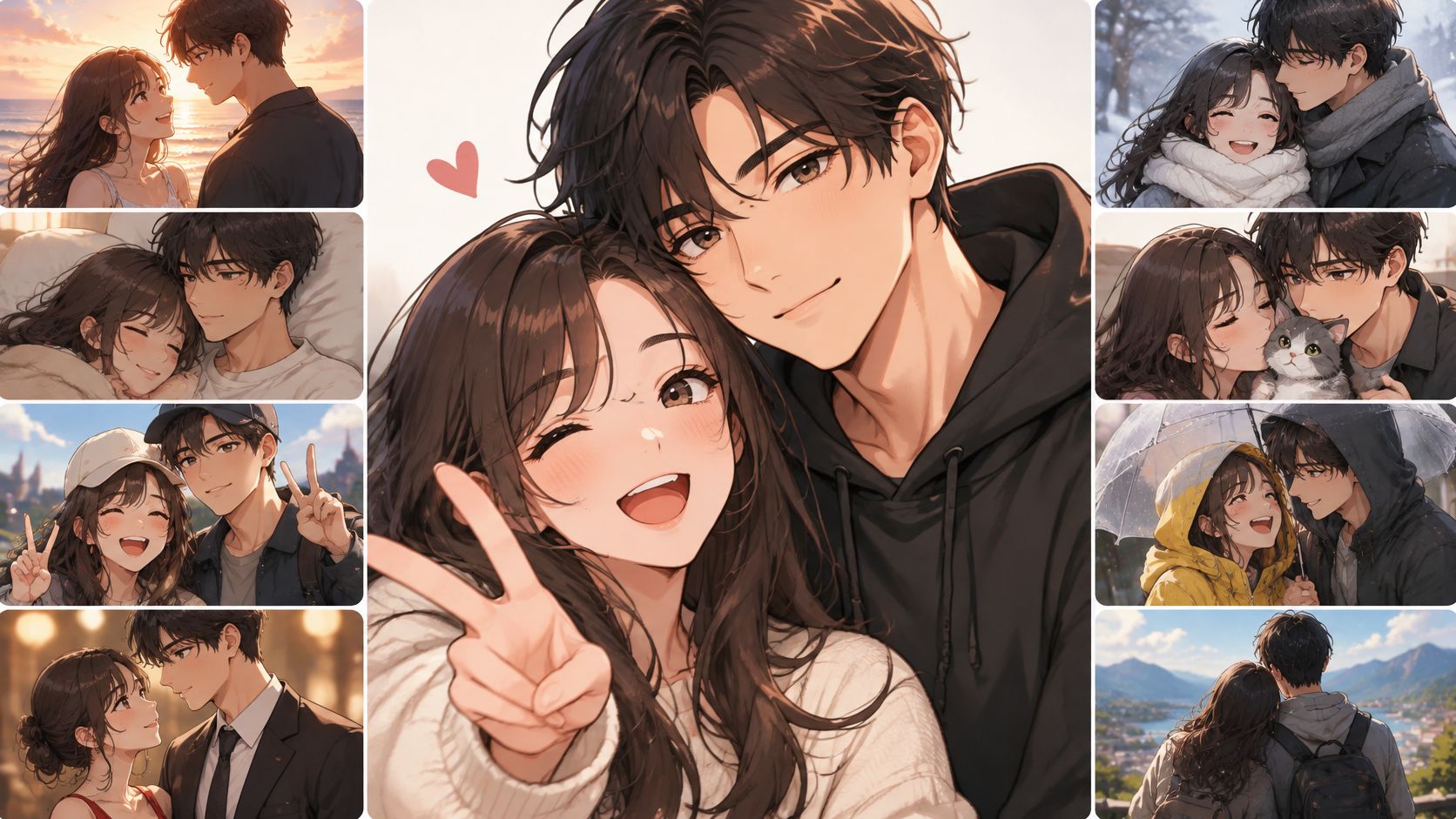
You've got a blank prompt box, a couple you love in mind, and a model that keeps swapping their hair, merging their hands, or turning a tender scene into a stiff pose. That's the usual starting point for an Anime pic couple project. The fix isn't a longer prompt. It's a clearer brief.
A good couple image starts with two characters a model can recognize and a mood a viewer can feel in one glance. These eight pairings combine clear costume markers, varied settings, and distinct emotional tones, so they work as practical starting points for composition and style tests. I treat each one below as a brief you can reuse, not as fan trivia.
That reuse matters because the audience is now global. The Association of Japanese Animations figures reported by Anime News Network put the global anime market at 3.8407 trillion yen in 2024, with overseas revenue at 2.1702 trillion yen. Build a set that reads clearly, keeps both faces consistent, and exports cleanly for a profile, wallpaper, or poster. Start with the pairing that matches your mood.
Table of Contents
- 1. Naruto Uzumaki and Hinata Hyuga
- Prompt Tactics That Hold
- 2. Ryuuji Takasu and Taiga Aisaka
- Light Does the Romantic Work
- 3. Shoya Ishida and Shoko Nishimiya
- Keep the Prompt Short
- 4. Gilbert Bougainvillea and Violet Evergarden
- Details the Model Forgets
- 5. Kaguya Shinomiya and Miyuki Shirogane
- Build Panels, Not Just Portraits
- 6. Vegeta and Bulma
- Costume Markers and Clean Cut Outs
- 7. Lelouch vi Britannia and C.C.
- Control the Shadows
- 8. Tomoya Okazaki and Nagisa Furukawa
- Warmth Without Blur
- Anime couple pairings compared by look, mood and best use
- Turn These Pairings Into Your Next Couple Image Set
- Check Quality Like a Producer
1. Naruto Uzumaki and Hinata Hyuga
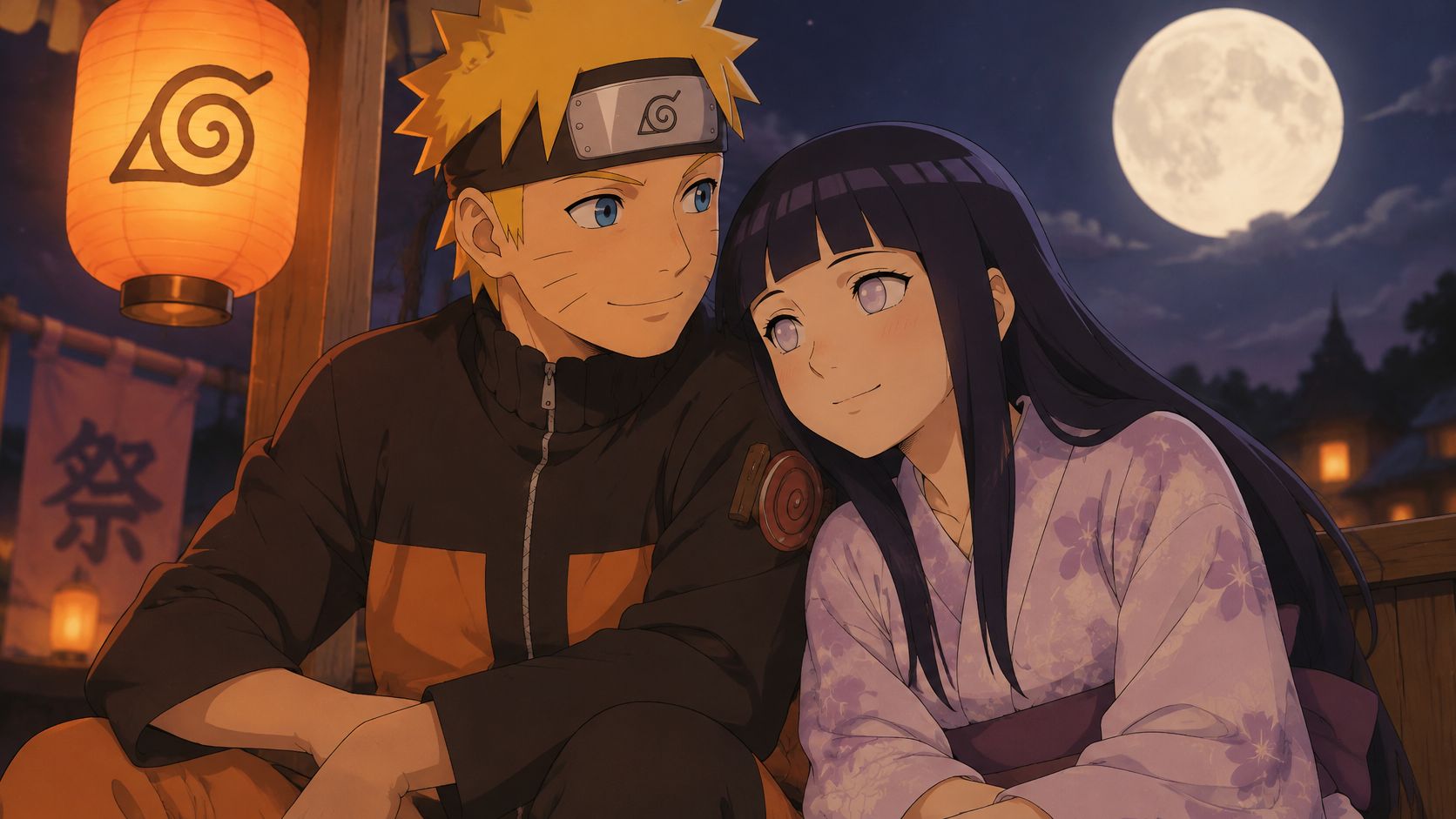
Naruto and Hinata give you instant contrast. He's loud, forward, and bright. She's quiet, contained, and watchful. Put that contrast in the pose, not just the costumes, and the image reads as a couple before anyone checks the details.
Use them for a moonlit festival scene first. Lanterns give you warm highlights. A full moon gives you a clean backdrop shape. Keep Naruto slightly turned toward the viewer and Hinata angled toward him. That triangle holds attention and stops the pair looking like two solo portraits pasted together.
Prompt Tactics That Hold
Name both characters, then lock the traits the model drops first. I always spell out Naruto's whisker marks, spiky blond hair, and orange and black jacket. For Hinata, specify long dark hair, pale eyes, and a modest, hands together pose.
- Style first: Use the Visual Sandbox reference library to pick one treatment, such as cel-shaded or watercolor, before you generate.
- Variants first: Generate several variations, then refine only the best one with an editing step.
- Icons second: Crop a winning frame into chibi-style couple icons for fan communities and social profiles.
Practical rule: If the whisker marks vanish in the first batch, don't add more adjectives. Shorten the scene description and repeat the face markers at the end of the prompt.
Keep personal fan art separate from commercial merchandise. A profile icon for your own account is a different risk from a shirt listing. Don't blur that line.
2. Ryuuji Takasu and Taiga Aisaka
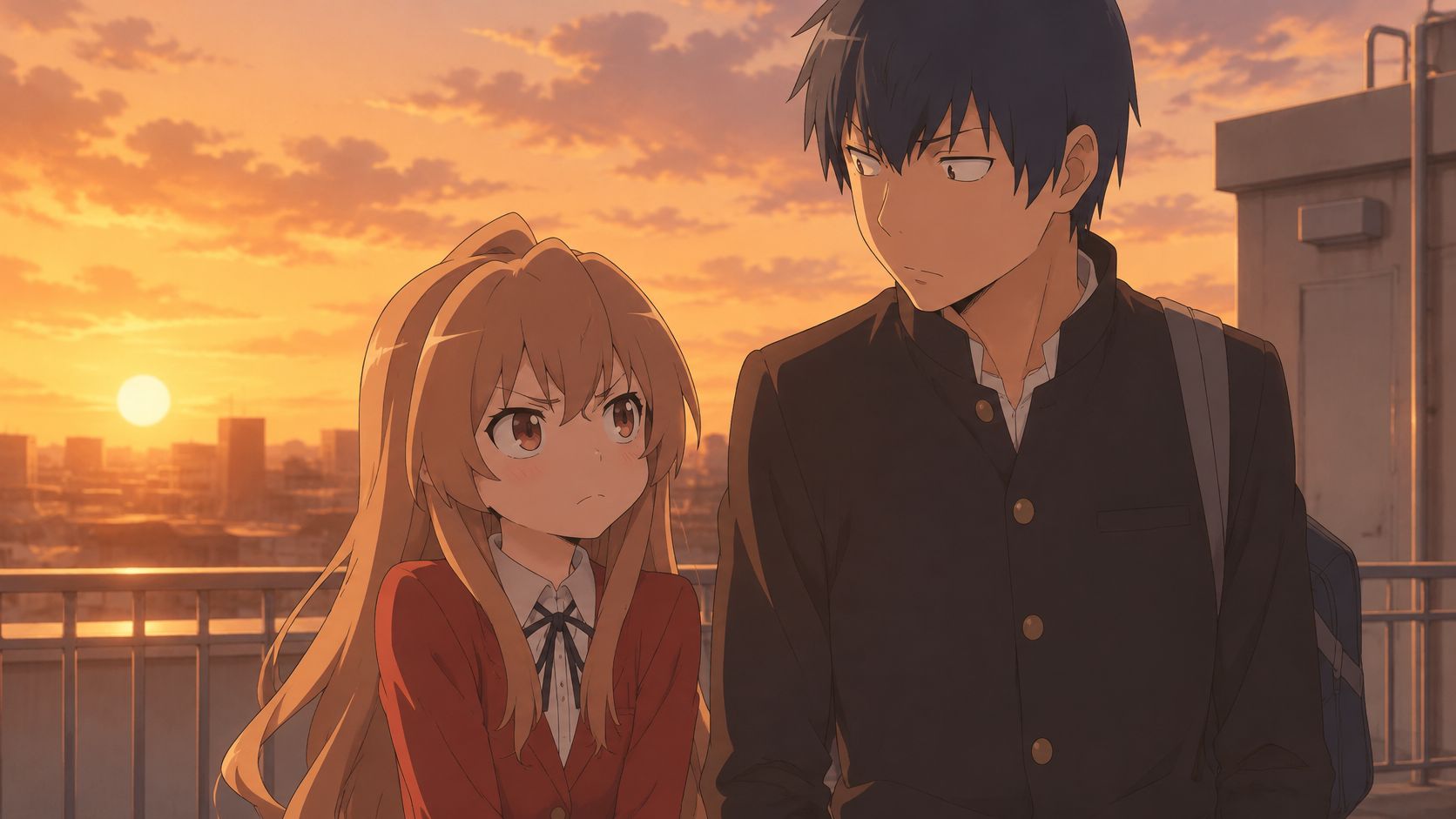
This pair from Toradora! works when you lean into scale and temper. Taiga is small, sharp, and expressive. Ryuuji is taller, calmer, and often half a step behind her. That offset makes a simple rooftop composition feel alive.
Try a rooftop at dusk as a wallpaper or banner for a fan community. Place Taiga in front with arms crossed. Put Ryuuji beside her, looking down at her rather than at the camera. You get comedy and affection in one glance, without forcing a kiss or embrace.
Light Does the Romantic Work
Describe the light before you describe the feeling. Golden hour and soft evening light warm the skin tones and soften school uniforms. Vague words like romantic often produce pink haze and floating petals you didn't ask for.
I use the Visual Sandbox agent to turn a plain request like two students on a rooftop into a model specific prompt, then I check it against the shojo ink style reference for line weight and tone. That reference helps when you want softer ink without losing Taiga's edge. Crop late, not early. Generate wide, then crop to banner or profile format before exporting.
For a minimal two character icon set for a forum or channel, strip the rooftop to a flat sky gradient. Keep Taiga's long hair silhouette and Ryuuji's fringe. At small sizes, silhouette beats detail every time.
3. Shoya Ishida and Shoko Nishimiya
Shoya and Shoko from A Silent Voice need restraint. Their story runs on communication, guilt, and reconciliation. Loud poses break it. Quiet glances, distance, and hands carry it.
A two character illustration focused on hands forming sign language gestures is powerful, but it's also where models fail fastest. Fingers bend the wrong way. Gestures turn into vague waving. Check generated hands against a real sign language reference before you share anything.
Keep the Prompt Short
Use a short, plain language prompt that highlights mood rather than action. Say quiet riverside, overcast light, two students sitting apart, looking at the water. Then stop. Long prompts push this pair into generic melodrama.
Choose a soft, muted palette from the Visual Sandbox colour reference library. Desaturated blues and warm greys suit a classroom or riverside scene in a fan art series. The anime feature film look reference is useful here because it favors painterly backgrounds and restrained faces over sharp television cel shading.
Don't ask for a readable sign and a wide scenic shot in the same frame. Pick one. Hands need a close crop. Scenery needs distance.
If you're building a series, keep the same palette and lens feel across all frames. Consistency in light matters more than identical outfits for this pair.
4. Gilbert Bougainvillea and Violet Evergarden
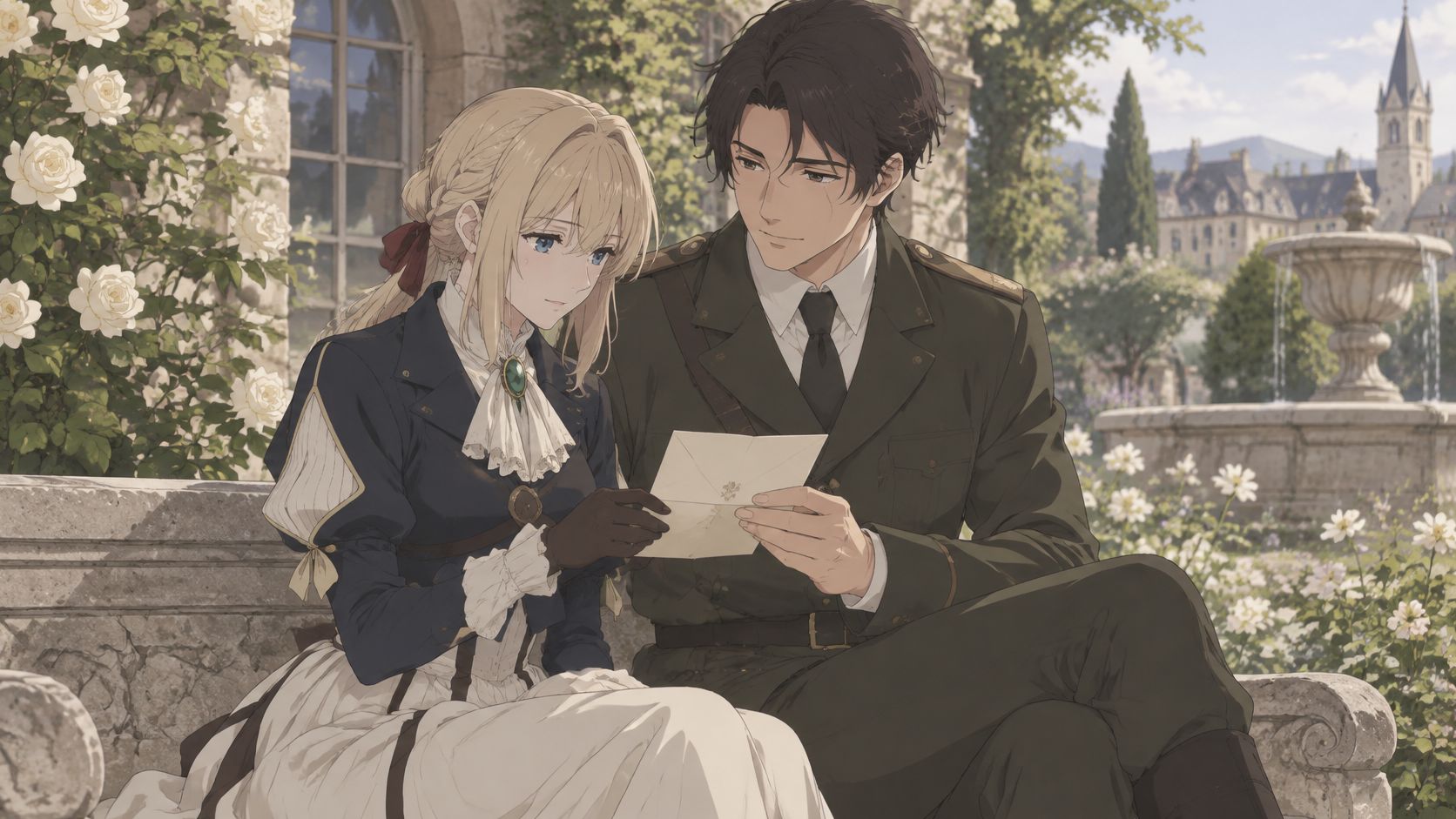
Gilbert and Violet suit a slower, historical brief. Letters, uniforms, and post war streets give you props that tell the story without dialogue. That's useful when you want an Anime pic couple image that feels cinematic rather than cute.
A painterly scene of Violet writing a letter by candlelight is a strong anchor image. Place Gilbert out of focus in a doorway or reflected in a window. You suggest memory and loyalty, and you avoid forcing both faces into equal focus when the mood doesn't need it.
Details the Model Forgets
Specify them every time. Violet's ribbon, braided hair, emerald brooch, and prosthetic arms are non negotiable. If you omit the arms, you'll get gloved hands and lose the character in one move.
- Framing: Use the cinematic technique references in Visual Sandbox to set lighting and framing before you prompt.
- Rain test: Try a cinematic portrait in a rain soaked street to test reflections and wet fabric.
- Series build: Generate three to four images to form a short visual story, desk, street, garden, farewell.
Repetition helps, but it has limits. I keep a fixed character block of text and paste it unchanged into every prompt in the set. Change only the setting and action lines.
5. Kaguya Shinomiya and Miyuki Shirogane
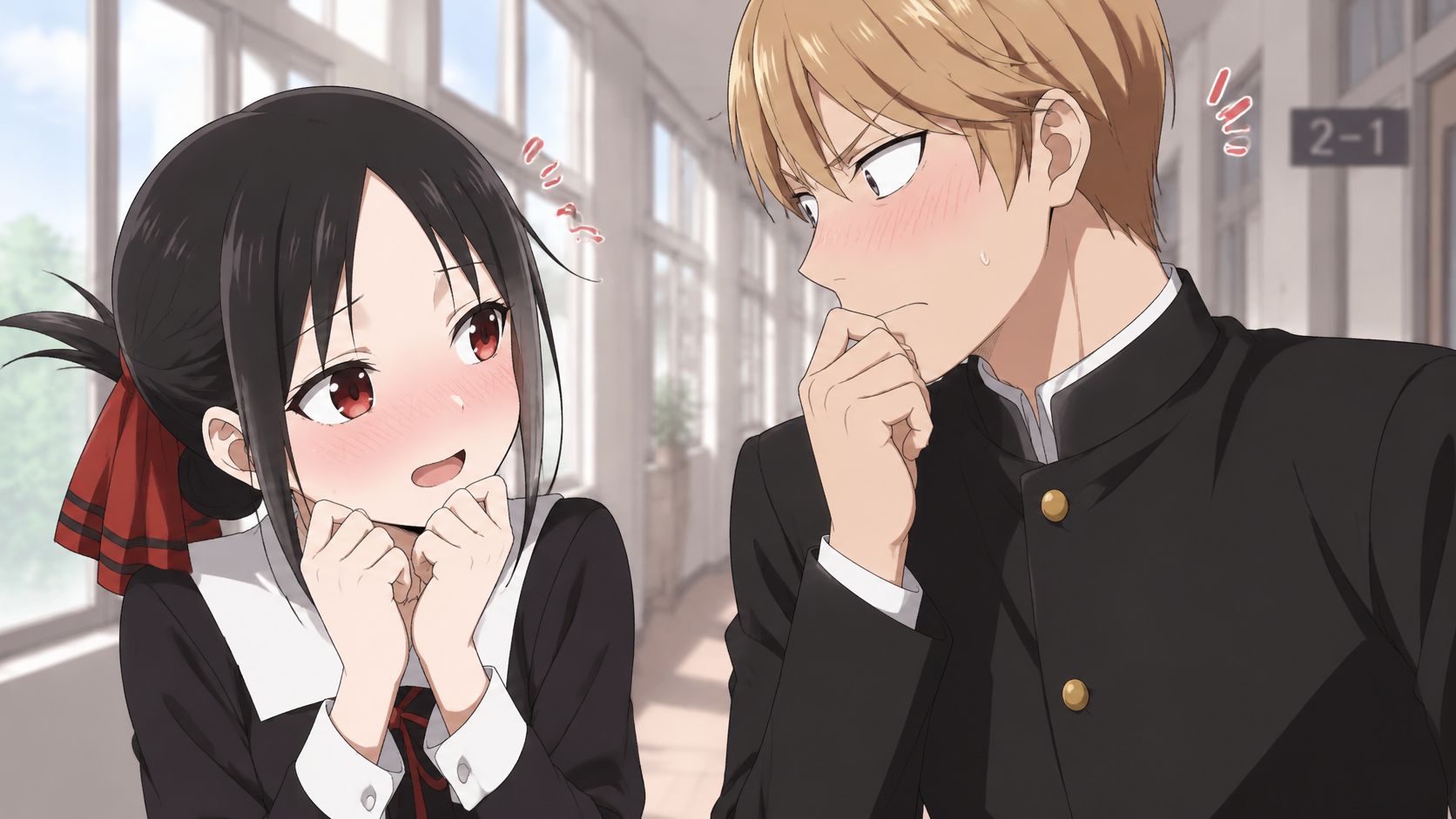
Kaguya and Miyuki from Kaguya-sama: Love Is War are built for expression work. Pride, panic, and playful rivalry do the heavy lifting. If both faces are neutral, you've lost the pairing even if the uniforms are perfect.
Describe the expression in plain terms. Smug smile, narrowed eyes, and a raised chin for Kaguya. Flustered face, stiff shoulders, and a sideways glance for Miyuki. Models follow concrete facial instructions better than they follow words like witty or charming.
Build Panels, Not Just Portraits
A split panel comic style image showing a playful exchange suits this pair better than a single romantic pose. Generate each panel separately. Single prompt comic grids often mix up who is speaking and swap hair colors between panels.
Use the illustration treatment references in Visual Sandbox to test comic styles, flat color, screentone, or clean digital ink. Then arrange the finished panels in a separate design tool for a proper layout. That gives you control over gutters, text space, and reading order.
For a stylized two character poster for a fan event, keep the background as a simple school hallway with strong verticals. Leave negative space at the top for a title. Don't ask the model to render the title text. It'll mangle it.
6. Vegeta and Bulma
Vegeta and Bulma offer the widest range on this list. You can go full battle intensity or quiet family warmth. Decide which one you want before you prompt, because mixing both in one brief usually produces a confused middle image.
For an everyday family scene with their child, drop the armor gloss and use home clothes, soft daylight, and a kitchen or garden setting. For a dynamic action poster in a training setting, push contrast, add speed lines, and keep Bulma with a tool or tablet so she isn't reduced to a bystander.
Costume Markers and Clean Cut Outs
Describe the costume details every time. Vegeta needs his widow's peak hairline, stern brow, and blue and white armor. Bulma needs her teal hair and inventor outfit. Without those anchors, models drift toward generic Dragon Ball style stand ins.
The shonen ink style reference helps you choose between heavy battle inking and a cleaner home style. I use the Visual Sandbox image generation options to run both versions from the same character block. Then I compare which one keeps the faces stable.
Layout trick: Use background removal in Visual Sandbox to create clean cut out characters, then rebuild the scene yourself if the generated background fights your text or product layout.
That cut out route is practical for shop visuals and fan posters. You control spacing, and you can reuse one strong pose across several designs.
7. Lelouch vi Britannia and C.C.
Lelouch and C.C. from Code Geass work best in shadow. Their bond is secrecy and shared purpose, not open romance. Bright, cheerful art usually looks wrong for them, even when it's technically clean.
A cinematic poster style image in a moonlit courtyard gives you stone, arches, and long shadows to separate the two figures. Put Lelouch in black with his cape edge catching light. Put C.C. in white or pale tones with long green hair falling straight. Value contrast does the storytelling.
Control the Shadows
Specify contrast and color temperature in the prompt to avoid muddy shadows. Say cool blue moonlight, warm window light from the left, deep but readable shadows. If you just say dark and moody, you'll get crushed blacks and lost faces.
Use the cinematic technique references in Visual Sandbox to set dramatic lighting and a low camera angle. Keep the pose tense and still. A shared glance over a chessboard or map tells you more about this pair than an embrace does.
Titles and captions need care too. Keep them neutral if your goal is a fan piece rather than a romance piece. Labels like allies or partners in strategy fit the source material and prevent the image from promising a tone it doesn't deliver. For a wallpaper for a fan community, export a version with empty dark space on one side for desktop icons.
8. Tomoya Okazaki and Nagisa Furukawa
Tomoya and Nagisa from Clannad carry warmth and nostalgia better than almost any pair here. Family, hardship, and perseverance shape their images. Hard light and saturated color fight that mood, so I keep everything soft.
A soft lit home scene with the couple and their child is the natural centerpiece. Use a low table, warm lamp light, and plain domestic details. Don't over decorate the room. Empty space and simple props make the emotion clearer.
Warmth Without Blur
Use warm lighting and soft focus terms, but protect the eyes. Add sharp focus on faces, gentle background blur. Without that guardrail, soft focus prompts often blur the whole frame and turn a tender portrait into a smudge.
- Treatment test: Use the photography and illustration references in Visual Sandbox to compare a photo like grade with a painterly one.
- Location variant: Try a nostalgic town street illustration for a fan art collection, with a hill and late afternoon sky.
- Print finish: Edit the final image with upscaling to prepare a print ready version, then check hair edges at full size.
That last check matters. Upscaling can sharpen eyes while turning loose hair strands into hard wires. Zoom in before you print. Fix the edges or pick a softer upscale setting.
Anime couple pairings compared by look, mood and best use
| Item | Signature Look | Best Mood | Best For |
|---|---|---|---|
| Naruto Uzumaki and Hinata Hyuga | Naruto's orange-and-black look and whisker marks beside Hinata's lavender tones and pale eyes | Gentle, heartfelt romance | Moonlit festival scenes and expressive couple art |
| Ryuuji Takasu and Taiga Aisaka | Calm, observant Ryuuji beside sharp-expressed, petite Taiga | Warm, comedic romance | School rooftop portraits and everyday couple scenes |
| Shoya Ishida and Shoko Nishimiya | Meaningful hand gestures, quiet glances, and soft watercolor-like backgrounds | Reflective and tender | Sign-language-focused art and quiet scenes |
| Gilbert Bougainvillea and Violet Evergarden | Elegant period clothing, Violet's ribbon and prosthetic arms, and Gilbert's military uniform | Cinematic, wistful, and healing | Letter-writing scenes and painterly historical portraits |
| Kaguya Shinomiya and Miyuki Shirogane | Formal school attire paired with exaggerated, expressive faces | Playful and comedic | Comic panels and bright couple posters |
| Vegeta and Bulma | Vegeta's spiky hair and Saiyan armor contrasted with Bulma's blue hair and inventor style | Intense yet warm | Dynamic action art and family scenes |
| Lelouch vi Britannia and C.C. | Dark, high-contrast outfits with Lelouch's black-and-purple look and C.C.’s long green hair | Moody and dramatic | Cinematic portraits and poster-style art |
| Tomoya Okazaki and Nagisa Furukawa | Nagisa's hairclip and school uniform with soft colors and gentle lighting | Warm, nostalgic, and sentimental | Everyday family scenes and heartfelt tribute art |
Turn These Pairings Into Your Next Couple Image Set
Pick one pairing and define its mood first. Then test three compositions: a close portrait, a scene with setting, and a stylized variation. Keep the costume markers in every prompt so the characters stay consistent. If a trait matters, repeat it. Models don't remember your last image unless you give them a reference.
Structural guidance helps when two figures overlap. The AniDepth study on anime in betweening evaluated 121 anime style samples and found depth guided, warped line art beat unguided diffusion at region boundaries and line art consistency. In plain terms, start from a strong keyframe. Use pose, depth, or line art conditioning for embraces and overlapping hair, where hands and shoulders merge first.
Check Quality Like a Producer
Build a small reference set for each recurring couple and score outputs the same way each time. One anime image evaluation study generated 100 images and reported an average Fréchet Inception Distance of 100.9565. Use that kind of measurement only as a rough signal. Your real checks are identity, hands, pose accuracy, and whether the relationship reads clearly.
Think about who your set includes, too. Crunchyroll's 2025 Global State of Anime report found nearly 60% of U.S. anime fans want more racial diversity and 16% want greater LGBTQ+ visibility. If you're creating original couples alongside these fan pairings, complementary styling and specific, respectful details beat identical matching outfits.
Rights need the same discipline. A 2026 academic discussion of Studio Ghibli style AI imagery reported 60% of examined sources viewed the work as non-commercial fair use and 30% viewed it as possible copyright infringement. That uncertainty is the point. Separate personal fan use from commercial use, credit artists for fan work, and use original characters for anything you sell.
Disclosure rules are tightening as well. The European Commission guidance on Article 50 of the EU AI Act states transparency obligations apply from 2 August 2026. The United States Copyright Office report summary from 29 January 2025 concluded merely providing prompts is not enough by itself for copyright protection. Keep records of your references, edits, and human choices.
Visual Sandbox offers image models such as Nano Banana Pro, GPT Image 2, and FLUX.2 Klein 9B, and its agent can turn a plain request into a model specific prompt. When the AI character setting is on, you confirm that every person in the image is an AI made character, and you must never use this setting with a photo of a real person. Run your three compositions, keep the winners, and build your set from there.
Pick your pairing, paste in a locked character block, and generate your close portrait, scene, and stylized variation side by side in Visual Sandbox, where you can test multiple image models, use style and colour references, remove backgrounds, and upscale the winner in one workspace. Start with one mood and one strong keyframe today, and you'll leave with a reusable couple set instead of a folder of near misses.