Vorticism
- BLAST style
- Wyndham Lewis style
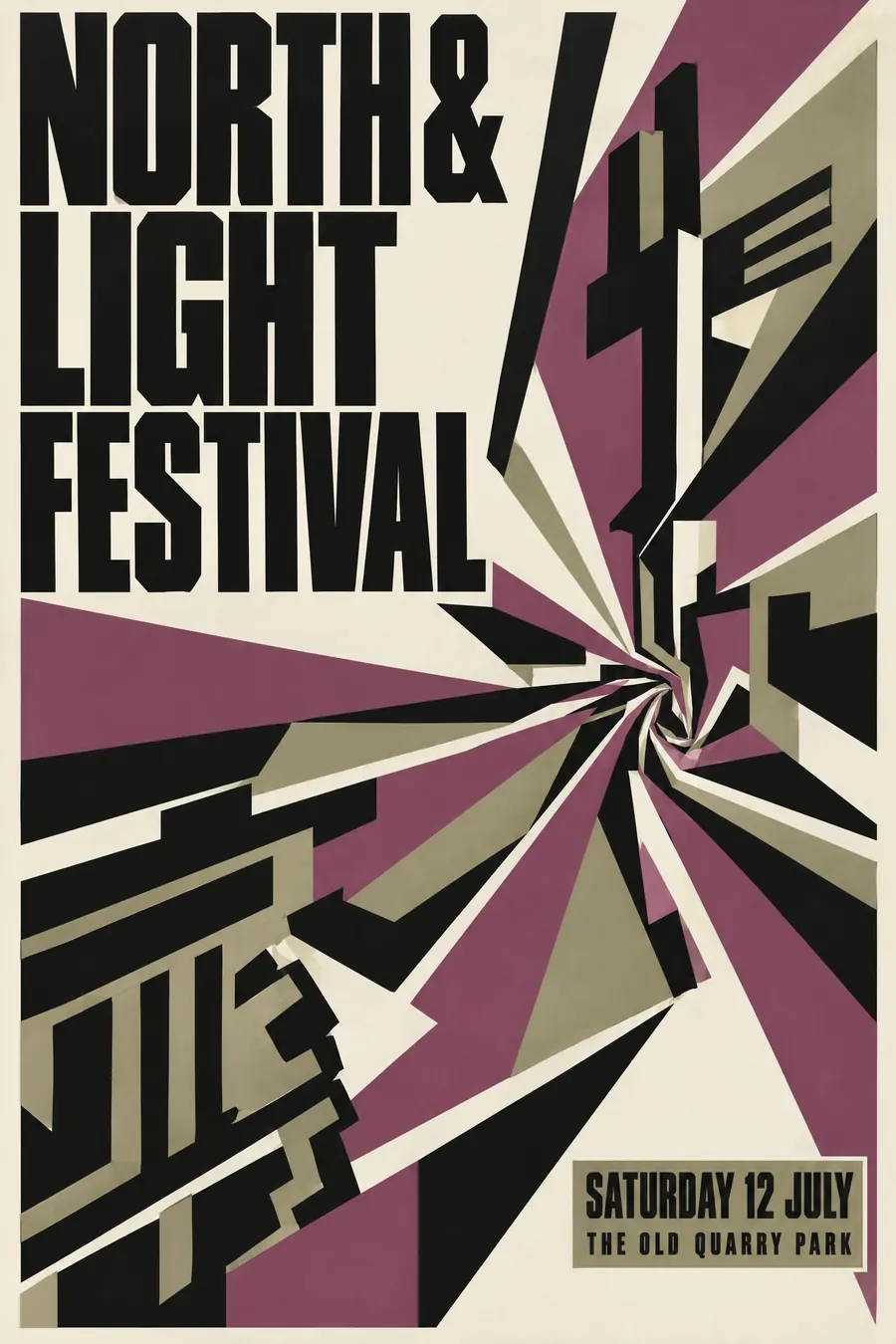
Hard angular planes driving into a vortex, and enormous block capitals.
Opens an image model with the prompt in it. The price is on the page before you sign in.
What it is for
Vorticism is English, brief and angry. It took Futurism's energy and froze it, so the sheet has the violence without the blur.
The typography is the part worth stealing. BLAST set its headings in enormous condensed capitals across the page, and it still looks aggressive a century later.
How it works
Build from hard-edged planes and wedges, all straight, converging into an off-centre point.
Colour is deliberately unpleasant: puce, khaki, black, on off-white. Flat, no modelling.
Set one word in enormous condensed block capitals filling a large part of the sheet, stacked, with the rest of the type very small.
When to use it
Use it for an experimental gig, a poetry reading, a war memorial event, a design lecture, an art school show.
Leave it alone for anything welcoming. Vorticism has no warmth and was not designed to have any.
Told apart from its neighbours
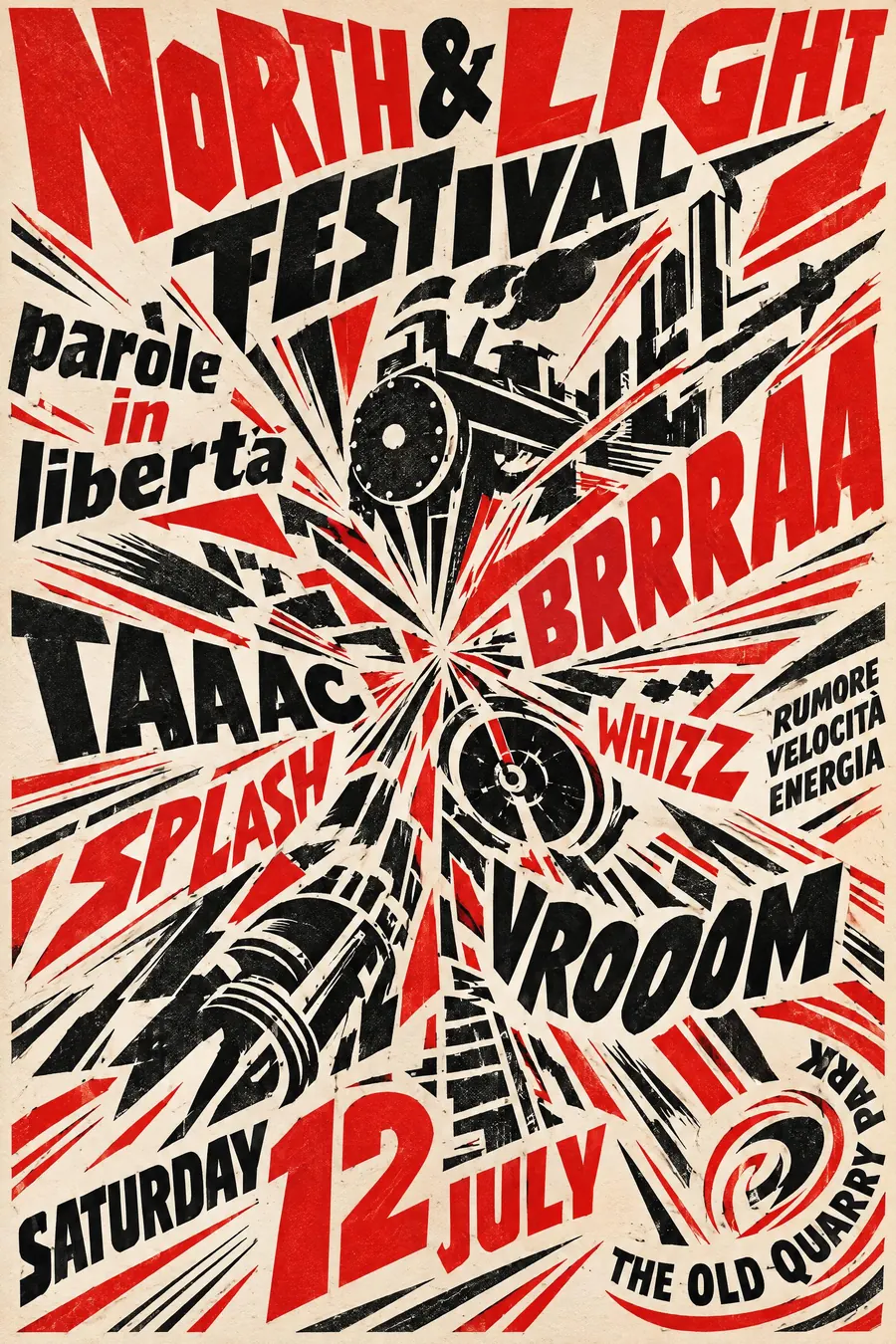
Futurism radiates and blurs. Vorticism converges and stays sharp.
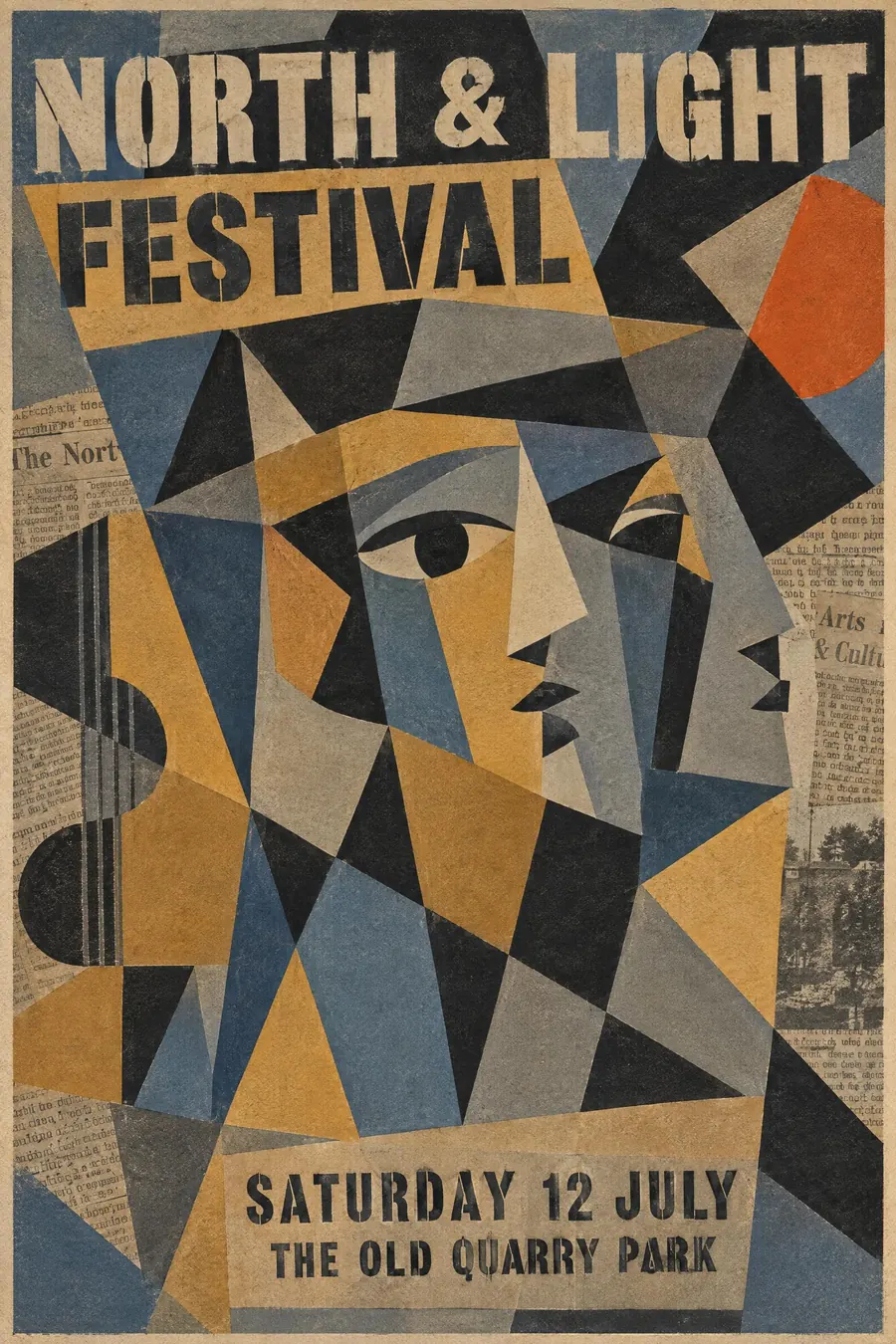
Cubist posters fragment a recognisable subject. Vorticism fragments nothing in particular.
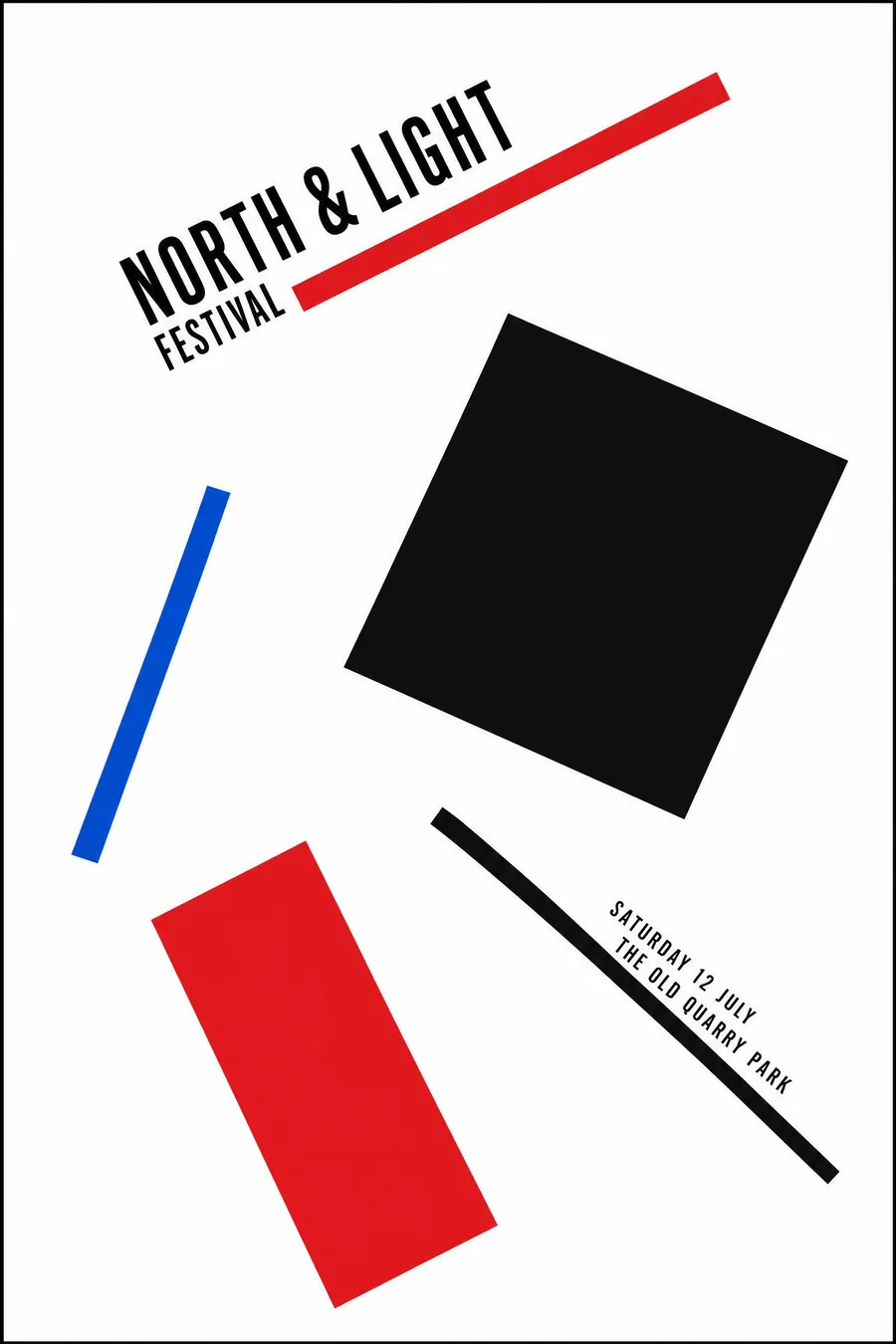
Suprematism floats its shapes in white space. Vorticism jams them together.
Where it was used
Wyndham Lewis launched BLAST in 1914 with a puce cover and a manifesto set in enormous condensed capitals. Edward Wadsworth applied the same angular planes to dazzle camouflage on ships during the First World War, which is the largest Vorticist work ever made.
- Wyndham Lewis
- BLAST magazine
- Edward Wadsworth
The prompt
Replace the blanks with your own event, keep the rest. Then run it on an image model.
poster for <event>, Vorticist style, composition of hard-edged angular planes and sharp diagonal wedges converging into an off-centre vortex, mechanical fragmented forms, flat harsh colour of puce black and khaki on off-white, enormous condensed block capitals set in one heavy stack, no curves anywhere, <date, time and place> in a small hard rectangle
What goes wrong
The model returns soft abstract shapes. Say hard-edged angular planes and sharp wedges, no curves anywhere.
The second failure is a pleasant palette. Ask for puce, khaki and black on off-white, deliberately harsh.
Leave out
curves, softness, decoration, gradients, warm pleasant colour
Watch for
No curve anywhere. One rounded shape and it reads as generic abstraction.
Questions
Print it
Pay for the one run. No subscription, and the price is on the model page before you sign in.
Next to it in the avant-garde shouts