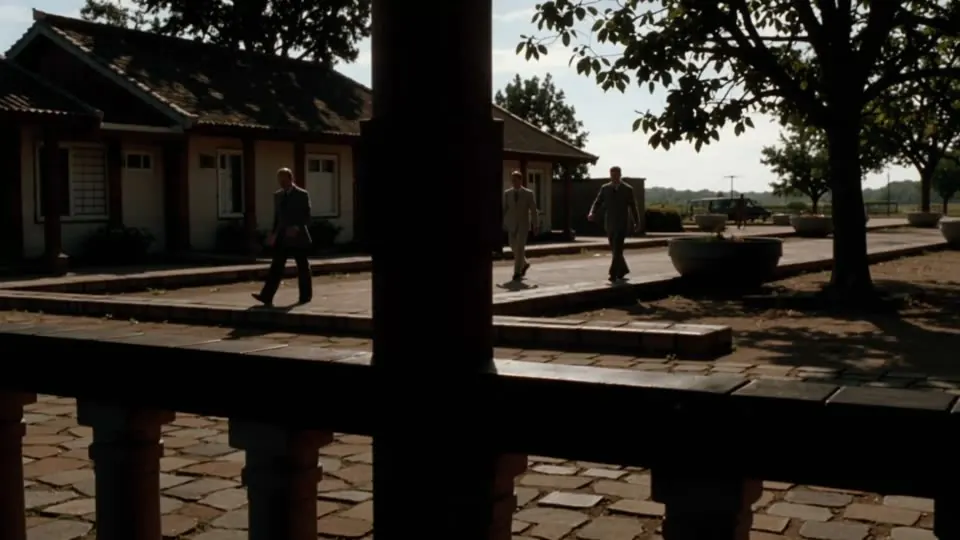
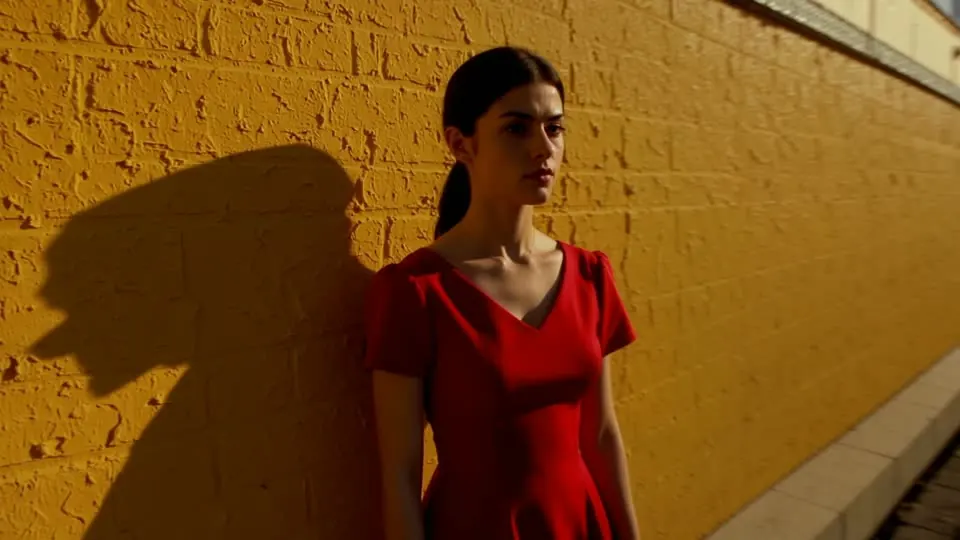
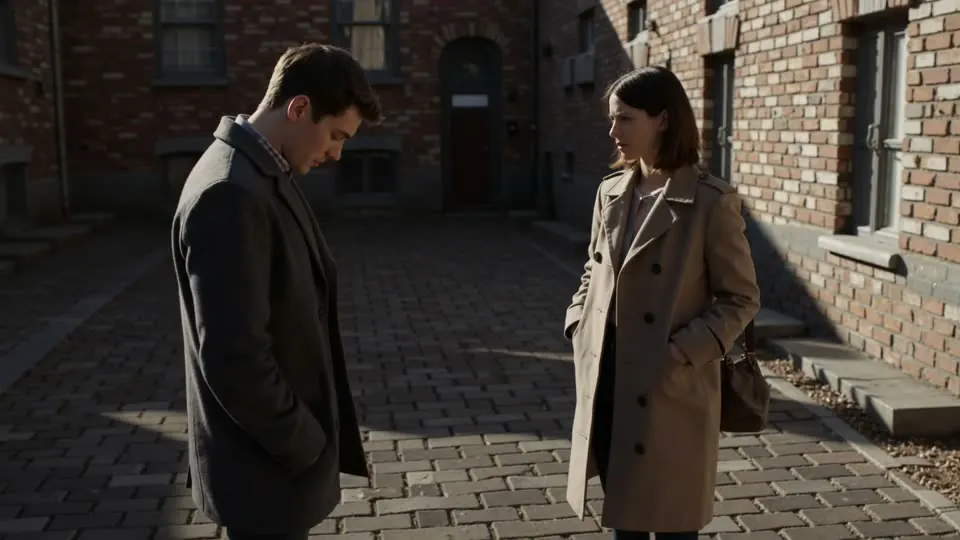
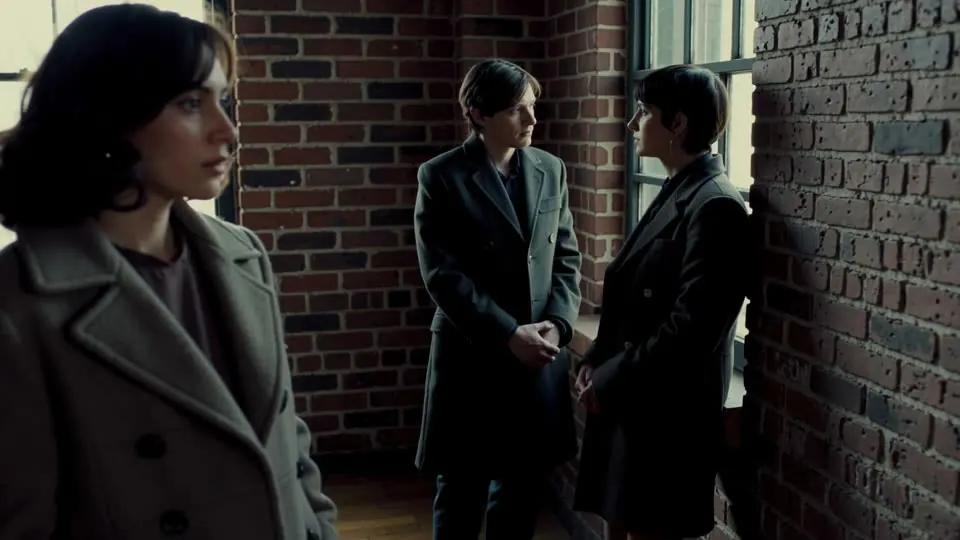
Over-the-Shoulder CoverageOTS
- Amorce épaule
- over the shoulder
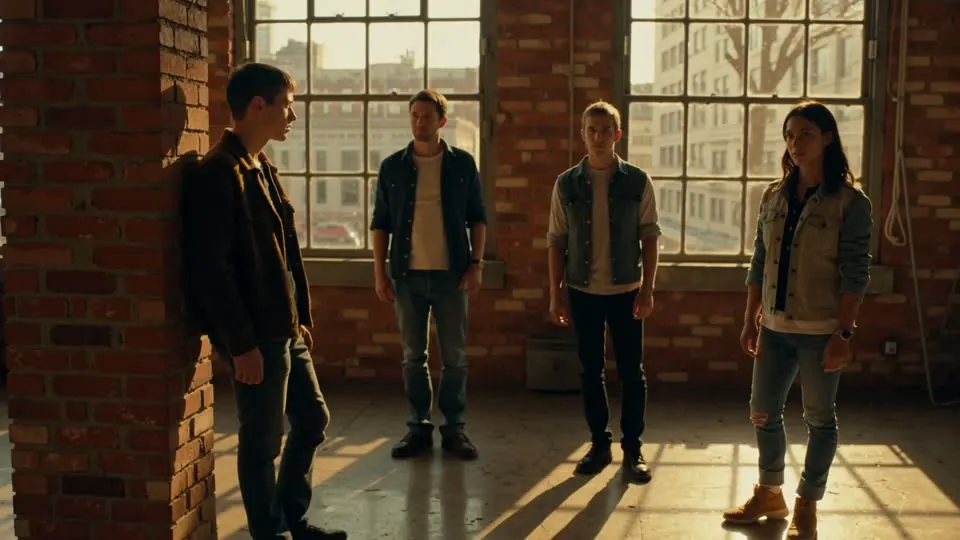
The camera looks past one person's shoulder at another.
Opens a video model with the prompt in it. The price is on the page before you sign in.
What it is for
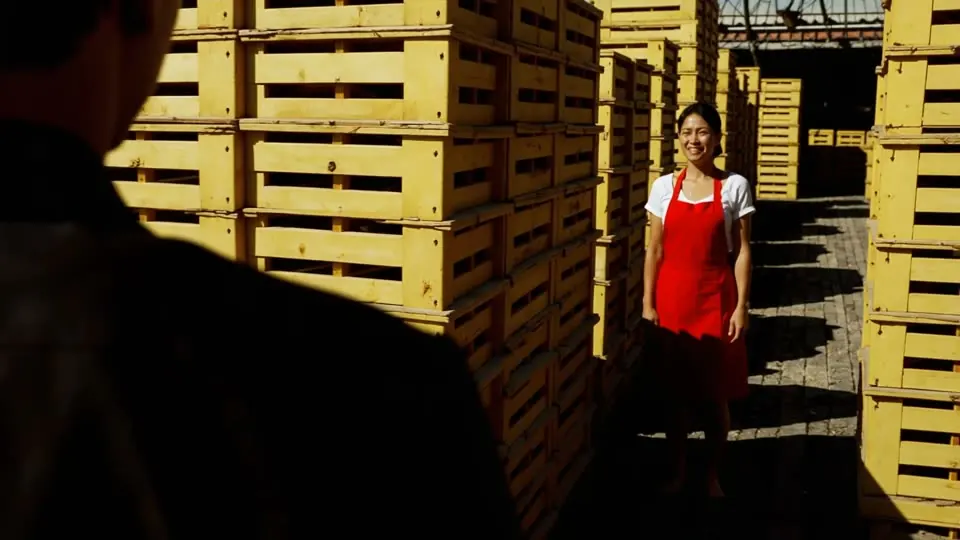
The camera looks past one person at another, so the audience is placed on somebody's side of the conversation. The near shoulder is a stand-in for the listener.
It also keeps two people in one geography. Cutting between matched over-the-shoulders tells the audience exactly who is where without ever showing both faces at once.
How it works
A blurred shoulder and a slice of head occupy one corner of the frame, and the person speaking sits in the opposite two thirds, looking back across the lens axis.
The pair has to match. Same lens, same height, same distance, mirrored. A reverse that changes any of those reads as a different scene, and crossing the line between two people swaps their screen positions and disorients the audience.
When to use it
Use it as the standard coverage for two people talking, especially when the exchange is an argument or a negotiation and the audience should feel placed.
Drop the shoulder when a character becomes alone in a room full of people. Cutting from over-the-shoulders to clean singles is a quiet way to say the conversation has stopped being one.
Told apart from its neighbours
A clean single has nobody else in frame. An over-the-shoulder is a dirty frame on purpose, and the near shoulder is the whole point.
A two-shot shows both faces. Over-the-shoulder coverage shows one face and the back of another.
On film
David Fincher plays the deposition scenes in The Social Network (2010) as long runs of matched over-the-shoulders, so the room stays fixed while the argument moves. Michael Mann cuts the coffee shop scene in Heat (1995) the same way, holding both men in the same geography without ever putting both faces in one frame.
- The Social Network (2010)
- Heat (1995)
The prompt
Replace the blanks, keep the rest. Then run it on a video model.
over the shoulder shot past <subject A> onto <subject B>, near shoulder soft in the foreground, far face sharp
What goes wrong
The near shoulder disappears and the shot becomes a plain single. Ask for the foreground shoulder to stay in frame, soft and out of focus.
The second failure is a shoulder that is sharp and in the way. Say it is soft and sits in the corner, occupying roughly a quarter of the frame width.
Leave out
single, profile
Watch for
Keep the near shoulder soft and in frame. Lose it and the shot is just a single.
Questions
Shoot it
Pay for the one run. No subscription, and the price is on the model page before you sign in.
Next to it in who is in the frame