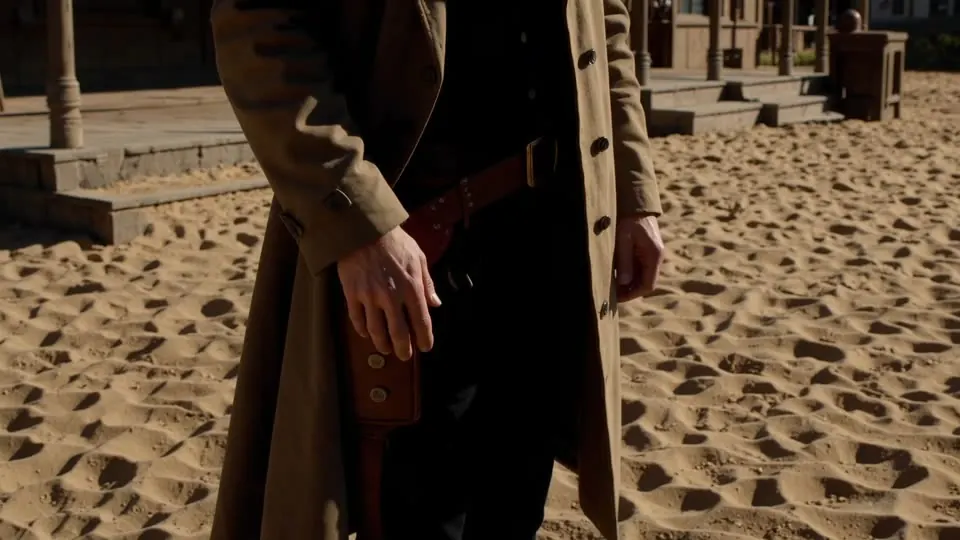
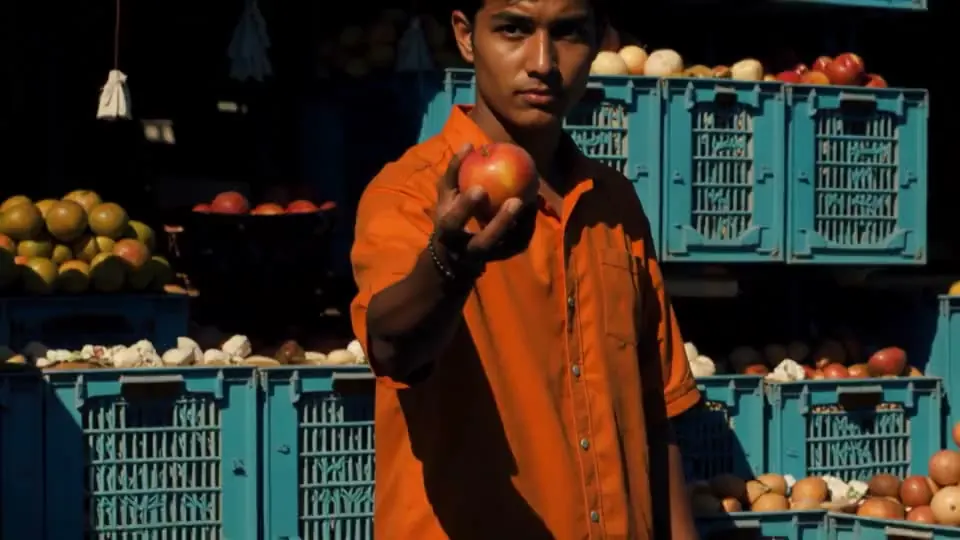
Extreme Close-UpECU
- Italian shot
- choker
- detail close-up
- Facial detail
A single feature fills the frame.
Opens a video model with the prompt in it. The price is on the page before you sign in.
What it is for
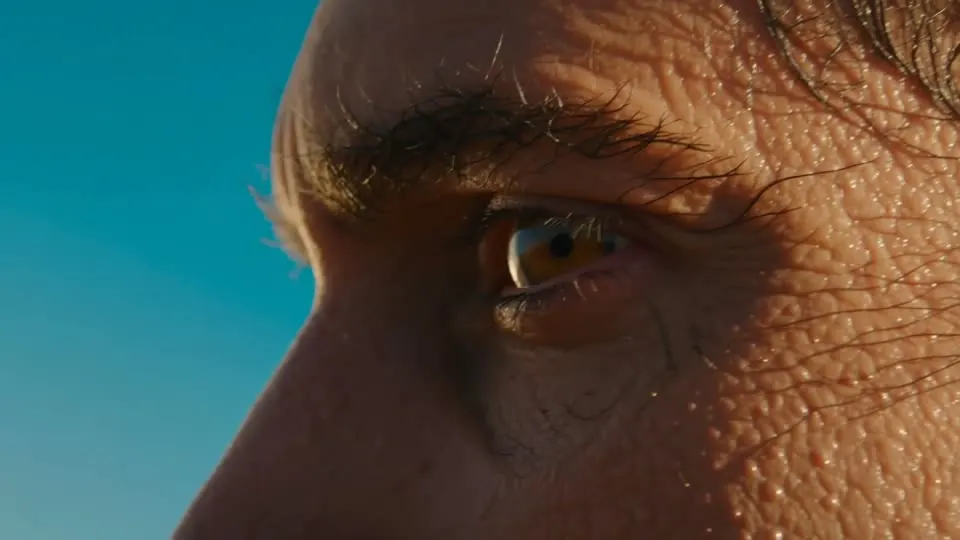
One feature takes the frame and becomes the scene. An eye, a mouth, a finger on a trigger, the second hand on a watch.
At this size the audience has no choice about where to look, which is why the shot is used to plant information and to hold a moment past comfort.
How it works
The frame holds a fragment. Context is gone, so the cut before and the cut after have to carry the geography, or nobody knows whose eye they are looking at.
Getting this close usually means a macro lens, or a long lens with a close focus. Depth of field collapses to millimetres, so the one thing in focus is the shot and everything around it is texture.
When to use it
Use it to plant a detail the plot needs, to hold a reaction that has gone past words, and as the last step in a run of tightening frames.
Skip it when the audience still needs to know who is in the room. An extreme close-up out of nowhere is an unreadable crop.
Told apart from its neighbours
A choker still holds a whole face. An extreme close-up gives one feature the frame and lets the rest fall outside it.
An insert also shows a detail, and the difference is the job rather than the size. An insert exists to hand the audience a piece of information. An extreme close-up is often about pressure instead.
On film
Sergio Leone cuts the standoff in Once Upon a Time in the West (1968) down to strips of eyes, and the frames tighten as the wait gets longer. Alfred Hitchcock uses the same logic on a single feature in Psycho (1960), where an eye fills the frame and the camera pulls back from it.
- Once Upon a Time in the West (1968)
- Psycho (1960)
- The Good, the Bad and the Ugly (1966)
The prompt
Replace the blanks, keep the rest. Then run it on a video model.
extreme close-up of <feature> on <subject>, one feature filling the whole frame, texture visible
What goes wrong
Naming no feature returns an arbitrary crop, usually a face at choker size. Say the one thing: the left eye, the mouth, the hand on the glass.
The second failure is a shot with no anchor. Give the model the material around the detail, such as skin, metal or fabric, so the fragment has a surface and reads as real.
Leave out
full face, medium
Watch for
Name the one feature. Bare extreme close-up gives you an arbitrary crop.
Questions
Shoot it
Pay for the one run. No subscription, and the price is on the model page before you sign in.
Next to it in the shot sizes