Interview
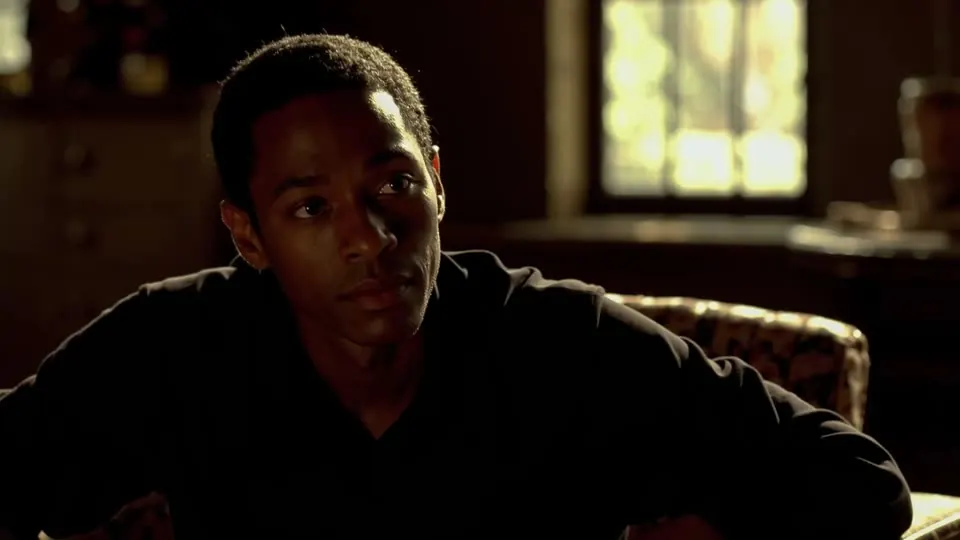
A seated subject speaks slightly off the lens to an unseen questioner.
Opens a video model with the prompt in it. The price is on the page before you sign in.
What it is for
One person sits and speaks to someone the audience never sees. The slight turn away from the lens is what makes it read as a conversation being overheard rather than a speech being delivered.
It is the backbone of documentary, and it has become the standard frame for testimonials and founder videos for the same reason. The form itself signals that what is said is a record rather than a performance.
How it works
Seated, framed from the chest up, positioned off centre with the empty side of the frame in the direction the subject is looking. The eyeline sits just beside the lens, close enough that the audience still reads the eyes.
The background is part of the claim. A workshop, a bookshelf or an office says what kind of person this is, and a soft background with one or two readable objects is the usual compromise between context and distraction.
When to use it
Use it for testimony, expertise and personal account, and for any ad where the credibility of the speaker is the product.
Move to a straight address to the lens when you want a direct pitch. The two are different contracts with the audience.
Told apart from its neighbours
A medium close-up is the size. An interview is that size plus a seated subject, an off-lens eyeline and a background with a job.
A fourth-wall address looks straight down the lens. Everything about an interview depends on not doing that.
On film
Errol Morris built a device for The Fog of War (2003) that projects his own face onto the front of the lens, so Robert McNamara speaks to a person and looks straight into the camera at once. The film is worth studying because it shows what the ordinary off-lens eyeline is giving up.
- The Fog of War (2003)
The prompt
Replace the blanks, keep the rest. Then run it on a video model.
interview framing of <subject>, seated, eyeline just off the lens, medium close framing, background softly out of focus
What goes wrong
The subject looks into the lens, which turns the interview into an address. Say the eyeline is just off the lens, toward an unseen questioner.
The second failure is a blank wall behind the chair. Name one or two objects in the background and say they fall slightly soft.
Leave out
direct to camera, wide
Watch for
Off the lens, not into it. Straight into the lens is a fourth-wall address.
Questions
Shoot it
Pay for the one run. No subscription, and the price is on the model page before you sign in.