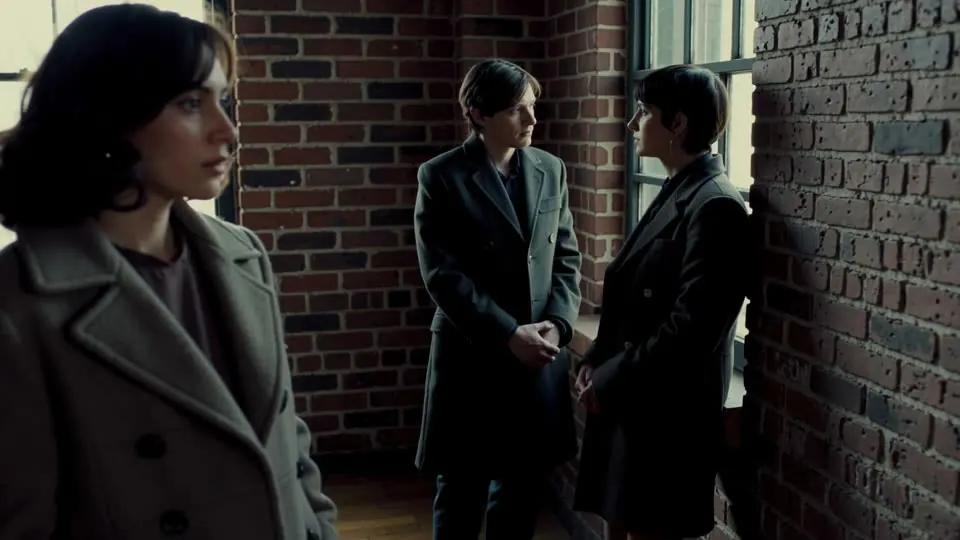
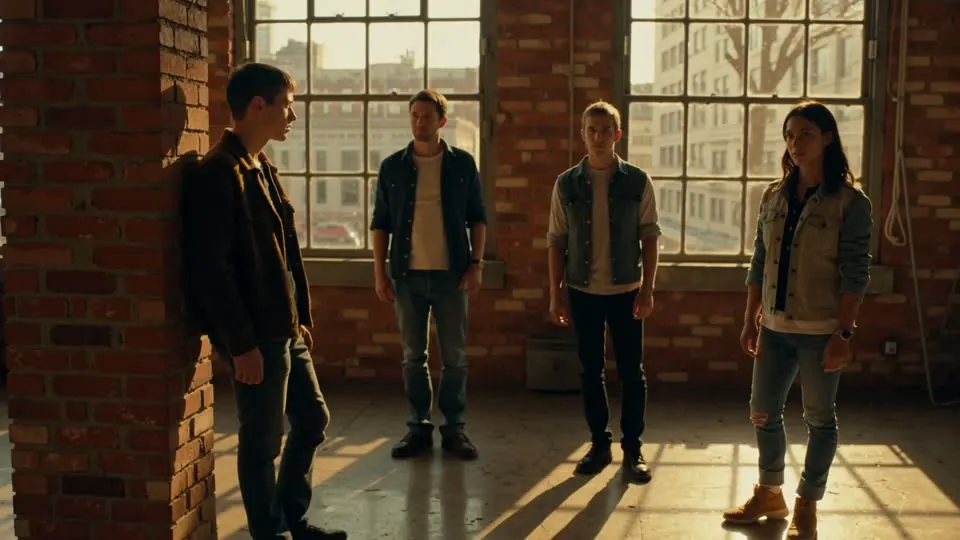
Establishing Shot
- opening establishing shot
- re-establishing shot
- aerial establishing shot
- Transitional still life
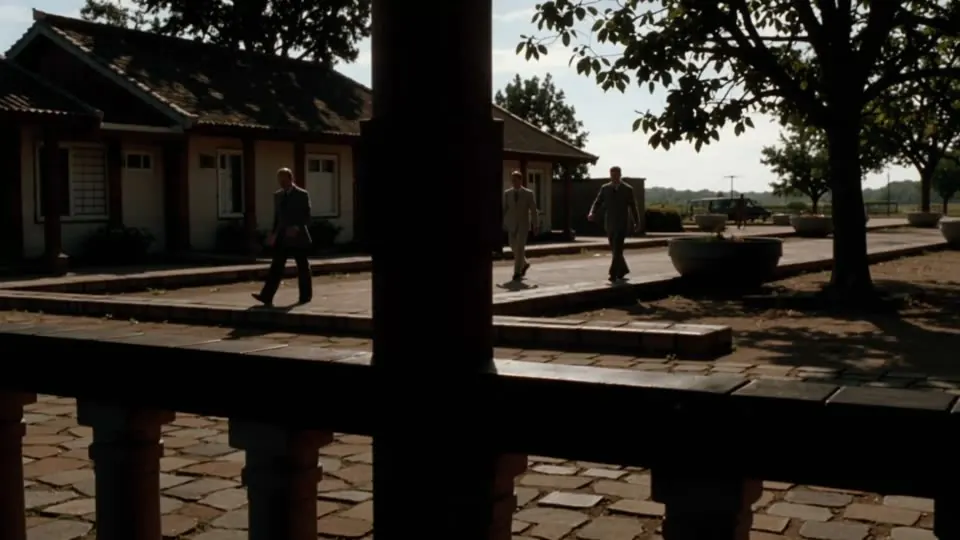
A wide frame that says where the scene happens before anyone speaks.
Opens a video model with the prompt in it. The price is on the page before you sign in.
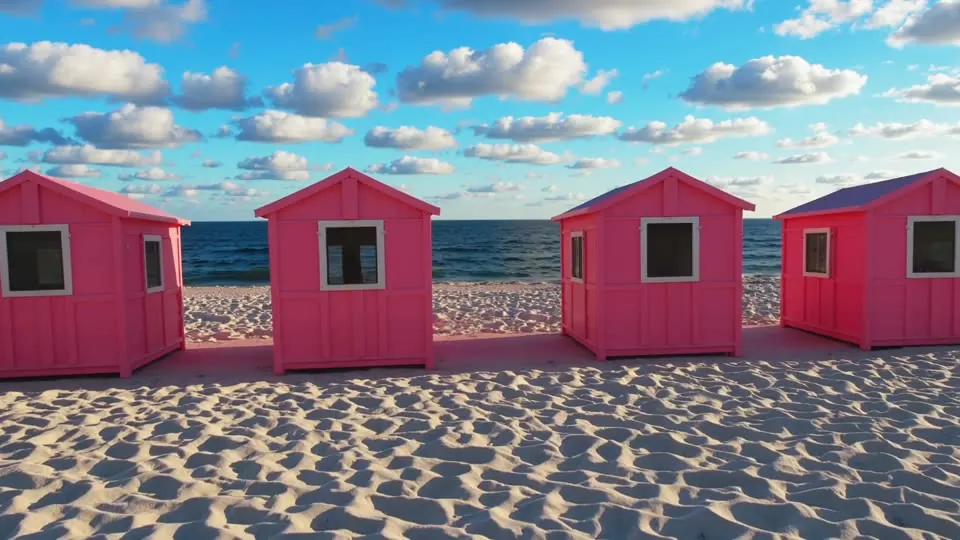
What it is for
It answers where before anyone has to ask. A rooftop, a street, a house at the end of a road, and the audience stops wondering and starts listening.
It also buys time. A few seconds of a place lets a cut breathe and marks the seam between one scene and the next, which is why so many of them sit at the top of a sequence.
How it works
Wide enough that the location is the subject. People can be in it, and if a face is large enough to read, the frame has gone too tight to establish anything.
The cue that makes it read as an establishing shot is usually light and weather rather than architecture. Time of day, a lit window, wet tarmac. Those say when as well as where, and the next shot inherits both.
When to use it
Open a scene with it, and use it again when the story moves to a new place or jumps in time. A re-establishing shot after a long stretch of coverage resets the geography cheaply.
Skip it when the location has already been shown and nothing about it has changed. A second tour of the same rooftop is dead screen time.
Told apart from its neighbours
A master shot covers the whole scene from one wide position so it can be cut back to. An establishing shot has no such duty. It shows the place and gets out.
A plain wide shot is the same framing without the job. The name changes when the frame is there to orient the audience.
On film
Yasujiro Ozu opens and closes sequences in Tokyo Story (1953) and Late Spring (1949) with held frames of rooftops, corridors and laundry lines. The shots carry no action at all, and they still do the work of saying where the film has moved to.
- Tokyo Story (1953)
- Late Spring (1949)
- Peking Opera Blues (1986)
The prompt
Replace the blanks, keep the rest. Then run it on a video model.
establishing shot of <location>, wide framing, whole setting legible, subject small within it
What goes wrong
Put a person in the prompt and the model frames the person. Say the location is the subject, and either leave people out or make them small.
The second failure is a generic postcard. Name the one thing that makes this place itself, such as a sign, a roof shape or a particular kind of weather.
Leave out
close-up, tight framing
Watch for
The location is the subject. If a face reads, the frame is too tight.
Questions
Shoot it
Pay for the one run. No subscription, and the price is on the model page before you sign in.
Next to it in who is in the frame