Photo Collage
- cut and paste collage
- photomontage
- analogue collage
Photographs cut out and layered on a surface, with the cut edge left visible.
Opens an image model with the prompt in it. The price is on the page before you sign in.
What it is for
Putting two photographs together that do not belong forces a viewer to make the connection themselves, which is a much stronger effect than showing them one picture of the idea. The visible cut edge is what keeps them aware they are doing it.
How it works
Photographs are cut out with scissors and laid on a backing. The white edge of the paper shows along every cut. Pieces come from different sources at different scales with different grain and light. Small shadows separate the layers. Tape or glue shows at a corner.
When to use it
Use it for editorial, music and anything that argues by juxtaposition. Avoid it where a single clear subject is needed, because collage always has at least two.
Told apart from its neighbours
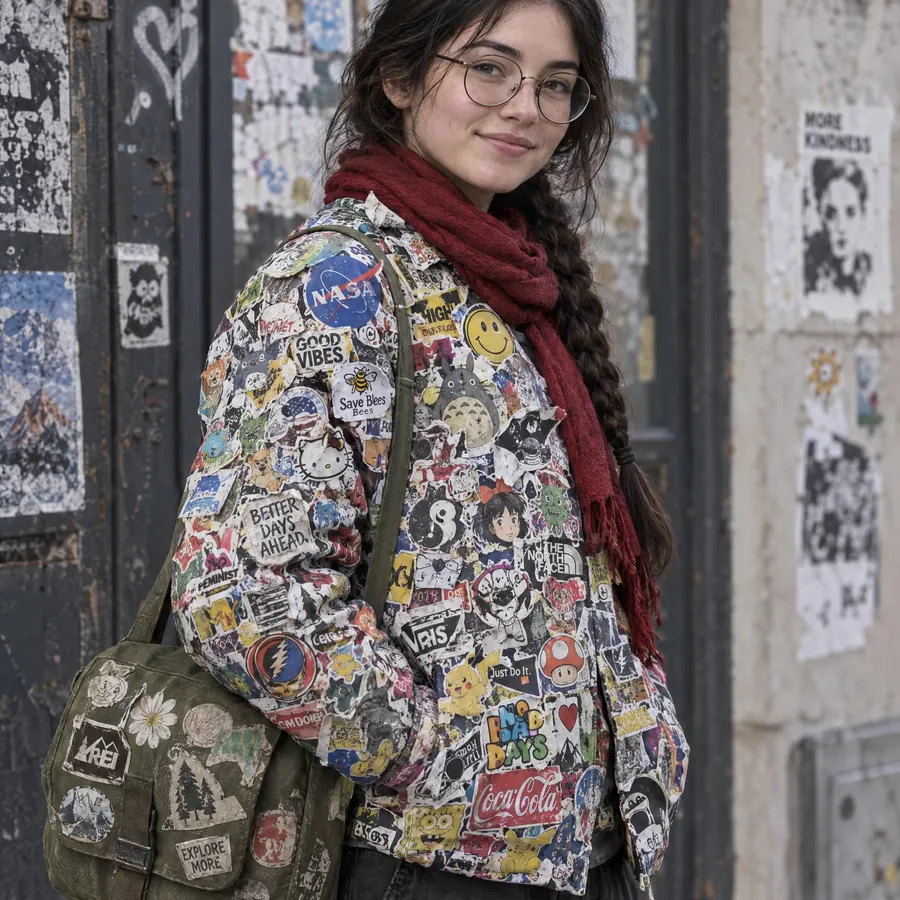
Sticker Bomb layers printed stickers rather than cut photographs. Dada Collage in the print catalogue is the poster tradition this comes from. Doodle Overlay draws rather than cuts.
- Sticker Bomb
- Dada Collage
- Doodle Overlay
Where it is used
It suits a magazine spread, an album cover, a zine and any picture that should look assembled rather than taken.
- Editorial and music artwork
- Advertising, zines and book covers
The prompt
Replace the blanks with your own character, keep the rest. Then run it on an image model.
<character> built as a cut paper photo collage, separate photographs cut out with scissors and layered on a plain backing with the white cut edge of the paper visible along every shape, the pieces at mismatched scales and from obviously different sources with different lighting and grain in each, small shadows where one piece lies over another, a torn edge on one or two pieces, visible tape or glue at a corner, nothing blended and no piece adjusted to match another
What goes wrong
A smoothly composited image comes back with matched lighting. Ask for the white cut edge along every shape and for each piece to keep its own grain and its own light.
Leave out
blended edges, matched lighting, a single consistent scale, digital compositing, a seamless join, colour grading across pieces
Watch for
Never match the pieces. Consistent lighting and scale turns a collage into a composite, and the mismatch between the fragments is what makes it read as cut by hand.
Questions
Draw it
Pay for the one run. No subscription, and the price is on the model page before you sign in.