Glitch Art
- databending
- datamosh
- corrupted image
An image breaking: channels shifted, scan lines displaced, blocks repeating where data was lost.
Opens an image model with the prompt in it. The price is on the page before you sign in.
What it is for
A glitch is a picture of something going wrong, and a viewer feels that as urgency even when nothing is actually broken.
It is also one of the few digital styles that improves a bad source image, because damage hides detail rather than needing it.
How it works
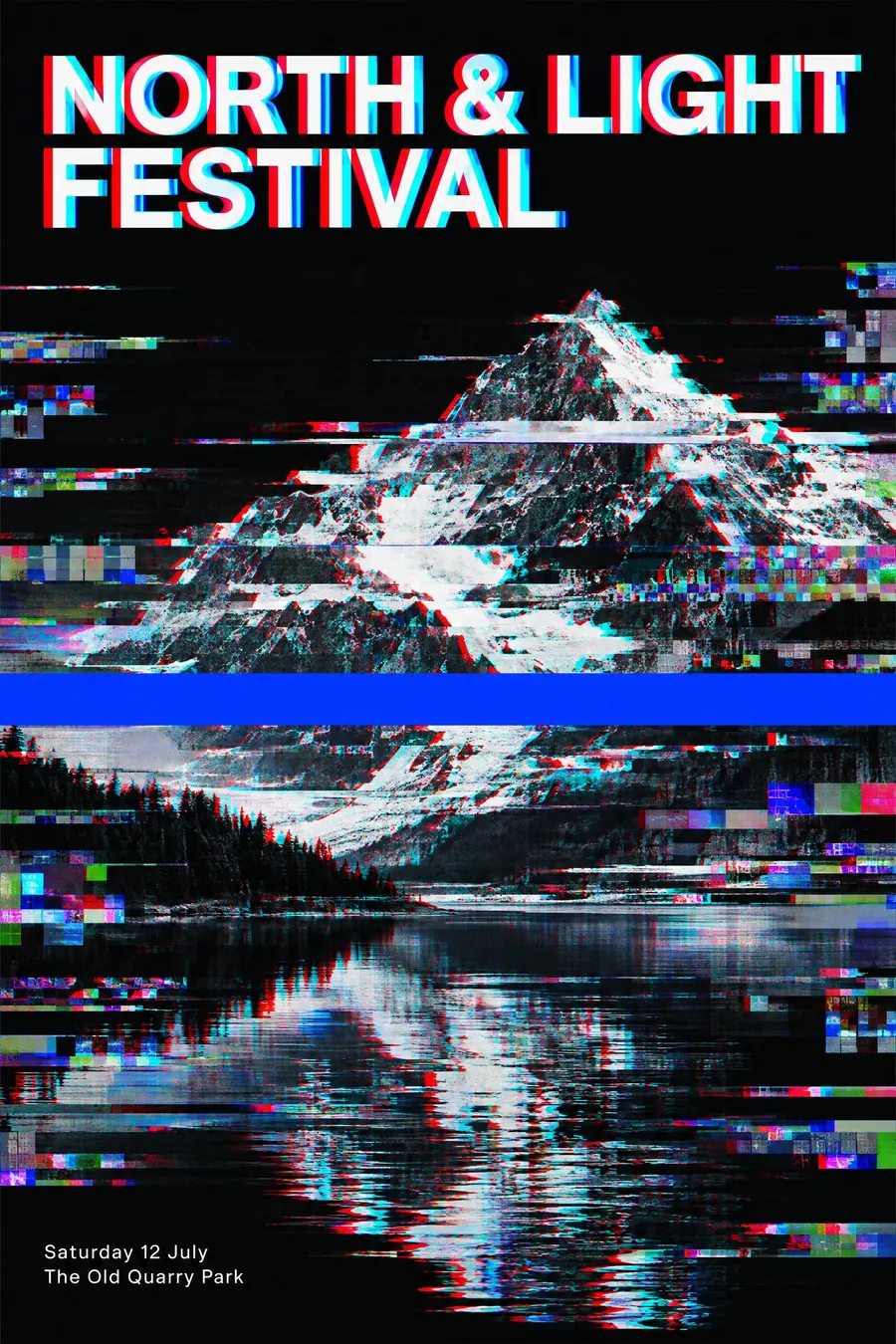
Displace horizontal bands of the image sideways, as though a scan line failed. Keep the displacement aligned to the pixel grid.
Separate the RGB channels so red and cyan fringes appear at the edges, and repeat blocks of compression artefacts where data was lost.
Hold one thing still. Clean modern sans type, undamaged, against the corrupted image, and let the title alone be duplicated in three channels.
When to use it
Use it for an electronic night, a tech event, a film festival, a games event, an experimental gig, a security or hacking talk.
Leave it alone when clarity matters. The style is about failure and some audiences read it as an actual fault.
Told apart from its neighbours
Grunge typography damages with photocopies and dirt. Glitch damages with data, and the artefacts are rectangular.
Vaporwave degrades gently with VHS artefacts and nostalgia. Glitch is sharp and current.
Brutalism is intact and merely unpleasant.
Where it was used
Rosa Menkman's Glitch Studies Manifesto of 2011 is the clearest statement of the idea. Kim Asendorf's pixel sorting work and the datamosh videos of the early 2010s put the techniques in front of a wide audience.
- Rosa Menkman
- datamosh music videos
- Kim Asendorf
The prompt
Replace the blanks with your own event, keep the rest. Then run it on an image model.
poster for <event>, glitch art, one photograph corrupted by data loss with horizontal bands of pixels displaced sideways, RGB channel separation leaving red and cyan fringes, blocks of repeated macroblock compression artefacts, a band of solid colour where the scan failed, the title duplicated and offset in three channels, otherwise clean modern sans type held perfectly still, black background, <date, time and place> in undamaged small type
What goes wrong
The model returns evenly distorted noise. Ask for horizontal bands of displaced pixels and repeated compression blocks, with the rest of the image intact.
The second failure is painted distortion. Say the artefacts are rectangular and aligned to the pixel grid, not brushed or blurred.
Leave out
uniform damage, painted texture, warmth, hand-drawn distortion, soft blur
Watch for
Keep one element undamaged. Total corruption reads as noise; partial corruption reads as glitch.
Questions
Print it
Pay for the one run. No subscription, and the price is on the model page before you sign in.