Ukiyo-e Woodblock
- Japanese woodblock
- Hokusai style
- floating world print
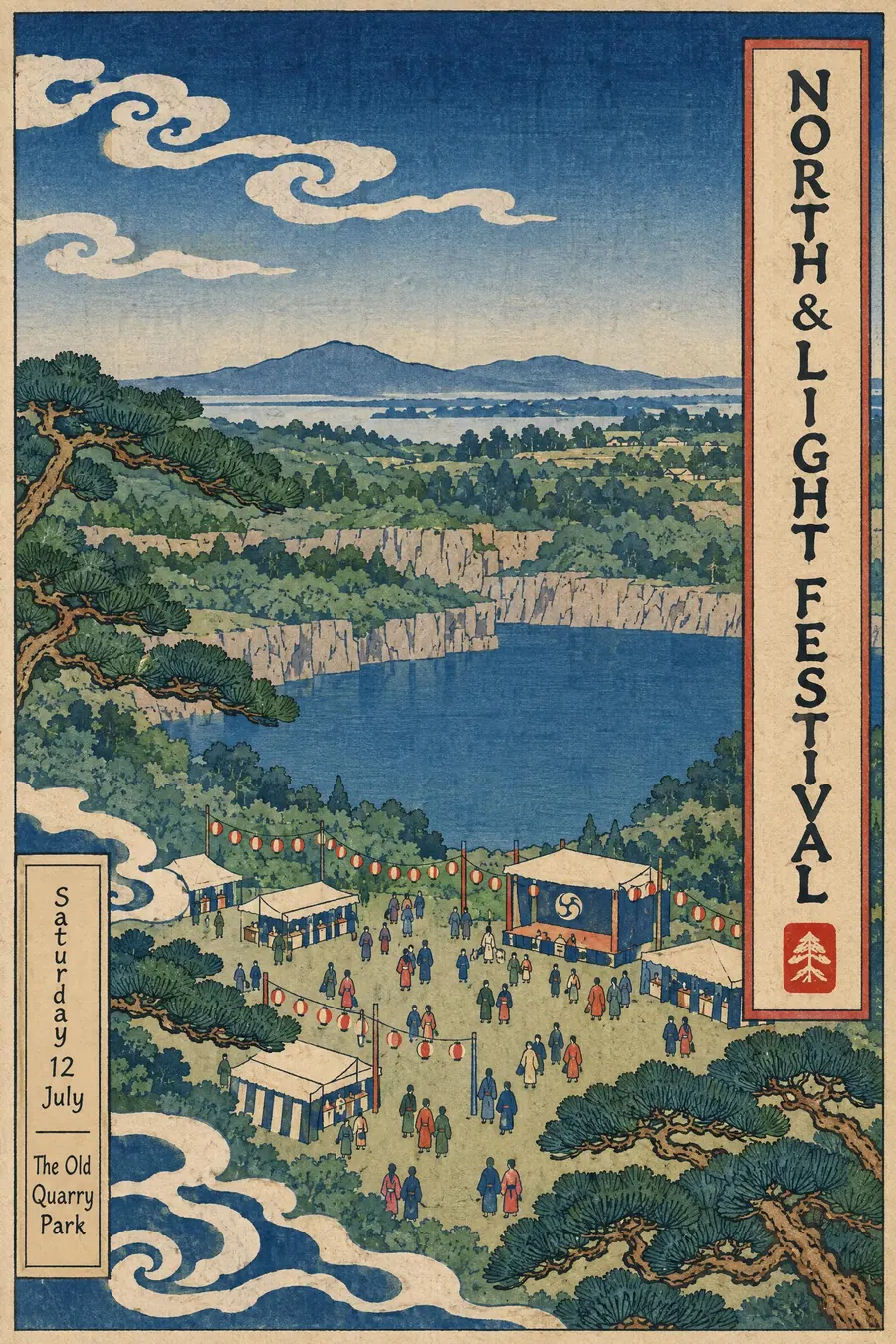
Flat colour behind a black keyblock line, printed on absorbent paper with visible wood grain.
Opens an image model with the prompt in it. The price is on the page before you sign in.
What it is for
Ukiyo-e solved flat colour printing two centuries before Europe did, and the solutions still work: outline, flat fill, one hand-wiped gradient, no shadows.
It is also among the most recognised image styles in the world, so a poster in it is legible to almost any audience.
How it works
Draw the keyblock first: a fine, continuous black outline that every colour sits inside.
Fill flat, with no modelling and no cast shadows. The one exception is bokashi, a gradient wiped by hand across the sky, usually indigo to pale.
Use a high viewpoint with no linear perspective. Add wood grain showing through the flat areas, a vertical title cartouche down the right edge, a small red seal and washi paper texture.
When to use it
Use it for a Japanese cultural event, a food festival, a garden opening, a martial arts club, a print exhibition, a coastal event.
Leave it alone when you need photographic realism or a Western typographic hierarchy. The format resists both.
Told apart from its neighbours
Japonisme is the European borrowing, with Western subjects and lithographic printing.
Expressionist woodcut is crude, one or two colours, and gouged. Ukiyo-e is precise and printed from many blocks.
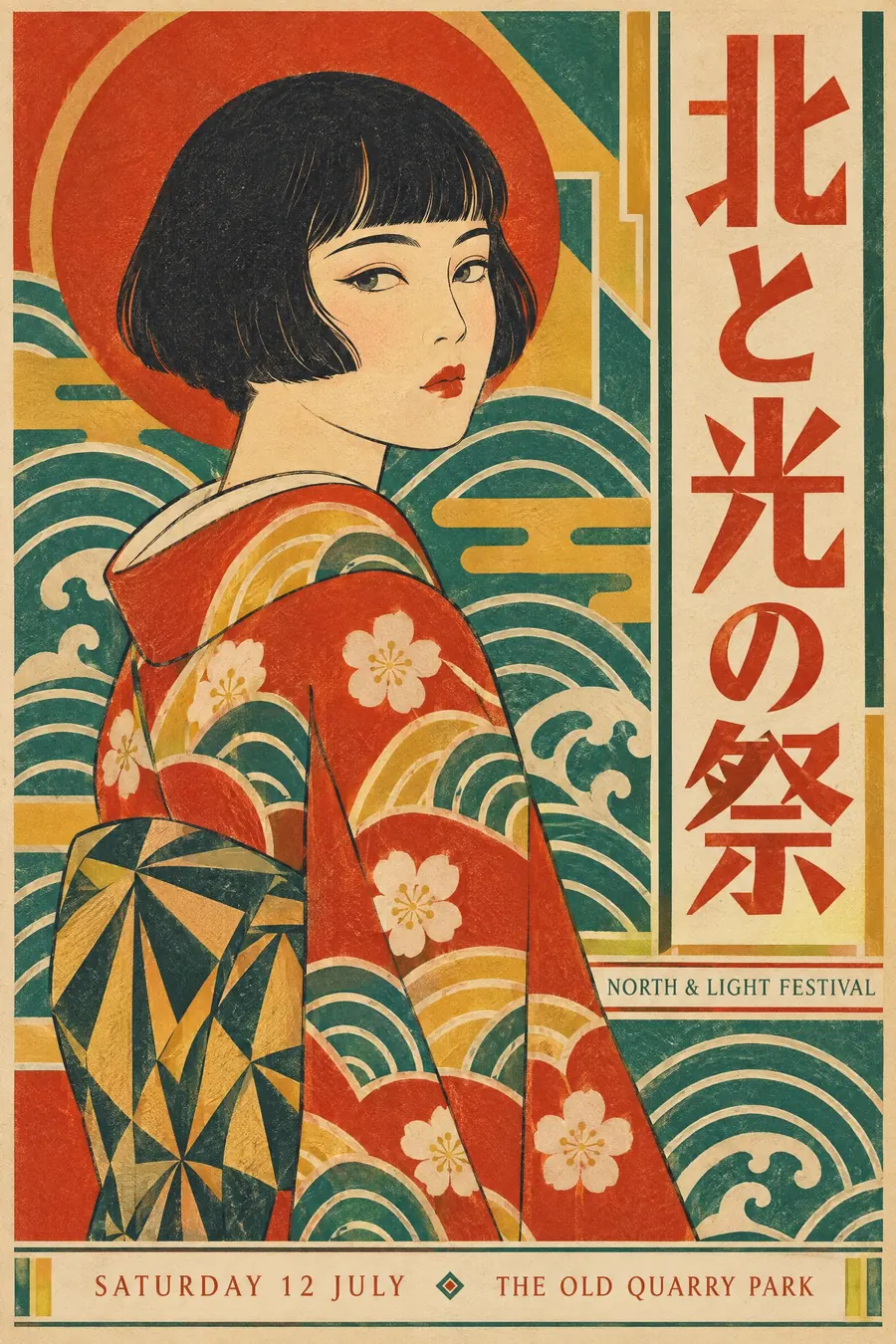
Taisho modern comes a century later and mixes the same sensibility with Art Deco.
Where it was used
Hokusai's Thirty-six Views of Mount Fuji, printed around 1831, includes The Great Wave and is the most reproduced print series ever made. Hiroshige's Fifty-three Stations of the Tokaido did the same for landscape, and Utamaro for portraits.
- Hokusai
- Hiroshige
- Utamaro
The prompt
Replace the blanks with your own event, keep the rest. Then run it on an image model.
poster for <event>, ukiyo-e Japanese woodblock print, flat unmodulated colour areas held by a fine black keyblock outline, bokashi gradient hand-wiped across the sky from deep indigo to pale, visible wood grain in the flat areas, high viewpoint with no cast shadows and no perspective, stylised wave cloud and pine motifs, a vertical title cartouche down the right edge and a small red seal, washi paper texture, <date, time and place> in a narrow side panel
What goes wrong
The model returns a painted Japanese scene. Ask for flat colour areas held by a fine black keyblock outline, printed rather than painted.
The second failure is cast shadows. Say there are no cast shadows and no linear perspective anywhere.
Leave out
cast shadows, linear perspective, photographic detail, glossy colour, western type
Watch for
The keyblock line holds everything. Without one continuous black outline the colour areas fall apart.
Questions
Print it
Pay for the one run. No subscription, and the price is on the model page before you sign in.