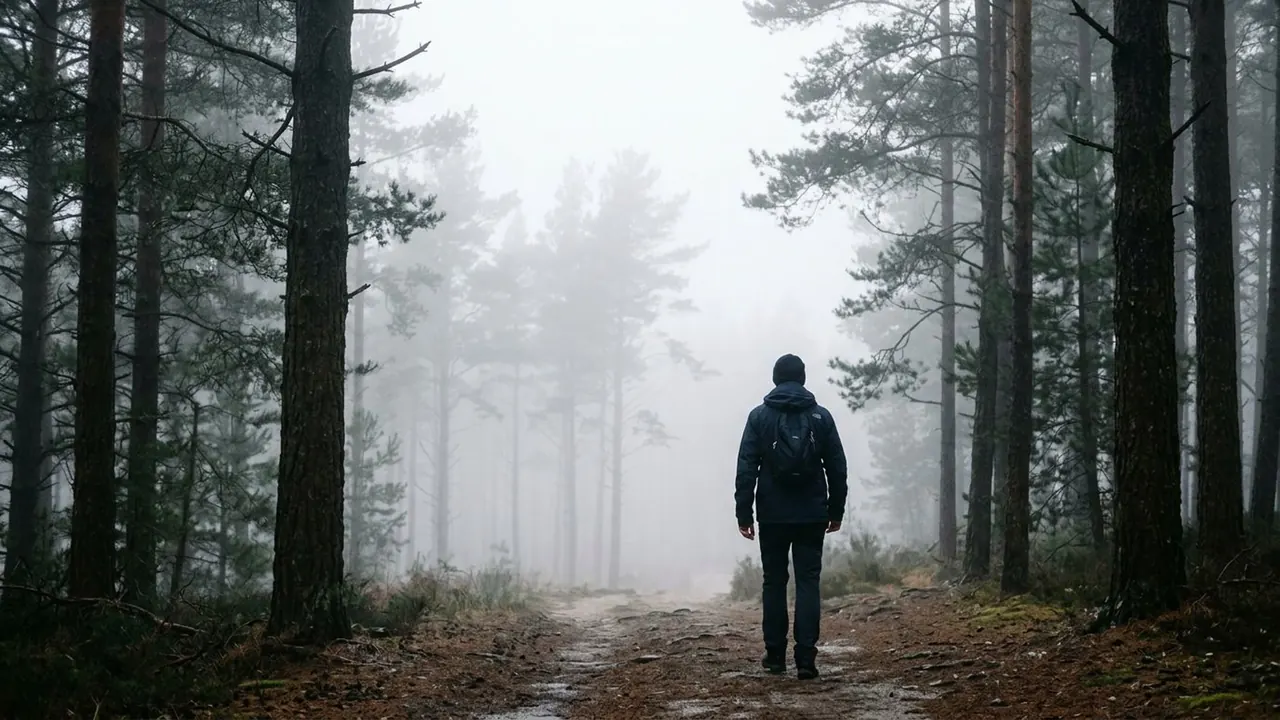
Rain
- haze
- fog
- smoke
- dust
Falling water streaks the air and puts light on every surface.
Opens a video model with the prompt in it. The price is on the page before you sign in.
What it is for
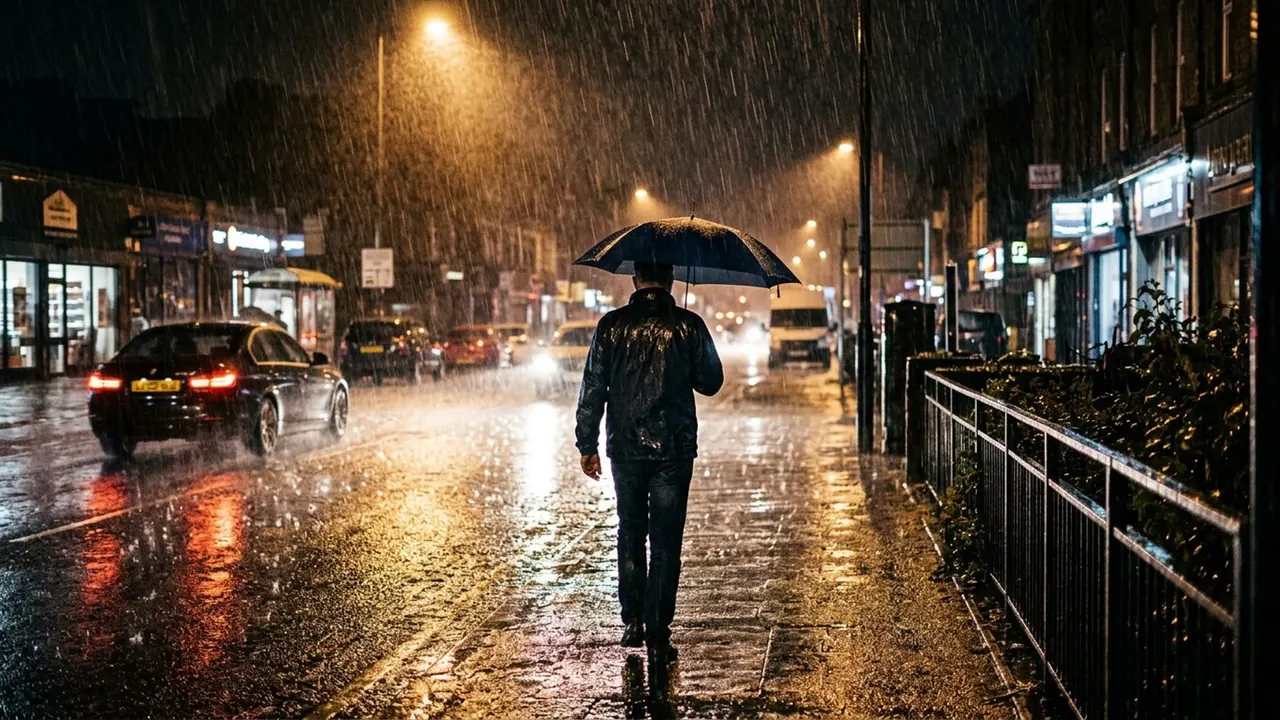
Rain gives the air something to see. Every drop is a small moving highlight, so the space between the camera and the subject stops being empty and becomes measurable.
It also changes every surface below. Roads turn into mirrors and skin goes reflective. Clothes get heavy and cling, so a person in rain is doing something physical in every frame whether they act or not.
How it works
Rain reads only when light hits it from behind or from the side. Put the source behind the fall and each drop becomes a bright streak against the dark. Light it from the camera position and the water disappears.
Shutter angle sets the shape. A long exposure smears the drops into lines. A short one freezes them into dots. Both are used and they look different on the same rig.
On a set the rain comes from a tower or a bar above the frame, and the ground is wet down first, because falling water landing on dry tarmac reads as a fake.
When to use it
Use it when the scene should cost the character something physical, and when a night exterior needs the street to carry light.
Skip it when the dialogue has to be clear and the frame is already busy. Rain adds noise to the picture and to the track.
Told apart from its neighbours
A wet-down has the soaked ground and no falling water. Rain has both. The test is the air, because nothing is moving through it in a wet-down.
Snow drifts and takes its time to land. Rain falls straight and fast. Naming the fall speed keeps the two apart.
On film
Ridley Scott keeps Blade Runner (1982) under near constant rain, lit from behind and from the side, so the street reads at night and every surface carries a highlight. Akira Kurosawa opens Rashomon (1950) under a downpour at the gate, and the crew mixed ink into the water so the rain would show against a pale sky.
- Blade Runner (1982)
- Rashomon (1950)
The prompt
Replace the blanks, keep the rest. Then run it on a video model.
heavy rain falling around <subject>, streaks catching the light, water running off surfaces, wet reflections below
What goes wrong
The rain does not show. A model lights the scene from the front by default, and front-lit rain is close to invisible, so ask for the rain to be backlit and for the streaks to catch the light.
The second failure is dry ground under falling water. Say the surfaces are already soaked and the ground is reflective, or the shot reads as an effect laid over a clean plate.
Leave out
dry ground, clear air
Watch for
Backlight the rain. Front-lit rain is nearly invisible on camera.
Questions
Shoot it
Pay for the one run. No subscription, and the price is on the model page before you sign in.